Fermentieren
9. May 2025Read more

23. December 2022
“Mmm, that’s delicious! It’s really nicely spicy!” or: “It tastes so good – I don’t even miss the meat!” You’ve no doubt heard phrases like these – or even said them yourself – in the past when it came to eating or preparing food. And the question isn’t entirely unfounded. After all, that rich flavour doesn’t come out of nowhere. Alongside salt, pepper and other select spices, yeast extract lends many dishes its flavour-enhancing aroma. This fine, water-soluble, usually yellowish-brown powder – which is also available as a paste – is characterised by its savoury, meaty note, also known as umami. Last but not least, in some countries and on other continents it is even eaten as a spread on bread for breakfast.

Yeast extract is derived from baker’s or brewer’s yeast and, in its concentrated form, consists of the soluble components of yeast cells. Yeast extract contains B vitamins, carbohydrates, minerals, proteins and natural glutamic acid (an amino acid). The glutamic acid released is responsible, for example, for the characteristic umami flavour.
Step 1:
Fermentation: The yeast grows in so-called fermenters at a constant temperature of 30 °C, whilst being supplied with oxygen and sugar. The sugar serves to provide the yeast cells with optimal nourishment. Once the yeast has matured, it undergoes cleaning in centrifuges to remove any residual sugar from the yeast. The result is a thick, viscous yeast mass, also known as a ‘suspension’.
Step 2:
Autolysis: In heated tanks (45–55 °C), the yeast stops growing. The yeast’s own enzymes then break down the proteins into their constituent amino acids and other macromolecules. In the process, the cell walls of the yeast cells disintegrate through autolysis, causing the cell fluid to leak out.
Step 3:
Preparation of the yeast extract: This cell fluid is then passed through the centrifuge a second time to filter out the remaining cell walls – leaving behind the natural components of the yeast cells (proteins, minerals, glutamic acid and vitamins). The liquid is then heated to 60 °C. Evaporation results in the formation of a paste. To process the yeast extract into a powder, it is produced using spray drying.
Yeast extract is often equated with the flavour enhancer glutamate and appears on many ingredient lists. Some consumers therefore regard yeast extract as a direct substitute for glutamate. However, there is a subtle difference.
Unlike artificially produced glutamate, yeast extract is not classified as a flavour enhancer because it is not considered an additive. Consequently, it is simply labelled as ‘yeast extract’ on a list of ingredients. Although glutamate is a natural component of yeast extract, no additional substances are added during the manufacturing process.
Thanks to its strong, naturally salty flavour, yeast extract is often used to reduce the salt content of a dish.
Why do so many people view glutamate with such scepticism? It is important to distinguish between natural glutamate and isolated monosodium glutamate. This is because, unlike the naturally occurring glutamate in yeast extract – which comes from glutamic acid – the artificially produced sodium glutamate (monosodium glutamate) is added to food as a flavour enhancer. In this case, no amino acids are present. Some consumers, and producers in particular, also know this additive by the designation E 621.
From a chemical point of view, glutamate is the salt of glutamic acid (an amino acid). In its natural form, glutamate – also known as exogenous glutamate – occurs as a protein building block in many plant-based and protein-rich foods (tomatoes, soya sauce, Parmesan, pulses, salmon, etc.). Even the human body produces glutamate. For example, glutamic acid is found in breast milk. This is known as endogenous glutamate. It regulates many bodily functions, such as the nervous system, and is important for the brain.
The answer to that is: No. The European Food Safety Authority (EFSA) has classified yeast extract as safe.
However, as with many other processed foods, it is important to bear in mind that there may be traces of gluten present – depending on the type of yeast used. Anyone with a gluten intolerance should therefore read the list of ingredients carefully beforehand. This information must be clearly visible on every packet.
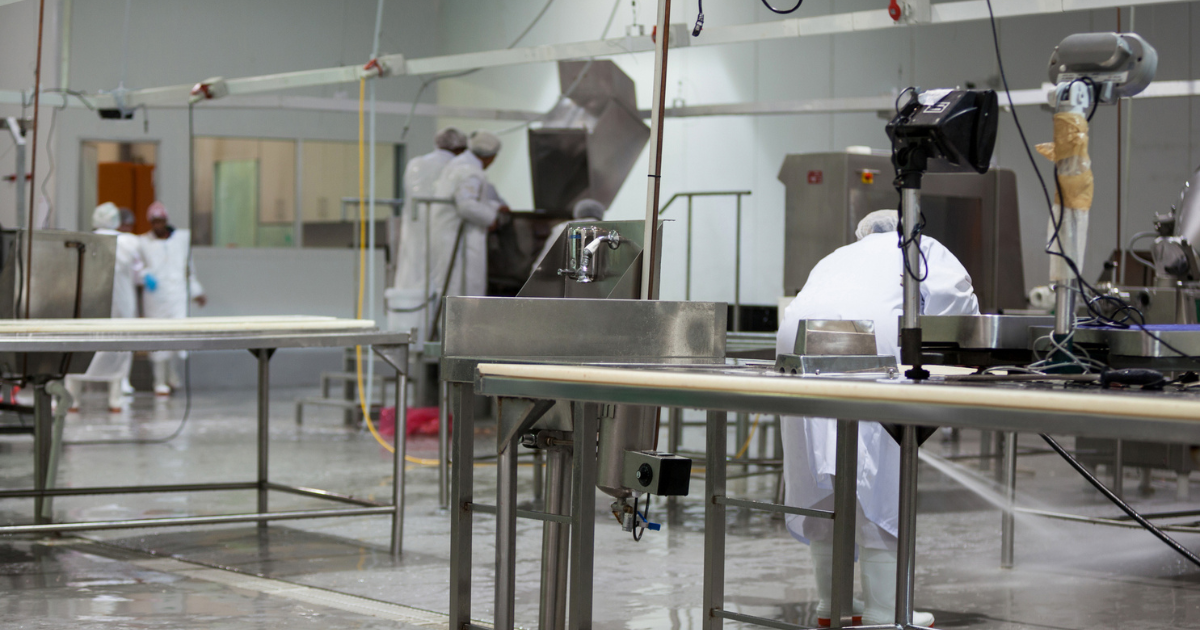
To ensure that health and safety standards are maintained on site – that is, at the production facility – a hygienically sound working environment for staff and the processing of foodstuffs are, of course, essential prerequisites. Swab tests, disinfectants and cleaning agents are effective tools for preventing illness and contamination.
Yeast extract can be found in many dishes and on many ingredient lists. It is a particularly welcome addition in food production, as it adds the finishing touch to ingredients. It’s great that it’s also vegan and can be used in meat-free dishes too.
It is therefore not only found in meat and sausage products or ready-meals, but can also be incorporated into cheese and meat substitutes.
Yeast extract is often found in the following products:
Sauces
Soups
Meat products
Broths (vegetable or meat)
stock cubes
Spice blends
Seasoning
Ready meals
Are you still missing the right tools, such as spoons to make it easier to measure out the ingredients? Or other accessories like buckets and scales? No problem at all. We’d be happy to supply you with the right accessories. If you’re still undecided or have any questions about specific products, please feel free to contact us. Rest assured that with Ehlert, you have the right partner at your side. Our expert staff are available to assist you round the clock.


More articles