Desinfektionsmatten als Teil des Hygienekonzepts
7. August 2026Read more

12. June 2026
In food production, moisture, water, cleaning processes and low temperatures are often part of everyday working life. Whether in meat processing, commercial kitchens or in dishwashing and cleaning areas: wherever moisture is present, staff rely on high-quality protection against moisture. After all, damp clothing is not only uncomfortable; it can also have a negative impact on staff performance and safety, as well as on operational hygiene. Suitable moisture-protective clothing therefore fulfils several purposes at once – reason enough to take a closer look at the subject.

In the food processing industry, there are various working environments that are classified as ‘wet areas’ – these extend far beyond simply a rainy outdoor area used for goods delivery. A wet area is defined as one where work regularly involves water, splashes, damp products, liquids or cleaning agents. This includes, for example, work areas in fish and meat processing, such as slaughterhouses and cutting rooms, vegetable and salad processing, and production areas for convenience products, Meat alternatives or other food preparation areas where food is handled in a wet environment, as well as dairies. This also includes dishwashing and cleaning areas, and cold stores where condensation occurs. In particular, the combination of cold and damp conditions requires specialist equipment for trained staff.
As with all areas of workwear, waterproof clothing is selected depending on the specific application and, where applicable, the worker’s personal preferences. Full-body coverage is not necessary in all situations. The key factor is which parts of the body come into frequent contact with moisture or liquids during the task in question.
Waterproof jackets and slip-on jackets for the upper body
Waterproof trousers and dungarees for the legs and torso
Waterproof overalls for comprehensive protection
Protective suits for specific cleaning or production areas
Rainwear, including jackets, trousers and rain parkas for outdoor areas, goods receiving or yard work
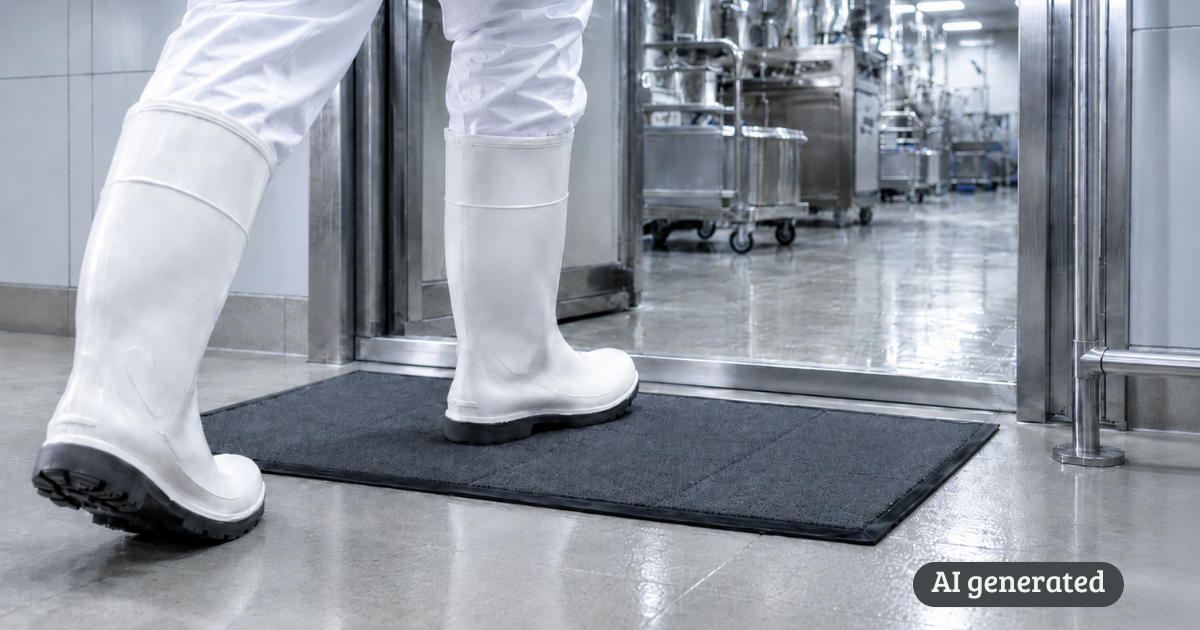
waterproof boots and suitable safety footwear with anti-slip properties
Aprons, sleeve and hand protection as supplementary elements
The main advantage of pull-on jackets in wet conditions is that they do not require a full-length zip. This means they are less likely to let moisture in. Dungarees are recommended for extra protection of the stomach and chest area, whilst overalls are a good choice when splash water or similar is expected from all sides.


More articles
First and foremost, when it comes to appropriate protective clothing, it is essential that it provides reliable protection against water, splashes and various other liquids. However, to ensure optimum protection and the best possible safety, other factors must also be taken into account. For example, it should be robust and of high quality, comply with the hygiene standards of the food industry and be easy to clean. In addition to suitable materials, fit and size also play a role.
Waterproofing should not restrict the employee’s freedom of movement, or should do so as little as possible. Elasticated material helps to achieve this. Protective workwear must not get in the way and must be easy to wear over other clothing without constantly slipping out of place. Depending on the work area, clothing that is too loose can also have serious consequences if it gets caught on something. The correct size is also crucial for boots and other footwear – in addition to slip resistance, a precise fit influences safety and the risk of accidents.
The EN 343 standard deals with protective clothing for use in working environments affected by rain, wind or damp. It sets out requirements and provides guidance – including on factors such as breathability.
In addition to the basic requirements for protection against moisture, consideration must also be given to suitability for the specific operation and its day-to-day working conditions. For occasional outdoor use in light rain, basic equipment may suffice, whilst continuous use in damp working environments requires more comprehensive kit.
As clothing that is too tight restricts movement and is more prone to damage, whilst clothing that is too loose increases the risk of accidents, the correct size should be available for every member of staff.
The following factors must be taken into account when providing suitable protective clothing for the wet area:
appropriate level of protection for the relevant wet area
durable and hygienic materials
a good fit with plenty of freedom of movement
easy cleaning and maintenance
a sensible combination, such as boots, Work gloves and aprons
Taking into account the relevant standards and quality criteria
It is not without reason that protection against wetness is an essential part of work protection. If protection is lacking or used incorrectly, workers’ clothing becomes damp. This can pose health risks, particularly when work environments are also air-conditioned. Furthermore, wet floors, damp sleeves or unsuitable clothing increase the risk of accidents caused by uncontrolled movements.
From a hygiene perspective, too, protective clothing that repels moisture plays an important role. In food processing, in addition to cleanliness, the strict separation of different work areas is also important – for example, to Preventing cross-contamination. This is precisely where clothing can help. Protective clothing helps to reduce contamination and ensure that defined hygiene standards are met in accordance with the HACCP plan to be observed. Accordingly, appropriate clothing not only protects staff but also safeguards food safety.
In food production facilities, certain areas and activities are often sensitive from multiple perspectives – and protective clothing must address a number of factors. Moisture-protective elements are often combined with other types of protective clothing. These include, for example, food-grade clothing, disposable clothing, headgear, gloves, aprons, safety boots and puncture and cut protection. Cold-weather clothing may also be necessary, particularly in cold stores or cold production areas.
When it comes to high safety standards, reliable quality and good value for money in the food sector, Ehlert is there to help. As well as waterproof clothing, our shop offers a wide range of workwear – tailored to the food industry. Put together the right solutions for your specific area of work in our online shop.
Our expertise and our expertly curated range do not stop at clothing: with Ehlert, your specialist wholesaler for the food industry, you can source everything you need. Cleaning agents to meet high hygiene standards, equipment and tools for efficient production processes, and a wide variety of spices for flavourful dishes are just part of what we offer. Source everything from a single supplier – with rapid product availability and over 100 years of industry expertise.