Koriander
7. February 2025Read more

12. December 2025
Turmeric (Curcuma longa), also known as yellow root or the ‘golden spice’, is more than just an ingredient in curry powder. The root has evolved from a traditional Asian spice into a reliable ingredient in modern food production. Turmeric combines flavour, colour and naturalness – which also meets consumer demand for plant-based ingredients and clean-label products. In this article, we take a closer look.
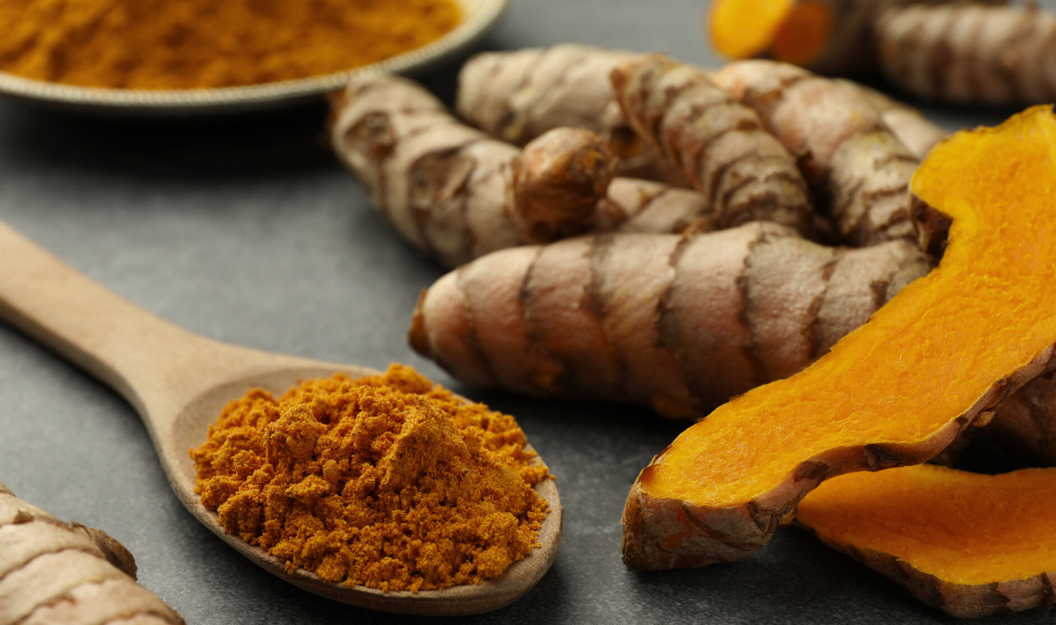
In common parlance, the term ‘turmeric’ refers to both the plant and the spice derived from it. From a botanical perspective, turmeric belongs to the ginger family. The plant thrives particularly well in warm, humid climates and is mainly cultivated in South and South-East Asia. The rootstock consists of thickened underground shoots, known as rhizomes, which closely resemble those of ginger. When cut open, turmeric reveals its characteristic yellow to deep orange colour.
Put simply, the rhizomes are processed into powder by peeling, drying and grinding. This produces the familiar fine, vibrant-coloured powder that many people recognise from curry mixes, marinades or even drinks such as Golden Milk is well known. Turmeric owes its intense colour to what are known as curcuminoids. These yellow-orange compounds make up only a small proportion of the rhizome, but are so intensely coloured that even small amounts of the powder are sufficient to visibly colour a recipe. The flavour is primarily determined by essential oils. These give turmeric a warm, slightly earthy spice that is significantly milder than that of ginger. In addition, turmeric also has a subtle to distinct bitterness – depending on the variety, freshness and quantity used.
Turmeric powder is not a standardised industrial product, but an agricultural produce. This means that its colour and flavour may vary depending on the variety, growing region, climate and processing method. Consequently, different batches may produce different results even when used in the same quantity.
As well as its flavour, one of the main reasons for turmeric’s popularity within the food industry is curcumin, a natural coloring that has an intense yellow hue. It is authorised in the European Union as food additive E 100. Because it is of natural origin, it offers a suitable alternative to synthetic Colorings, to give food a bright, appetising colour.
Curcumin provides an attractive colour to a wide range of foods. Its applications range from traditional to innovative products:
Sauces & Dressings: Increased yellowing, for example in the case of Mustard, salad dressings or mayonnaise.
Dairy products & fats: Curcumin is used to standardise the colour of products such as margarine or certain types of cheese and to make them visually appealing.
Baking & Pasta: The colorings in turmeric also help to intensify the yellow colour of egg-based pastries or other baked goods.
Drinks: Soft drinks, smoothies and other liquids also become more appealing thanks to the colouring.
Turmeric is used in various forms in production, depending on its intended purpose. The main forms used are turmeric powder, extracts and the coloring curcumin, which is used as food additive E 100.
Curcumin is naturally fat-soluble (lipophilic), which means it dissolves very well in fats and oils, but less so in water. For many traditional foods such as sausages, mayonnaise, margarine or high-fat sauces, this is not a problem – the colour disperses well and is stable. However, it is more difficult to use in aqueous products such as soft drinks. In such cases, modern technologies can be employed to ensure that curcumin can be processed effectively with water.
Another important consideration during processing is the sensitivity of the coloring, whose brightness can be affected by external factors such as light or pH:
Light sensitivity: Direct exposure to light can cause the colour to fade quickly. This means that choosing the right packaging is also important when it comes to products containing turmeric.
Acidity level: The colour intensity of curcumin also depends on the acidity of the food. In acidic environments, the colour is stable and a bright yellow. In alkaline environments, however, curcumin breaks down rapidly, resulting in a loss of colour.
These chemical properties should be carefully taken into account during formulation and product development in order to get the most out of this natural food colouring.
Turmeric is a versatile ingredient. Used sparingly, it adds a subtle colour without significantly altering the flavour. As the amount increases, its earthy, spicy aroma becomes more pronounced – and if used in excess, a bitter note takes over.
Whilst turmeric is used as a spice in curry dishes, its flavour can be a hindrance in, for example, neutral dairy products. During product development, these factors are specifically managed through the selection of raw materials and the dosage: more powder for spicy results; E 100 when colour is the main priority.
In many countries, turmeric is valued not only as a spice and natural colouring agent, but also as a remedy. Turmeric is said to possess, above all, anti-inflammatory and antioxidant properties, which is why many people make a conscious choice to eat foods containing turmeric. Even though there is no evidence to support its claim as a miracle cure for promoting health, turmeric remains a sought-after and versatile raw material in food production due to its varied properties.
In food production, flavourings and colorings take centre stage. Turmeric is a good example of how traditional natural products are optimised using modern technologies and modified for industrial use. In addition to the technological challenges relating to stability and solubility, there are regulatory requirements that must be met with regard to turmeric.
Particularly for manufacturers who value naturalness, Clean-label and colour intensity, turmeric can be a key ingredient. With us as your experienced supply chain specialists, you’ll be perfectly positioned for your food production in a variety of ways – our extensive and diverse range shows you how.


More articles