Messer: Überblick zu den Schneidewerkzeugen in der Lebensmittelproduktion
8. December 2023Read more

27. September 2024
It is hard to imagine the modern food industry without film / foil. It is practical and efficient – throughout the various stages of food production, processing and transport. However, not all film / foil is the same, as different properties mean it is suited to different purposes. To help you understand cling film and similar products better, we’ve compiled lots of useful facts in this blog post.
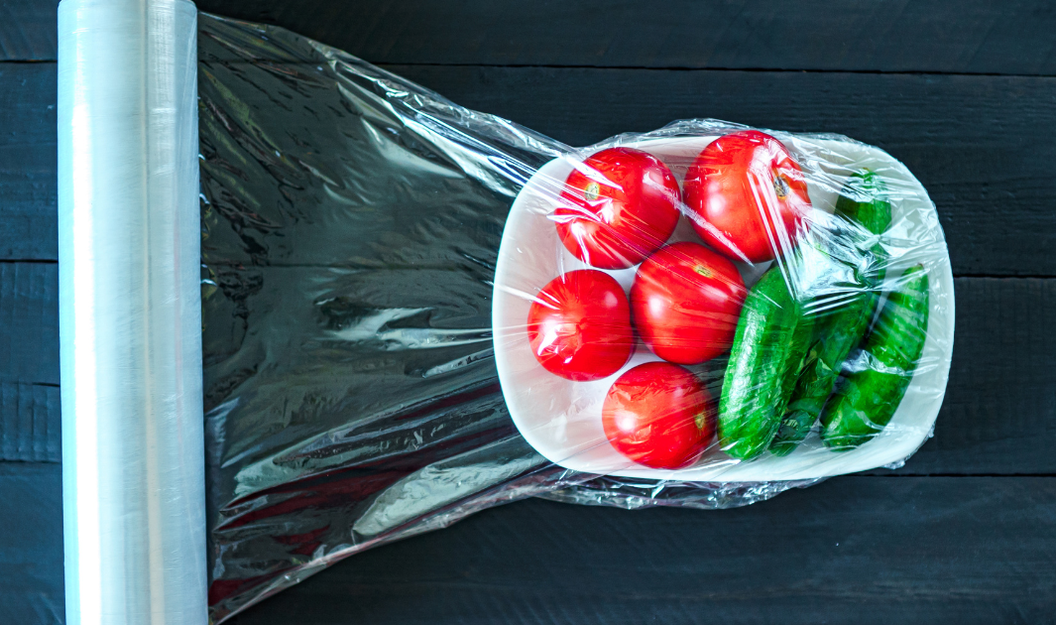
Film / foil offers a whole range of benefits. It protects various foods from external factors such as dirt and contamination. It also keeps out moisture and oxygen. This not only ensures hygiene, but also freshness and Preservation support – so, in a sense, they are all ‘cling films’. Films / foils are also essential for clean and safe transport, as their protective function helps prevent loss and food wastage. Consequently, they are safe for contact with food.
Another advantage is that they are flexible and can be adapted in a variety of ways. They are a suitable replacement, particularly for containers without lids, as they are straightforward to use and ready for use in no time. With transparent films / foils, another benefit is that they reveal the contents at a glance.
There are various requirements within the food industry. Films / foils offer a solution to some of these – at least, provided the application and the food-grade film are a good match. It’s time to take a look at our range of food-grade films:
Aluminium foil: There’s hardly a household that doesn’t have a roll of this silver all-purpose wonder in its cupboard. In an industrial context, aluminium foil is at least as popular. It is easily malleable, heat-resistant and protects against light, moisture and oxygen. As well as hot food, chocolate, for example, benefits from it.
Cling film: As a lightweight film / foil, it is easy to shape and also adheres very easily. Its name gives away its purpose: keeping food fresh. It prevents food from getting dirty or drying out and reliably covers it ab. Aluminium foil and cling film are both suitable for use with fatty foods.
Stretch film: This is used when flexible packaging material is required. When food is wrapped in it, it prevents condensation from forming as it fits snugly. The food stays fresh for longer, and thanks to its practical adhesion and high elasticity, wrapping it is a breeze.
Flat film: These soft LDPE flat films have a range of uses: they can be used to cover and wrap both food and other items. They are strong and transparent, which has made them particularly popular. Presentation and packaging in one.
Top and bottom films: With the aid of packaging machines, top and bottom films wrap around chilled meat products or enhance the packaging of other delicacies. The combination of a rigid bottom film and a softer top film is crucial in this process.
Shrink film: Tubular film is a seamless tube made of food-grade film that fits snugly around the product. Here, too, meat and sausage products are a classic example of its use, benefiting – as always – from the extended shelf life.
In addition to the different types of packaging film, these are usually also available in various versions in terms of size or thickness. This makes it possible to find the right one for every foodstuff Food packaging and the safest method of transport. This helps to improve food safety and make logistics more efficient. We’d be happy to advise you on finding the right product to suit your needs.
This applies not only to film packaging, but to our entire range of spices, machinery and Food-clothing.


More articles
Stretch film: Stretch films are in high demand in the food industry as they wrap tightly around foodstuffs and protect them securely. They prove particularly valuable in logistics, specifically when full pallets need to be secured and stabilised. Thanks to their high elasticity, they wrap tightly and securely around the load whilst protecting it from mechanical damage, dust and moisture.
Cellophane film: This packaging film, also known as cellophane, is naturally biodegradable in its untreated form and is therefore particularly environmentally friendly – and can simply be disposed of with waste paper. It is also transparent and, with the right coating, can be used for a wide range of applications – from cheese and sausages to baked goods and even medicines.