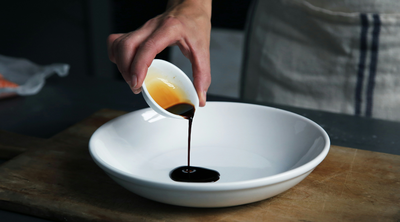
Essig: Von Säure und Raffinesse
7. June 2024Read more

26. June 2026
Sultanas are among the classic dried fruits. They can be found in muesli mixes, baked goods, desserts, snacks, fillings and even spice blends. These small dried fruits are highly valued and used in a wide variety of ways, both in small-scale artisan production and in industrial food manufacturing. However, they are not simply a sweet ingredient: as well as flavour, sultanas also influence texture, appearance and moisture content, and can therefore sometimes shape the entire recipe development of a product. In the context of professional food production, it is therefore worth taking a closer look at their origin, processing, characteristics and possible uses. We are putting the spotlight on sultanas.

Sultanas are dried grapes, predominantly made from light-coloured, seedless grapes with thin skins. The Sultana grape variety, also known as Sultanina and referred to in the USA as Thompson Seedless, plays an important role in this. Depending on the country of origin and commercial practice, these terms are closely linked or used interchangeably.
Sultanas differ from dark raisins primarily in terms of colour, processing and the drying method used; however, the grape variety used may overlap. Sultanas have a mild sweetness, a comparatively soft texture and, as a rule, a characteristic yellowish to golden-brown colour.
The drying process used for sultanas is crucial to their quality and appearance. Unlike many dark raisins, which are often dried without any pre-treatment, sultanas undergo a process known as Dippens: The grapes are dipped in an emulsion of vegetable oil and potash (potassium carbonate). The solution causes the natural, waxy protective layer on the grape skin to break down, making it more permeable and allowing moisture to evaporate more quickly. As a result, sultanas take less time to dry, which reduces the natural browning processes. The result is the light colour and soft texture of sultanas.
To ensure a lasting, bright and uniform colour – as is often required in industrial food processing – sultanas are frequently treated with sulphur dioxide. In addition to the visual effect, this step also ensures a extended shelf life, as the growth of yeasts, fungi and bacteria continues to be inhibited.
All three Dried fruit are a type of dried grape. Whilst ‘raisins’ is often used as a general term, the retail trade generally distinguishes between raisins, sultanas and currants.
Raisins are usually darker in colour, ranging from brown to dark brown, and have a strong flavour. These characteristics result from a longer drying process, such as traditional sun-drying, during which natural oxidation and browning processes influence the colour and aroma.
currants are particularly small, very dark to black-purple dried grapes, traditionally made from the variety Black Corinth They have a concentrated, relatively intense flavour. As well as in pastries, they are also popular in savoury dishes.
As a type of dried fruit, sultanas are a concentrated source of energy. 100 grams provide around 300 kilocalories, consisting mainly of carbohydrates and derived in particular from naturally occurring sugars such as glucose and fructose. Their high sugar content is one of their major benefits and, at the same time, a reason to avoid excessive consumption.
In addition, sultanas contain, amongst other things, fibre and minerals such as potassium, iron and magnesium. The exact levels may vary depending on the raw material. Some heat-sensitive vitamins may be lost during the drying process.
Sultanas are not just for decoration or to add flavour. They influence the Texture In dishes, they add the fruit’s natural sweetness and can enhance the perception of juiciness. In baked goods, they influence the balance between the dough, the fruit content and the moisture level. Depending on their moisture content, sultanas can bind water to varying degrees, which is why their raw quality should be precisely suited to the specific application.
In muesli and energy bars, for example, sultanas are used as a binding agent and to enhance texture, as dry ingredients such as rolled oats, nuts and seeds can be bound together using their natural adhesive properties. Thanks to their high content of natural sugars, sultanas can help to reduce the use of refined sugar. As a natural ingredient, these dried grapes can also help to meet the continuing demand from consumers for Clean-label- to put concepts into practice.
When processing, care should be taken to ensure that the quality of the raw material is suitable for the intended application. Sultanas that are too dry can draw water from the dough or fillings, whilst those that are too moist can affect their stickiness, ease of portioning and shelf life. Depending on the application, various preparation methods may be advisable, such as pre-soaking, chopping or a light oil treatment.
Specifications regarding colour, texture, size, moisture content, sulphur dioxide content and general quality are also important. Whole dried fruits are the main form used. In addition, there are other product forms such as sultana paste or sultana juice concentrate, which can be used, for example, as a fruit-flavouring or sweetening ingredient in products such as yoghurt, ice cream, fillings or bars.
When using sultanas, there are two aspects in particular to bear in mind:
Sulphur dioxide and sulphites: Many sultanas are treated with sulphur dioxide or sulphites (such as E 220 to E 228) to enhance their colour, oxidative stability and shelf life. These substances may trigger intolerance reactions in sensitive individuals. In the EU, the maximum permitted level for sultanas and raisins is 1,500 mg/kg, expressed as total SO₂. Irrespective of this, labelling is mandatory if sulphur dioxide or sulphites are present in the ready-to-eat product in concentrations exceeding 10 mg/kg or 10 mg/l.
Ochtratoxin A: The growth of mould toxins can be encouraged by unfavourable conditions during cultivation, drying, transport or storage. For dried grapes – that is, currants, raisins and sultanas – a maximum level of 8.0 µg/kg has been in force in the EU since the start of 2023. For baked goods, cereal snacks and breakfast cereals containing at least 20 per cent dried grapes, a maximum level of 4.0 µg/kg applies.
The fact that sultanas can fulfil several requirements at once makes them particularly interesting for product development. They provide sweetness, a fruity flavour, texture and a familiar appearance. At the same time, they need to be precisely tailored to the specific recipe.
It is therefore crucial to select the raw material according to the intended use. For light-coloured baked goods, light-coloured, evenly coloured sultanas may be appropriate. For rustic mueslis or wholemeal products, the colour may, in some cases, be darker and more uneven. Softer sultanas can be advantageous for bars and fillings, whilst firmer raisins may be preferable for dry mixes. Making the right choice helps to reliably control sensory quality, process reliability and product appearance.
Sultanas, too, demonstrate just how important high-quality produce, clean processes and the right equipment are in food production. Whether it’s storage, dosing, mixing, baking, packaging or quality assurance: many individual steps influence whether ingredients such as sultanas can truly deliver their benefits. For food manufacturers, it is not just the right recipe that matters, but also hygienic equipment, suitable packaging, professional plant facilities and high-quality consumables and supplies. This is exactly where we come in: as an experienced partner, we offer you a wide range of products for professional production processes. At Ehlert, you get everything from a single source – for reliable, high-quality production processes.


More articles