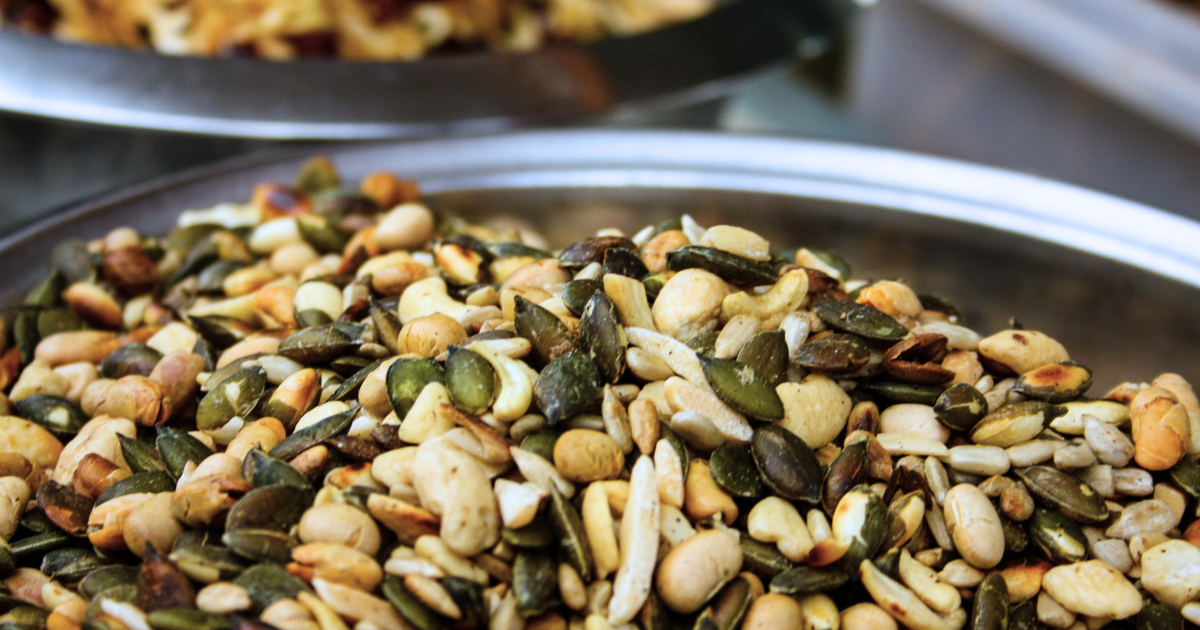
Röstprozesse bei Nüssen, Saaten und Gewürzen
11. September 2026Read more

18. September 2026
Broth should be clear, purée smooth and flour evenly distributed – consistency and uniformity play a crucial role here. It is therefore hardly surprising that sieving and straining are among the fundamental processes in the catering and food production sectors. Both processes are used to separate ingredients from one another – but with different objectives. When carried out correctly, both improve food texture, enhance process reliability and support quality control and the detection of foreign bodies. This blog article highlights what matters most in this context.
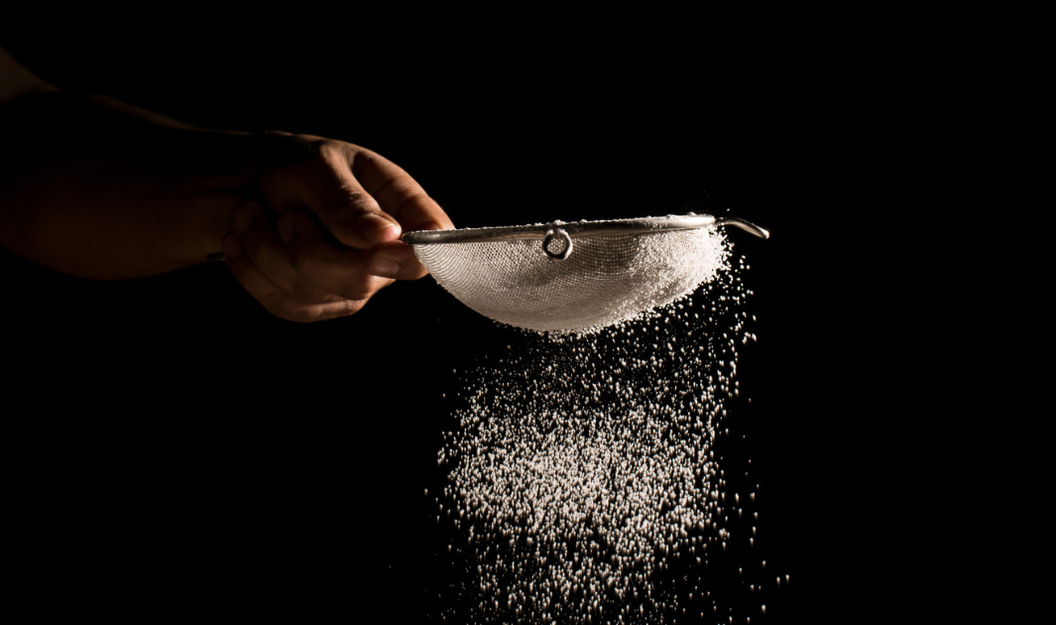
During sieving, a foodstuff is passed through a surface with defined openings – traditionally, the sieve from which the process takes its name. Whilst small components pass through the meshes or holes, larger particles are retained. This process can be used, for example, to remove lumps, drain off liquids, filter out solids, aerate flour or grade spice powders.
The mesh size is therefore of great importance, as a coarse-mesh sieve filters out less than a fine-mesh sieve. Whether sieving is carried out manually, by machine, in batches or continuously depends on the product and the production volume.
When soft or cooked food is pressed through a sieve, a straining cloth or a food mill, the process is known as straining. Often, this not only separates the components but also breaks them down and homogenises them. The result is a smooth mixture or liquid that is largely free of skins, stones and fibres.
This method is particularly popular for making purées, sauces, soups, fruit purées, jams, stocks and broths. A food mill usually consists of a perforated disc and a scraper or stirring mechanism. Straining through a suitable sieve is traditionally done using a scraper, spoon or spatula. A straining cloth is ideal for particularly fine results.
Depending on the application, the methods may produce similar results, but differ in the way they work:
Seven: separates, sorts, breaks up clumps or strains.
Pass through: separates, refines and chops soft ingredients.
Pureeing: shreds the entire product without separating out the skins, stones or fibres.
Filtering using a muslin cloth: retains particularly fine suspended solids and residues.
The various processing methods are also used in combination. If, for example, food is first puréed and then strained, this results in a particularly smooth texture – particularly in the case of purées – without any unpleasant, coarser particles.
Sieves are used in many food production processes. In bakeries and patisseries, Flour, icing sugar and other dry ingredients are sieved. Commercial kitchens, butchers’ shops and delicatessens also need them for straining, clarifying or removing coarse particles. Sieves and food mills are also used wherever vegetables and fruit are to be processed into purées, soups or similar products. This also applies to the production of sauces, stocks and broths. The range of applications is correspondingly diverse.
Screens also play a part in the quality control of certain foodstuffs. For example, screening can be used to remove packaging fragments, plant residues or other particles. Sieving is not a substitute for testing procedures, but it can make a significant contribution to quality assurance. However, tiny particles, deformable foreign bodies or small metallic components, for example, can only be detected through other testing methods.
At the same time, the outstanding amounts allow valuable conclusions to be drawn, for example regarding problems with goods receipt, at Packaging or on upstream machinery. As with all work equipment, it is advisable to carry out regular checks on screens for deformation, cracks, loose wires or material wear.
Round sieves, handle sieves, pointed sieves, hair sieves, strainers, sieve inserts, as well as flour and icing sugar sieves – the range of sieves is vast. In large-scale operations, vibrating sieves, inspection sieves and continuous-flow sieves are also frequently used. For straining, suitable options include straining devices with perforated discs, traditional straining sieves and straining cloths.
When choosing the right equipment, the following points in particular should be taken into account:
Type, temperature and viscosity of the foodstuff
desired fineness and consistency
Mesh size or aperture size of the sieve
Batch size and required throughput
Resistance to acids, salt, heat and cleaning agents
safe handling and ergonomic working practices
easy cleaning, dismantling and visual inspection
A food mill with interchangeable perforated discs can be flexibly adapted to different products and the desired degree of fineness. The fineness can then be adjusted depending on the product.
Regardless of the wide range of options available, reliable hygiene is also essential when it comes to sieving and straining. It is not just a matter of removing coarse residues and leftovers – thorough cleaning should be carried out after each use and, depending on the application, this should be followed by disinfection.
As with many repetitive processes, sieving and straining eventually become second nature. Errors in determining the appropriate method often arise from an unsuitable mesh size – if it is too fine, it reduces throughput and increases working time; if it is too coarse, unwanted components find their way into the product. The same can happen if the sieve is overloaded.
With certain products, excessive pressure can cause undesirable bitter compounds or tannins from seeds, skins or other residues to enter the strained mixture. An incorrectly fitted perforated disc can also fail to perform as intended. It therefore often takes a bit of finesse to get the straining and sieving results just right. Once the process has been optimised, it should be documented to ensure it remains reproducible.
Whether it’s coarse straining, fine sieving or clarifying with a straining cloth: having the right equipment plays a key role in ensuring safe processes and consistent product quality. The same applies to other equipment used within the food industry. It is therefore worth relying on partners who not only provide an extensive range of equipment, tools and consumables, but who, thanks to their many years of market experience, know what really matters – just like us.


More articles