Desinfektionsmatten als Teil des Hygienekonzepts
7. August 2026Read more

24. April 2026
Spices and herbs are an integral part of cooking and food production. They often give dishes their distinctive flavour, making them instantly recognisable and influencing their quality. At the same time, the use of spices raises certain questions that crop up time and again: How long do spices actually keep – and what does the best-before date actually mean in practice? Can spices and herbs really go off? How should they be stored to ensure they keep for a long time? This blog post explores various aspects of spice shelf life.
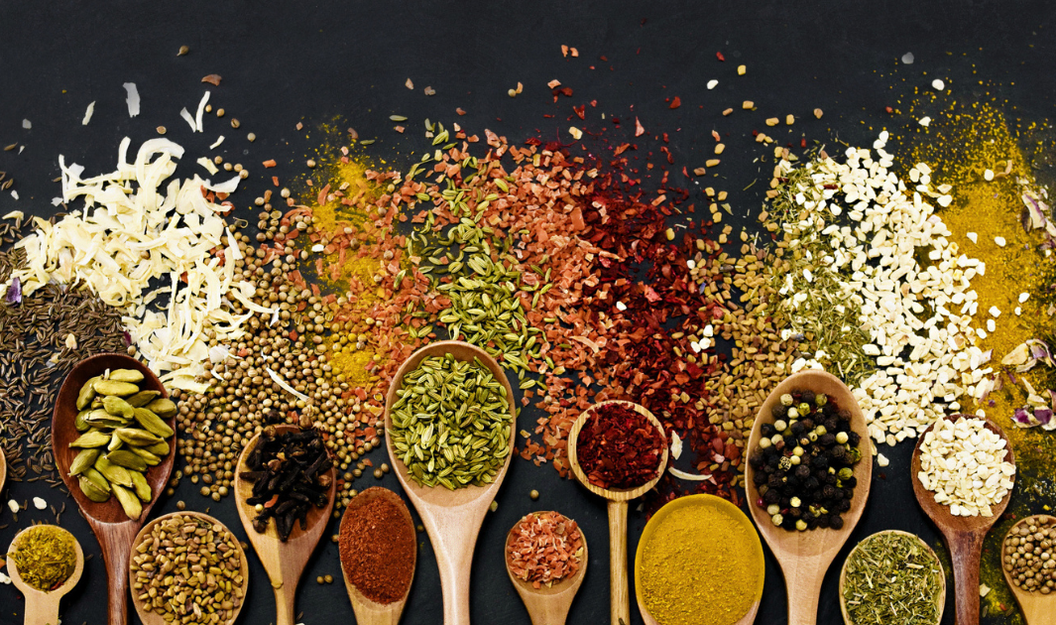
Spices rarely go off in the traditional sense – mould, for example, is actually the exception. The ‘best before’ date therefore tends to indicate how long the product in question will retain its typical characteristics, such as aroma, colour and flavour, when stored correctly. In a domestic setting, spices can often still be used beyond the best-before date. In food production, however, this is a sensitive issue due to legal considerations.
Once the best-before date has passed, spices usually lose their intensity. This is particularly true of crushed or ground spices, as their larger surface area accelerates the breakdown of essential oils. Ground pepper or paprika powder that has been open for a long time, for example, can lose a significant amount of its flavour.
Typical changes that occur after the best-before date has passed are:
Diminishing flavour
Colour loss
The volatilisation of essential oils
Consequently, a larger quantity of spice is required to achieve the desired flavour. However, higher dosages can have a negative impact on process and product safety in an industrial context.
Storing spices correctly is the key to maximising their shelf life. These basic rules apply to private households as well as to the catering industry and food producers:
Store in a cool, dry place away from direct light
Seal airtight
Avoid placing the appliance in close proximity to heat sources
Use up large containers as quickly as possible or transfer the contents to smaller containers
A suitable spice jar, for example, protects against moisture and oxygen – two of the main factors causing a loss of quality.
There are often advantages to using the flavour-giving ingredients whole: Ginger, Cardamom and cloves can sometimes be stored for years. The same applies to the following varieties:
Peppercorns often keep for 3–4 years
Whole nutmegs keep for several years
Cinnamon sticks also often retain their intense aroma for years
The powdered form, on the other hand, often results in a shorter shelf life – even though the spices are usually still edible. Ground varieties, such as ground pepper or paprika, generally lose a significant amount of their quality after just 1–2 years. The reason for this is their structure: whole spices such as peppercorns or cinnamon sticks protect the essential oils inside them. It is only when they are ground that these oils are released – and at the same time begin to evaporate more quickly.
You can assess the quality of spices even without checking the best-before date. The following criteria can help with this:
Smell: Does the spice still have a strong, characteristic aroma?
Colour: Has the original colour scheme been retained (e.g. a deep red in the case of Paprika powder)?
Flavour: Does the spice still have the desired level of flavour?
Consistency: Are there any lumps caused by moisture?
A musty smell or a noticeably diminished flavour are clear signs that the spice has passed its prime.
Spice mixes can pose a particular challenge when it comes to shelf life. As they consist of several components, it is usually the most perishable ingredient that determines the shelf life. The same principle applies here: a spice mix with a high proportion of ground spices loses its quality more quickly than a mix containing whole ingredients.
Similarly, the herbs or salt content of the product also affect its shelf life. It is therefore important for producers to calculate the use-by date carefully and to carry out regular sensory tests.
In an industrial context, the requirements are more stringent than in the domestic sphere. In addition to sensory aspects, hygiene, traceability and legal requirements also play a key role.
For example, the following points should be taken into account:
Adherence to the use-by date
Recording of batches and use-by dates
Regular quality controls
Use of suitable packaging and spice jars
Optimised Warehouse logistics to prevent interference
Structured spice management is crucial for ensuring consistent product quality, particularly when dealing with large production volumes.
Spices rarely go off in the traditional sense, but they do lose their intensity over time – particularly ground varieties. Are you looking for high-quality and varied spices for your food production? Then Ehlert is exactly the right place for you! As an experienced supply chain specialist, we not only stock a wide range of machinery, tools, workwear and more in our warehouse, but also an extensive selection of high-quality spices. Why not take advantage of our carefully curated spice blends, or have your own bespoke creations put together for you?
As well as our wide range of products, you’ll benefit from expert advice and practical know-how drawn from over 100 years in the food industry – from selection and storage right through to use in day-to-day production. Please get in touch!


More articles