Ratgeber zur Herstellung von Fischkonserven
9. December 2022Read more

11. September 2026
The delicious aroma of golden-brown nuts, the fragrant note of roasted spice seeds or the taste of crunchy sunflower seeds give us a hint: carefully applied heat can alter the character of a raw material and make it even better. Roasting processes influence the aroma, colour, texture, moisture content and, in some cases, the subsequent processing steps. We take a closer look at the roasting of nuts, seeds and spices.
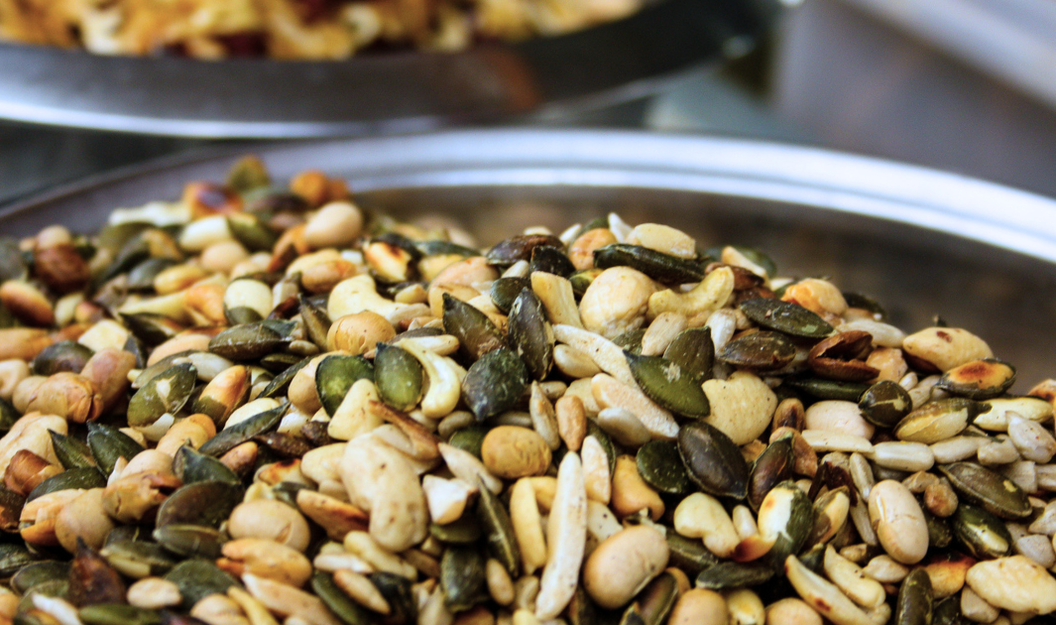
Roasting refers to the dry heat treatment of foodstuffs, usually of plant origin. Numerous processes take place during dry heating: for example, moisture evaporates, the colour darkens and new flavour compounds are formed. In many foodstuffs, a firm, crisp or crumbly texture also develops.
The Maillard reaction plays an important role in the heating of food. Put simply, certain sugars and proteins react with one another. This results in characteristic browning and the formation of numerous flavour compounds. The extent of the Maillard reaction varies. The outcome depends, amongst other things, on the temperature, the duration of heat application and the composition of the raw ingredients in question.
Nuts, seeds and spices differ, amongst other things, in their fat content, size and texture, as well as in the composition of their flavour compounds. Consequently, they react differently to the heat applied.
When roasted, nuts change both in flavour and texture. On the one hand, they lose moisture and develop their characteristic roasted flavours. On the other hand, the heat can alter the cellular structure of the nuts, making it easier for the oil stored within them to be released.
The natural fats found in nuts deserve special attention. Polyunsaturated fatty acids, in particular, can oxidise when exposed to high heat. The sensitivity of different types of nuts varies: walnuts, for example, have been found to be comparatively susceptible to oxidation. Heat-sensitive nutrients may also diminish, depending on the type of nut, temperature and roasting time. For high-quality processing, therefore, the principle ‘the more heavily roasted, the better’ does not automatically apply. Rather, the degree of roasting should be specifically tailored to the raw material in question and the desired sensory outcome.
Foods such as sesame seeds, linseeds and sunflower seeds also contain a high proportion of natural oils, depending on the raw material. Furthermore, many seeds are small, which means they heat up more quickly. As a result, they should generally be roasted very carefully, as the line between the desired degree of roasting and over-roasting can be very fine. Sesame For example, when roasted, it develops a nutty flavour, which can, however, turn bitter if exposed to heat for too long.
Roasting spices, in particular, serves to intensify their flavors. Typical spices whose flavor is often further enhanced by roasting include, for example, Caraway, Coriander, fennel seeds or mustard seeds. Controlled heat application can bring out certain flavour notes more strongly, alter the flavour profile and produce additional roasted notes. However, if temperatures are too high or roasting times too long, volatile flavour compounds may be lost or bitter and burnt notes may develop.
Whole spices are often roasted. Ground spices are more sensitive to heat due to their increased surface area and fine texture and, if heated at all, should be done so with particular care.
Temperature and time are among the most important factors influencing the roasting process. A low temperature and a longer duration often produce different results to a short, intense roast. Moisture content also influences heat transfer, water evaporation and the reactions taking place during roasting. Furthermore, the size and shape of the product being roasted have an impact, which must be taken into account particularly when roasting different spices, nuts and seeds together.
Depending on the raw material, the desired roast intensity, the production volume and operational processes, different roasting methods may be used. What they all have in common is that the heat must be transferred as evenly as possible and the desired degree of roast must be achieved in a reproducible manner. Relevant roasting methods include, for example:
In this process, the raw materials are heated in a rotating drum, which causes them to be turned continuously. Depending on the plant, the heat can be transferred to the food in various ways.
In hot-air roasting, heated air is directed specifically towards the product. The air transfers the required heat to the raw materials and, with appropriate airflow, helps to ensure even roasting.
Conveyor belt roasting primarily refers to the way in which the product is fed through the roasting plant. Nuts, seeds or other suitable raw materials are spread as evenly as possible across a conveyor belt and transported continuously through the roaster.
For small quantities, product development or in the catering industry, simple pan roasting is often used because of its flexibility. This method allows the degree of roasting to be monitored particularly well and adjusted directly. For large production volumes, however, specialised roasting systems are used.
Quality assurance begins even before roasting. Nuts, seeds and spices should be checked for appearance, odour, moisture content, foreign matter and any possible deviations. During processing, temperature, time and product movement must be monitored. After roasting, sensory checks should be carried out, along with inspections of colour, consistency and the proportion of broken pieces.
Hygiene and allergen management also play a role. Certain nuts, peanuts, sesame seeds and even mustard are among the allergens subject to labelling requirements. Plant, containers, metal sheets, shovels and conveyor systems must therefore be included in the company’s cleaning and inspection plans. During product changes, cross-contamination must be avoided and the relevant production steps must be documented in a way that allows for traceability.
After roasting, the product should be cooled hygienically and as quickly as possible. If it remains warm for too long, the residual heat may cause the product to change unintentionally. If the product is packaged whilst still too warm, this may, under unfavourable conditions, encourage the formation of condensation.
Roasting processes give nuts, seeds and spices their own distinctive character and allow for the precise control of flavour, colour and texture. At the same time, different raw materials react differently to heat. Even slight variations in temperature, time, moisture or cooling can significantly alter the result.
By ensuring that raw material quality, roasting methods, process parameters, hygiene and storage are all properly coordinated, you can lay the foundations for consistently high-quality products. To ensure everything runs smoothly, we – as supply chain specialists – provide you with everything you need for high-quality food production. Whether Clothing, Cleaning requirements, Spices or the right equipment – with us, you’ll enjoy your food in a well-organised way.


More articles