Fermentieren
9. May 2025Read more

13. September 2024
However small and unassuming the first impression may be, olives have a far-reaching influence on our culinary diversity and food production in general. They also offer a vast array of health benefits. Whether enjoyed as a table olive for a satisfying snack between meals or processed into the versatile olive oil – this little treasure has become indispensable in both its pure and processed forms. Why? This blog post highlights various facts and benefits of the olive, as well as the processes involved in turning it into ‘liquid gold’ and its origins.
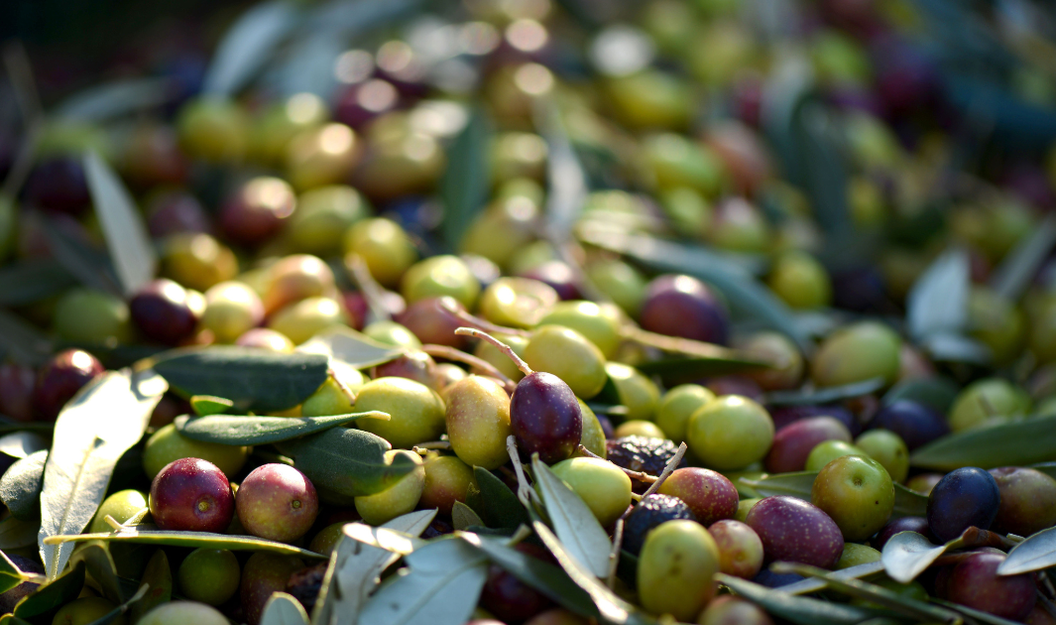
People often distinguish only between green and black olives, yet the number of olive varieties is far greater. The exact number of varieties can only be estimated, but it is likely to be in the lower four-digit range. Olives differ, for example, in terms of their shape, size, colour, flavour and primary use – such as table olives for eating and varieties used for oil production. Older varieties generally require fewer pesticides, fertilisers and artificial irrigation, as they are naturally more hardy. The olive trees can live for several hundred years. As a general rule, olives require a Mediterranean climate and cannot tolerate frost – so it is no wonder that Spain and Italy are among the largest olive-growing regions in Europe.
The Greek olive variety Kalamata is particularly well known for its firm skin, dark colour and savoury flavour. But the Manzanilla is also popular worldwide: available in green and black, this round fruit is a welcome addition to many dishes.
By the way: Did you know that the colour of an olive depends primarily on its stage of ripeness? Every olive starts out green before turning purple, brown or black. But not every black olive is ripe – green olives are often dyed to speed up the ripening process and reduce the risk of pest infestation.
Whether they are unripe and green, ripe and black, or in the form of pressed oil, olives and their flesh offer a whole host of health benefits. First and foremost, this is due to their high content of unsaturated fatty acids. These can lower cholesterol levels and help prevent cardiovascular diseases. Furthermore, iron, magnesium, sodium, phosphorus and folic acid, as well as vitamins A and E, are among the health-promoting components. Thanks to the antioxidants they contain, eating olives can also support cell health and have an anti-inflammatory effect. Black olives have a higher nutrient density, but are also higher in calories. However, the content of anti-inflammatory polyphenols decreases as the olives ripen, meaning that green olives are richer in these compounds than black olives.
But bear in mind: olives are usually eaten in processed form. And the marinades and liquids in which they are also Preservation pickles often contain a lot of salt – such as brine, for example.
The gnarled olive trees, with their small stone fruits, provide the basis for the popular oil, which has many uses. Olives are mainly harvested between the end of October and February. But how is the oil produced? A distinction is made, for example, between cold pressing and cold extraction. Both are complex processes that require expertise and care. Production usually relies entirely on mechanical methods, and the following procedure is followed for both extraction methods:
cleaning: The freshly harvested olives are first thoroughly cleaned to remove dust, twigs and other debris.
Grinding: This is quickly followed by the grinding of the olives – pulp and stone included. Otherwise, there is a risk of a loss of quality in the stone fruits. The grinding takes place in special oil mills.
Whether the process involves cold-pressing or cold-extraction determines how the resulting paste is processed. In the pressing process, the paste is spread onto round mats, which are then stacked. This is followed by the pressing stage, which produces a mixture of olive oil and fruit water.
Cold extraction involves using centrifuges to spin the oil out of the homogenised pulp – much like the spin cycle on a washing machine. Before bottling or filling into bottles or canisters, the mixture is centrifuged once more to separate the fruit juice from the oil and obtain the oil in its purest form. This process has now become the industry standard.
Both ‘cold’ extraction methods – the temperature should not exceed 27 degrees – generally produce extra virgin oil of a high quality. However, the yield from the stone fruits is not as high as, for example, with hot pressing.
As there has recently been an increase in extreme weather conditions, resulting in a poor olive harvest, this has led to higher prices for table olives and varieties with a higher oil content. Rising production costs are further exacerbating the situation. In the retail sector, this is leading to sharp price rises – in some cases, prices have more than doubled since 2020.
How many Fats and oils Olive oil is also widely used in the food industry. For example, in salads, antipasti or dressings. Olive oil bread is another delicious option. It is important to bear in mind that cold-pressed extra virgin olive oil should only be heated to temperatures of around 180 °C. Otherwise, its health benefits are lost. If the olive oil contains a refined component, temperatures of up to 210 °C are possible. You can also try out some rather more unusual recipes, such as olive oil cake.
Regardless of its intended use, storage is a crucial factor in maintaining quality. Like many other oils, olive oil is best stored in a cool, dark place. The packaging should be as airtight as possible.
Olives are healthy, delicious and an essential ingredient in many foods. There are plenty of good reasons to incorporate them into food production. Whether this is your plan or you’re already well into the process, Gustav Ehlert GmbH is here to support you with tailor-made equipment and comprehensive expertise. For example, we can supply you with suitable food-grade clothing or useful machinery and tools. Drawing on our wealth of experience, we provide you with the equipment that suits your plans.


More articles