Biofilm: eine Herausforderung für Lebensmittelbetriebe
8. August 2025Read more

24. February 2024
The curry variety, or perhaps the classic tomato ketchup? Everyone has their own preferences. Ultimately, most people like the red sauce – whether on chips or other treats. But ketchup isn’t just used in fast food, barbecues and pasta dishes. Find out more about this classic condiment – and whether ketchup always has to contain tomatoes – in this blog post.
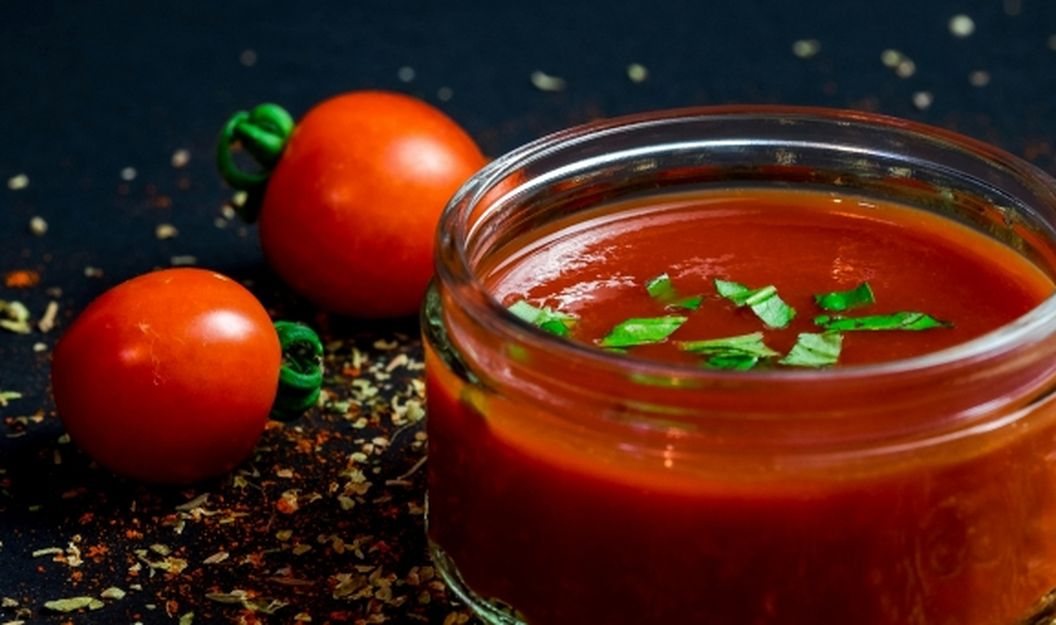
Relatively few ingredients are needed for the basic recipe of traditional tomato ketchup – for which, incidentally, both the articles ‘der’ and ‘das’ are acceptable. In addition to tomatoes or tomato purée, spices, salt, vinegar and sugar are used. Apart from organic products, industrial production often also involves the addition of flavourings, stabilisers, thickeners and flavour enhancers. This creates a blend of savoury, sour and sweet flavours that makes ketchup popular worldwide. The quality of the tomatoes used is also an important factor. The standardised procedure involves the following processes:
Homogenisation
Heating or vacuum-sealing
Filling
To create the wide variety of other ketchup flavours, the relevant spices are added – for example, coriander, cloves or allspice. This inevitably raises another question:
The classic par excellence is, without a doubt, tomato ketchup. Nevertheless, curry ketchups and other flavours are also hugely popular – for example, the spicy chilli variety – though they all contain tomatoes. As well as personal taste, local preferences also play a decisive role in some cases. As such, different types of ketchup lend themselves to various dishes and can creatively enrich different cuisines. But it has to be tomato-based, doesn’t it?
No. Whether in France or Asia: even though the origins of ketchup cannot be pinpointed with certainty, it is nevertheless clear that it initially had nothing to do with tomatoes and was instead based on ingredients such as fish or beans. During the Second World War, Maria Orosa from the Philippines even invented a banana ketchup. Faced with a shortage of tomatoes, she got creative and devised a spice paste that goes just as well with barbecued food and the like. There are also variations such as pumpkin ketchup or green ketchup made from spinach and peppers.
This thick, spicy sauce isn’t just delicious as an accompaniment to ready-made dishes. Nor is it confined to simple fare such as fast-food treats. On the contrary: even in many upmarket restaurants, ketchup plays its part in ensuring that sauces, marinades and dressings become a treat for the palate. It is, above all, the interplay of sweetness and acidity that comes into its own here. There are even recipes for ketchup cakes that play on these elements.
Tomato ketchup contains processed tomatoes, which are rich in lycopene. This protects against both heart disease and cancer, and also supports brain function. So far, so good! However, the assumption that ketchup is therefore healthy is still an oversimplification. Almost a third of conventional ketchup is often made up of sugar. Whilst this – together with the vinegar it contains – leads to a longer shelf life, it can contribute to obesity and other health problems. Especially as the proportion of salt is often quite high. For this reason, ketchup should probably be regarded for what it is: a luxury food. And as such, there is no reason not to enjoy it with chips or sausages.
As ketchup has been part of human life for quite some time, it has a history marked by the odd amusing story or development. In America, for example, so-called ‘ketchup pills’ were sold in pharmacies as a cure-all. It was only years later that their claimed effects were debunked.
Equally curious was the experiment carried out by the well-known ketchup manufacturer Heinz: the company grew tomatoes under conditions similar to those found on Mars and used them to make its popular ketchup – a special edition that was not available for sale. The successful cultivation of tomatoes of equivalent quality gives cause for optimism that we will also be able to The Future of Food you won’t have to go without ketchup.
Would you like to stock some excellent ketchup or use it in your food production business? Gustav Ehlert GmbH can help you with this. We have the three classic varieties available on the German market in stock for you:
Tomato ketchup
Curry ketchup
Spiced ketchup
As well as tubes, 10-kg buckets are also available. And for chip shops, we even stock the perfect refillable dispenser bottle – for an attractive presentation of this red flavour enhancer.
Are you the sort who likes to experiment? We’re also here to help you develop your own ketchup varieties, with spices, peeled tomatoes and vinegar. For your own unique creations to add to your culinary repertoire. From measuring jugs to spice mills, we’ll make sure you’re fully equipped.
As supply chain specialists in the food industry, we understand the added value of sourcing all equipment from a single supplier – simply and efficiently. If you’d like to expand your range when it comes to ketchup or, more generally, the world of condiments, please do get in touch. We’d be happy to help.


More articles