Fermentieren
9. May 2025Read more

22. May 2026
Whether you have a dog or a cat – anyone who owns pets wants them to be healthy and full of vitality. To achieve this, their diet must provide them with an optimal supply of nutrients. Many people pay a lot of money for high-quality pet food. Pet food manufacturers are subject to certain regulations which they must comply with. This blog post explores what these regulations are and what else needs to be taken into account when producing pet food.
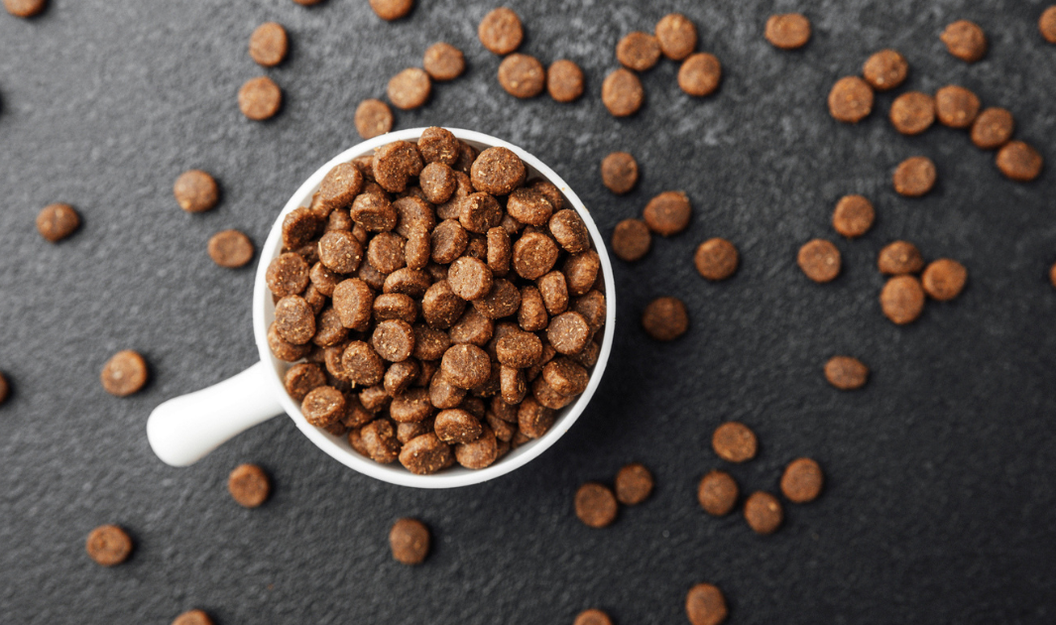
Feed is defined as any substance or product (including additives) which is processed, partially processed or unprocessed and intended for oral feeding to animals. The legal definition is derived from European feed legislation. Feed placed on the market is also subject to binding requirements regarding labelling, presentation and use. In particular, EC Regulation No 767/2009 should be noted in this regard. In addition, the German Food, Consumer Goods and Animal Feed Code (LFGB) is relevant in Germany, as it provides the national framework for the supervision of animal feed.
The information on the Packaging Labels on animal feed must provide various details. The information required depends, amongst other things, on the type of feed in question. For example, the labelling must specify whether the product is a feed material, a complete feed or a complementary feed. In some cases, this information may also be replaced by the term ‘compound feed’.
Further information which must appear on the packaging, depending on the feed, includes:
Name of the manufacturer, including address
a registration number, if applicable
Batch or lot reference number
Net mass or net volume
the species of animal or the intended use
Feeding instructions
Information on the composition
Information on analytical constituents
Overview of feed additives and other additives, insofar as these are subject to labelling requirements under current feed legislation
as a rule, a best-before date or another relevant date indicator
For pet food, a free contact option through which further information can be obtained on request.
Information on additives may also be required. Labelling is governed by the applicable feed legislation and is not the same in every case. The same applies to moisture content: this information is not generally required. As a general rule, the specific mandatory information that must be included on the packaging also depends on the feed in question.
In practice, complete feed in particular often contains additives. These are added to the feed for various reasons. Depending on their function, they can help to support nutritional requirements, improve shelf life, facilitate processing, or influence the smell, taste and appearance of the feed.
The addition of vitamins, trace elements, amino acids or other authorised additives can help ensure that a feed reliably meets an animal’s nutritional requirements. In the case of dry feed in particular, nutrient losses can occur during processing, for example through heating or extrusion. For this reason, certain substances are sometimes specifically supplemented or added at a later stage. Flavors may also be used to improve the palatability of the feed. It is particularly important, in the case of complete feeds, that animals’ nutritional needs are met.
Despite their important role, careful dosage is essential when it comes to supplements. This is because even substances that are generally beneficial can cause problems if taken in excessive amounts. This applies, for example, to vitamin D, as an excess of it can have serious health consequences for dogs. The decisive factor in the assessment is therefore not simply the use of an additive, but its legal authorisation, its function and the correct dosage.
Whether in a pet shop or online pet food ranges, the variety of food on offer is vast and goes far beyond the distinction between wet and dry food. Many recipes for dogs and cats are meat-based – which makes sense, particularly for cats, as their diet relies on animal-based ingredients. Dogs have a much more flexible diet, but animal-based ingredients also play a major role in their food. In addition, depending on the recipe, plant-based components such as grains, vegetables or other carbohydrates are included. Cereals are not inherently problematic: when properly processed, they are generally easy to digest and serve a nutritional purpose. The decisive factor, therefore, is not simply whether cereals are included, but whether the food as a whole has been formulated to meet the animal’s needs and is well tolerated by the animal.
Pet food labels often feature general descriptions such as ‘meat and animal by-products’. Such terms do not automatically mean that inferior raw materials are used. However, they do make it possible, in the sense of a Whole-animal marketing to use a wide variety of animal-based ingredients.
The term refers to animal-derived ingredients that are not marketed as food for human consumption but which, under certain conditions, may be used in the manufacture of pet food. Animal by-products are divided into three categories – for pet food, Category 3 material is particularly relevant. This may include, amongst other things, certain offal, blood, fat and other animal-derived ingredients, provided they meet the legal requirements.
Offal such as liver, kidneys or tripe can be nutritionally beneficial for dogs and cats, whilst also helping to make better use of the slaughtered animal. Pet owners are paying increasing attention to the ingredients contained in pet food. Transparent information about exactly which ingredients are included and which animal they come from often helps to build trust in the products. It also makes it easier to choose the right food in cases of intolerances or special dietary requirements.
Quality is also crucial when it comes to animal-based raw materials. Careful selection, traceable origins and gentle processing all help to produce high-quality animal feed that livestock farmers can buy with a clear conscience.
Whether a pet food is of high quality cannot, as a rule, be determined by specific buzzwords. The key factors are whether the formulations meet the specific needs of the animals in question, are legally compliant, and – ideally – whether the ingredients are clearly listed. In the case of compound feed, the individual feed materials used are generally listed in descending order of their proportion. If a particular animal species or ingredient is specifically highlighted on the packaging, it is therefore worth taking a closer look at the list of ingredients – particularly for animals with intolerances or allergies – as, for example, other types of meat may be included alongside a specific one.
Regardless of the specific formulation, the following applies: animal feed must not contain any substances that pose a risk to animal or human health. There are clear EU-wide guidelines on so-called undesirable substances, such as certain heavy metals, pesticides or botanical contaminants. Manufacturers must ensure that their animal feed meets these requirements and is only placed on the market if it is safe when used as intended. EU Directive 2002/32/EC sets out requirements regarding undesirable substances, which must be taken into account and implemented by animal feed producers.
Nowadays, alongside traditional meat-based recipes, alternative protein sources also play a role – such as insect protein or plant-based ingredients derived from pulses. Whilst these may be appropriate depending on the product concept, they should be suitable for the animal. It is particularly important here to distinguish between dogs and cats: whilst cats rely on certain nutrients from animal sources, dogs are significantly more flexible in their diet. Alternative raw materials do not therefore automatically appear to be better or worse – but they can be appropriate if the overall recipe is balanced and tailored to the animal’s needs.
It is not only the composition but also the manufacturing process that determines the quality of pet food. A key factor is the Feed Hygiene Regulation (EC) No 183/2005 It requires feed businesses, amongst other things, to register or obtain authorisation, to comply with uniform hygiene requirements and to apply HACCP principles. This ensures that safe processes and product safety are the focus throughout the entire production process, from the receipt of raw materials through to processing, storage and packaging.
There are a number of steps involved before pets can tuck into their full bowls. Our range includes items such as workwear for abattoirs, as well as various types of disposable clothing and cold protection.
No employee at the production site should be exposed to increased risk due to a lack of or inappropriate clothing. With the right selection of knives and high-performance equipment, the processing and mixing of meat and other ingredients can be carried out efficiently. And thanks to targeted cleaning, animal feed remains free from germs and contaminants.
Gustav Ehlert GmbH & Co. KG also provides the necessary equipment to support the production of tasty and healthy food for dogs and cats. You can rely on us as a supply chain specialist with over 100 years’ experience.


More articles