Fermentieren
9. May 2025Read more

30. June 2023
In times marked by concerns about future food security and the challenges posed by climate change, one issue keeps coming to the fore: reducing food waste. Food has often undergone a resource-intensive journey, from cultivation through processing and distribution right to the end consumer. It is therefore no surprise that there is a growing call for a mindful and well-considered approach to preventing food waste.

Worldwide, around 1.3 billion tonnes of edible food ends up in the bin every year. In Germany alone, around 12 million tonnes are thrown away. Whilst a large proportion of this waste is generated by private households, the rest arises across the various sectors of the food industry – for example, in agricultural cultivation, production and storage, or in distribution to the catering sector. Some of this food loss is preventable – and, given the high consumption of resources throughout the entire value chain, taking such action is highly desirable.
Preventing food waste therefore serves a number of purposes. These include, amongst others:
the reduction of unnecessary energy consumption
the reduction of greenhouse gas emissions
respect for the limited availability of our planet’s resources
strengthening the sector in the face of future challenges
Not all food waste is unavoidable. ‘Avoidable food waste’ refers to food that is removed from the value chain despite being perfectly edible. The causes of this are varied and range from miscalculations during cultivation to errors in production or a lack of consumer awareness.
Whilst individual action can lead to a reduction in the majority of waste, the food industry also plays a key role. Within the food sector, there are a wide range of approaches and practices that help to reduce avoidable food waste.
Many agricultural produce items are left in the fields because they do not meet aesthetic standards. However, these standards are set by consumers and the industry itself. By specifically marketing food that deviates from the usual aesthetic standards in terms of shape, colour or size, the sector can make a significant contribution to ensuring that more of this valuable produce actually ends up in food shops and on people’s plates.
Functional and well-organised supply chains are essential for the effective reduction of food waste. Appropriate measures and effective structures can reduce food loss at several levels simultaneously:
Avoiding overproduction
If more food is produced or purchased than is actually needed, this results in unnecessary waste. Overproduction can arise due to inaccurate forecasts of demand, poor planning or inadequate coordination within the supply chain. With technologies for improved demand forecasting and advanced stock management systems, shortages or surpluses can be identified more reliably. This enables manufacturers to better adjust production volumes and avoid surpluses that would otherwise have to be discarded.
Proper handling and storage
Efficient supply chains rely on processes that minimise spoilage during transport or storage. These include proper handling, suitable packaging and the maintenance of appropriate temperatures, cold chains or humidity levels. At the same time, the use of modern technologies to monitor and control storage conditions optimises these processes.
Sustainable logistics
Waste can also be avoided by reducing the necessary transport of food as effectively as possible. This involves planning the shortest possible delivery routes, avoiding empty runs and aiming to minimise delays in the delivery process.
Transparency
Transparency and traceability within the supply chain ensure that waste or quality issues, for example, can be identified at an early stage and addressed accordingly. The targeted identification of faults helps to minimise the resulting food losses. Transparent supply chains can also help to pass on information to consumers about the shelf life and storage of food.
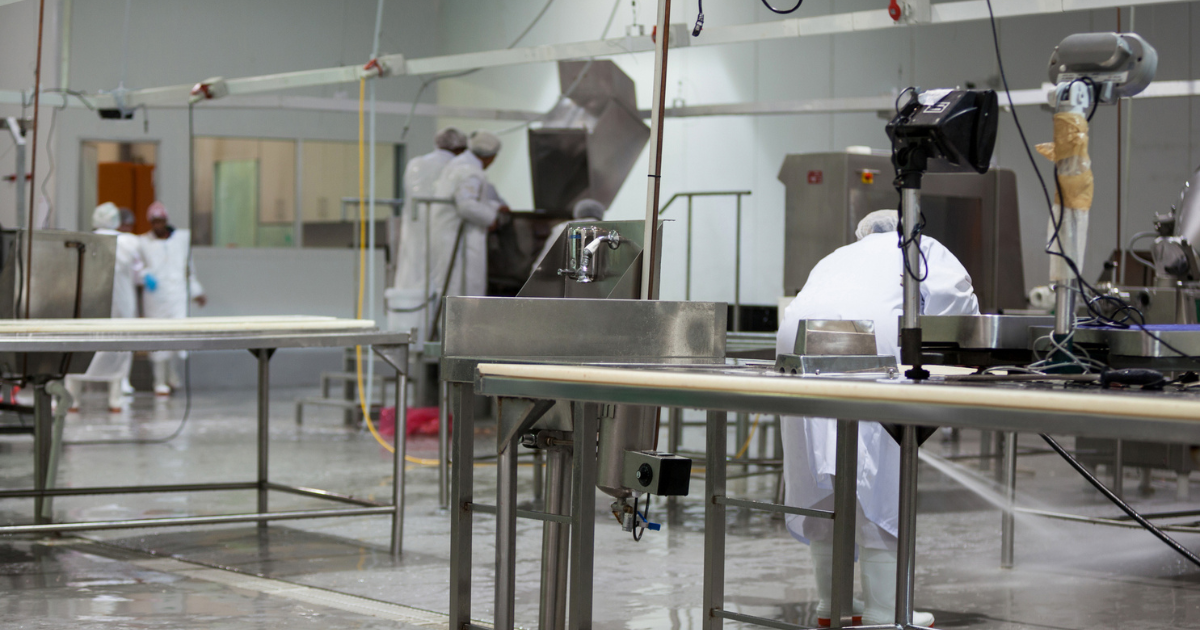
The need to dispose of food during the production process can be avoided through professional and high-quality manufacturing. What does this require? Reliable equipment and expertise. Efficient production processes and the monitoring of consistent quality standards support flawless operations, which help to reduce food waste. This also includes knowledge of hygiene standards, which, for example, Cross-contamination can be avoided in the production process.
A production process optimised to reduce waste also involves the further utilisation of by-products and residues from food processing. Possible uses include, for example, the production of animal feed, energy generation via biogas plants, or simply the manufacture of other food products. Profitable collaboration within the sector simultaneously improves its resource efficiency and helps to minimise waste.
A focus on smaller product sizes can also help to reduce unnecessary waste. On the one hand, large portion packs lead to consumers preparing more food than they actually need. The leftovers are then often thrown away. On the other hand, leftovers in large packs tend to go off before they can be eaten. Smaller portion sizes encourage consumers to take only what they will actually eat. The industry can therefore also help to reduce the likelihood of food waste in private households.
Another important role of the food industry is to educate consumers about the various aspects of food and raise their awareness. This can be achieved, for example, by providing additional information on shelf life, correct storage or best-before dates. Consumer campaigns highlighting the negative effects of food waste and offering tips for household use can also help to achieve the goal of reducing food waste.
What does Ehlert GmbH do particularly well? Supply management. As supply chain specialists, we not only have a wide range of products in stock, but we can also help you successfully prevent food wastage. In addition to our high-quality product range, our team’s expert knowledge is at your disposal to help you achieve this.
By sourcing your supplies of consumables and daily necessities through a specialist wholesaler, you are relying on experienced supply chain management. In the interests of efficient logistics, greater transparency and a well-connected transport and warehousing network, partnering with a company such as Gustav Ehlert GmbH is an important step in the right direction: preventing food waste and optimising your production processes.


More articles