Koriander
7. February 2025Read more

27. March 2026
Sustainability and resource efficiency are becoming increasingly important for a variety of reasons. In the food industry, producers are seeking cost-effective and environmentally friendly production processes, the development of innovative product ideas, and effective sustainability management – not least because these issues appear to have been growing in importance for consumers for years. One topic that is therefore coming to the fore more and more is food upcycling in the food industry.

The term refers to the high-quality reuse of by-products that arise during food production. These are no longer required for the actual production process, but still contain valuable nutrients. By ‘by-products’, therefore, we do not mean unusable waste, but rather components that remain of interest from a nutritional, technological or sensory perspective.
When defining food upcycling, it is therefore important to distinguish it from ordinary food waste or recycling. Upcycling by-products generally involves more than simply reusing them. It involves a targeted enhancement so that the by-product takes on a new, high-value function within food production. The aim of food upcycling is to transform little-used or unused components into a functional ingredient or even the basis for new products. Food upcycling aims to make more efficient use of these materials for human consumption, whilst some by-products are currently used as animal feed or for energy recovery in biogas plants.
As part of the Circular economy In this context, the term ‘cascade use’ is also employed – the step-by-step, multiple utilisation of a raw material along the value chain. Under this approach, food upcycling can be classified as a particularly high-value form of utilisation, as by-products are retained within the human food system for as long as possible.
In many areas of food production, by-products are generated that can potentially be processed further. One commonly used ingredient, for example, is brewers’ grains – a fibrous material produced in breweries during the processing of malt. Beer draff is often reused as animal feed due to its valuable nutrients. However, it is now also increasingly being used in human food – for example, in pasta, snacks or plant-based Meat alternatives to produce.
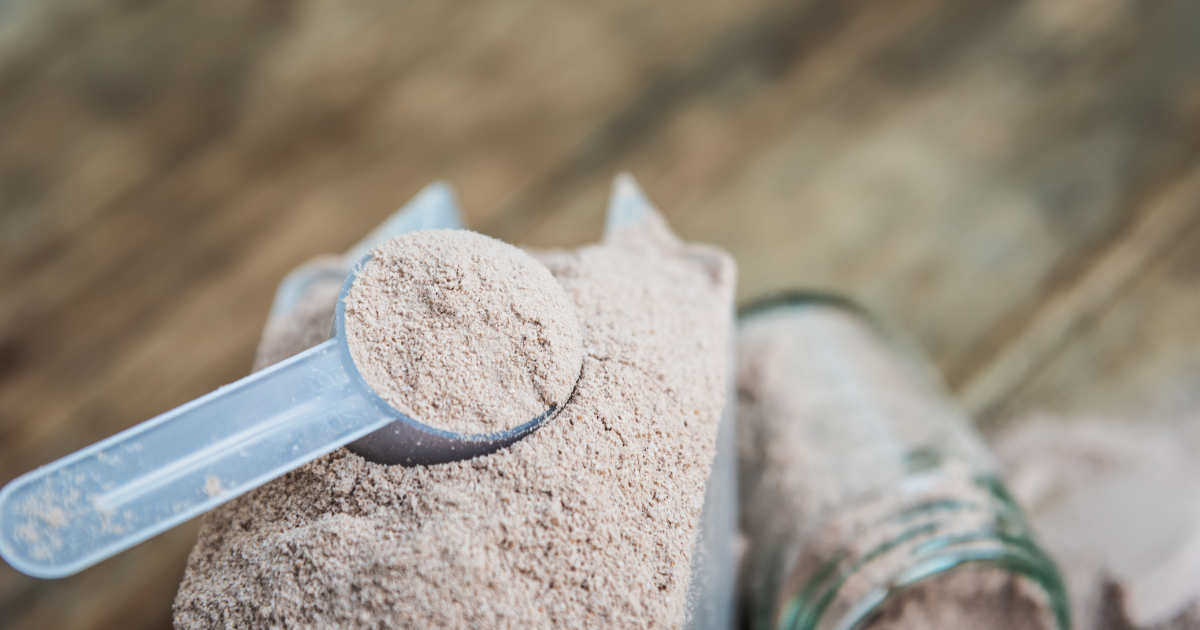
The production of soya products also yields a by-product, some of which is successfully reintroduced into food production. Okara, a protein-rich by-product of tofu and soya milk production, is used as an ingredient in plant-based alternatives. In addition to oilseed cake from edible oil extraction or pomace from juice and fruit processing, attention is also being paid, for example, to the sustainable utilisation of the cocoa fruit. Instead of using only the bean, the juice from the pulp or the shell, ground into powder, can also be utilised.
Although the topic of food upcycling needs to be considered from a variety of angles, a number of benefits can be identified at first glance:
New sources of revenue: By-products that were previously disposed of or given away free of charge open up new sources of revenue when they are upcycled into innovative products.
Reducing existing costs: If food leftovers are put to profitable use rather than being thrown away, this ideally means not only additional revenue but also a reduction in disposal costs.
Improved sustainability performance: Making the best possible use of available raw materials not only reduces the amount of food waste, but can also help to cut greenhouse gas emissions as a result.
Positive competitive positioning: When communicated effectively, upcycled products meet the growing demand for sustainable food and support a positive market positioning.
Innovations in product development: Functional ingredients such as plant-based proteins and dietary fibre can be utilised to drive innovation in the development of new product categories.
Tapping into the plant-based market: Many upcycled raw materials are of plant origin and are therefore ideally suited to enriching the growing market for vegetarian and vegan products.
However much potential the concept of upcycling may offer, it must be considered from a number of different perspectives. Not every by-product is automatically suitable for high-quality further processing. Many factors need to be taken into account if a by-product is to be transformed into a marketable food product or a functional ingredient.
The use of by-products is generally not possible without some effort – neither in organisational nor financial terms. Challenges arise, for example, in relation to shelf life and food safety. Many by-products are produced in a wet state and have a short shelf life. They must be processed promptly or preserved appropriately in order to remain usable.
This situation requires either close coordination between production sites in terms of time and location, or effective methods for preserving the residual materials in a way that allows them to be processed further.
This aspect ties in with another important area: the question of cost-effectiveness. Processing residual materials can be more labour-intensive than using standardised raw materials. Furthermore, the quantities of material available for processing are often smaller and the processes less automated. Depending on the procurement, processing and logistics structures, the costs may be higher than for established standard raw materials. Another important aspect is the scale of potential use: what works on a small scale cannot automatically be scaled up to viable industrial processes. For industrial production, it is therefore also crucial whether quality, availability, processing and costs can be balanced in a sustainable way.
Sensory and technological properties are equally important. Taste, smell, colour and texture all influence whether and how an ingredient can be processed. Some by-products contain valuable nutrients, but present challenges in terms of consistency or taste.
Despite the positive momentum and the trend towards sustainable eating habits, the concept of upcycling still lacks awareness and acceptance in many areas. The scepticism felt by many towards consuming products made from ‘food scraps’ highlights the fact that both transparent and comprehensive information, as well as targeted education, appear to be necessary – even though many consumers want products that address both food waste and the sustainable use of resources.
Last but not least, there may be regulatory frameworks to navigate. If by-products are to be processed into innovative food products, they must comply with food safety regulations and, in some cases, undergo authorisation procedures. This applies, for example, when a raw material or a product processed from it is classified as Novel Food is classified as such. Such processes can be time-consuming and costly – which can be a particular obstacle for start-ups.
The upcycling of by-products is an important approach to using resources sensibly, efficiently and responsibly. It combines sustainability with potential for innovation and demonstrates that many by-product streams contain valuable resources that can be usefully reprocessed. In order to turn this potential into economically viable concepts, further sophisticated technological processes, reliable quality standards and a corresponding understanding on the part of both manufacturers and consumers will be needed in future.
Food upcycling is not only a meaningful topic for the future, but also a concrete approach with potential for development – and it is precisely here that its relevance to the modern food industry becomes apparent. When it comes to supplying the necessary materials and consumables for food production, we are here to support you reliably as a specialist wholesaler and experienced supply chain specialist.


More articles