Biofilm: eine Herausforderung für Lebensmittelbetriebe
8. August 2025Read more

11. October 2024
Whether it’s pizza, cake or bread – none of these baked goods can be made without flour. Or can they? Is cornflour a suitable alternative? What exactly is cornflour made of? In this article, we explain the differences between the two products and offer an insight into the world of Gustav Ehlert GmbH & Co. KG.
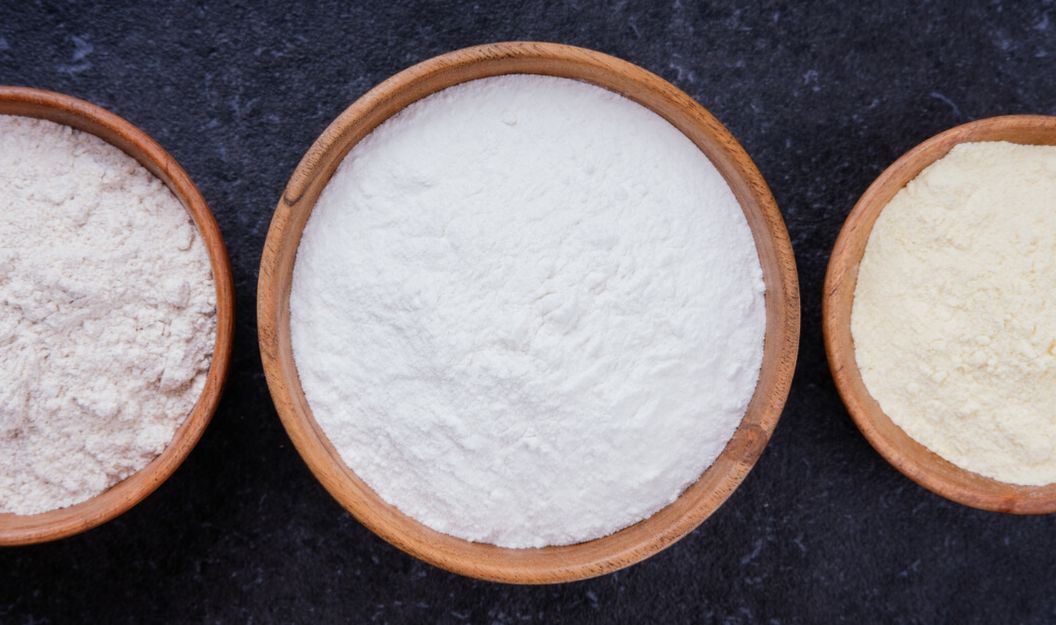
By definition, anything that is ground is considered to be flour. This includes, for example, cereals, Pulses, plants, fish, horn, bone, stone or wood. Primarily, however, the term is used for products made from cereals. A distinction is made between different types of cereal, degrees of fineness and classifications. The term ‘flour’ originates from Old High German "melo" and means: ground powder or something that has been ground.
This foodstuff serves as a base for various types of dough and baked goods, such as pasta, bread rolls and cakes. It is also used in cooking to thicken sauces. The most common use is Wheat flour It’s widely used because it’s a real all-rounder in the kitchen. But not every type of flour is equally suitable for every purpose. White flours, such as wheat and spelt flours with a low ‘type’ number, are particularly well-suited to sweet baked goods. Pizza also turns out superbly with these types of flour. The higher the grade, the more robust the flavour. Wholemeal flours produce particularly nutty flavors. Rye flour, for example, is very well suited to baking bread and savoury baked goods.
In terms of nutritional value and mineral content, flour contains a high proportion of carbohydrates, dietary fibre and minerals, as well as a low proportion of fat. The nutritional composition varies depending on the type of flour, with some components being present in greater or lesser quantities. Many of the carbohydrates consist of starch. Gluten is not present in every type of flour either. For example, buckwheat, rice, potato, millet and lupin flour gluten-free.
The mineral content of the flour – and ultimately its grade – depends on how the grain was milled. Most of the vitamins, minerals and dietary fibre are found in the outer husk. The more of the husk that is retained, the higher the grade number and the more vitamins, minerals and dietary fibre the flour contains. The rest consists of starch, protein and fats. Wheat flour type 405, a very common variety of white flour, is considered the least nutritious flour because almost all the components of the husk have been removed. It contains just 0.5 per cent minerals.
Wheat flour is made from ground wheat grains. It is one of the cereal types suitable for home baking, and is categorised as either durum wheat or common wheat. Durum wheat is used in the production of pasta, whilst soft wheat flour is used for bread and other baked goods. Wheat flour has a high starch and gluten content, which helps the dough to bind together perfectly. This makes it particularly well-suited to baking. It is also frequently mixed with other types of flour that are not as easy to bake with. Wheat flour is categorised into different types – ranging from 405 to 1700.
Nowadays, more and more people are focusing on a healthy lifestyle. Alongside sport and other activities that help maintain a healthy balance, a conscious approach to diet is a key priority. People who also suffer from gluten intolerance often struggle to find good alternative products. More and more bakers and restaurateurs are now rising to this challenge. There is now a wide range of alternatives available to replace ordinary flour.
The following flour substitutes are suitable for use in sweet and savoury dishes:
As oat flour has a similar texture to wheat flour and a relatively neutral flavour, it is a good alternative in many situations. It is regarded as a superfood and a source of protein because it is rich in nutrients such as iron, magnesium, calcium, selenium and zinc. It also has a particularly beneficial effect on gut flora. Thanks to its long-chain carbohydrates, oats help regulate blood sugar and cholesterol levels and have a satiating effect.
Oat flour is ideal for baking. It has a fairly thick consistency, which is balanced out by adding plenty of liquid or eggs. It also blends well with other flours, which is important for achieving the necessary binding properties. Although oats are low in gluten, they are not gluten-free. – To be on the safe side, if you have a gluten intolerance, it is best to use flour that is explicitly labelled as gluten-free. Oat flour can be used to make bread and other baked goods, and it is also ideal for binding sauces.
In terms of cultivation, oats offer a clear advantage because they are resistant to adverse weather conditions, pathogens and pest infestation. Oats are also grown in Germany, which makes them, in terms of The regional origin of food makes it relevant.
Although chickpea flour has a slightly grainy texture, it is nevertheless ideal for baking and cooking. It works well in both cold and hot dishes, and helps to produce delicious results – whether for sweet or savoury treats. Furthermore, this protein-rich chickpea flour is lactose- and gluten-free and rich in minerals. Thanks to its low-calorie and fat-free properties, it is therefore popular not only amongst those following a vegan diet.
The flour is used for various Baked goods such as It is used in pasta, pizza, bread or cakes. Savoury spreads, dips or purées made with this flour are also particularly popular. If you’re avoiding meat products, meatballs and patties made from chickpea flour are a good option, for example. However, even for meat-based dishes, the flour can be used to replace softened bread or breadcrumbs.
Thanks to their long-chain carbohydrates, lentils are real energy boosters and keep you feeling full for a long time. This helps keep blood sugar levels balanced and prevents cravings. They also have the highest protein content (26g/100g) – even higher than animal protein – and are rich in minerals and fibre. Athletes, vegetarians and vegans in particular therefore turn to this alternative.
This gluten-free flour is incredibly versatile and is suitable for both sweet and savoury dishes. Much like chickpea flour, it can be used to make pasta, bread, pizza, wraps, patties, spreads, purées and to thicken soups. To use it in baking, part of the required amount of flour can be replaced with lentil flour.
Of course, there are plenty of other alternatives to flour, for example as follows:
Tempura flour
Cassava flour
Quinoa flour
Amaranth flour
Potato flour
Chestnut flour
Buckwheat flour
Rice flour
Soyaflour
Almond flour
Wholemeal flour
Millet flour
and much more.
A grain of cereal, or more specifically the endosperm it contains, consists largely of starch (80–90 per cent). The starch granules it contains are enveloped by a protein coating, known as gluten. When combined with warm water, the protein coatings burst and the starch and water combine – The starch swells. This process is known as gelatinisation. In the process, it absorbs two to three times its own weight in water, forming a jelly-like mass.
The starch in the flour is an essential component for bread dough to rise at all. This process occurs in conjunction with enzymes. It is only when the starch is broken down into simple sugars that yeast and lactic acid bacteria can produce fermentation gas, which causes the dough to rise.
Gluten is also known as gluten protein: GGluten is a mixture of various proteins found in the seeds of certain cereals, which acts as a binding agent. These include wheat, rye, barley, as well as green spelt (immature spelt) and related cereals such as emmer, einkorn and kamut. Gluten binds the water in the dough and holds it together – and provides elasticity. The binding properties of the proteins it contains vary considerably. For example, the protein composition in wheat flour binds better than that in spelt flour. Together with the gelatinised starch, the gluten also forms the crumb of the bread.
Starch is a complex sugar (polysaccharide), which forms a complex carbohydrate and is composed of many glucose molecules. It serves as the most important storage and reserve substance in plant cells. In the form of starch granules (cells), starch acts as a store of carbohydrates in plants. It is produced during photosynthesis.
Food starch is a collective term for wheat starch, maize starch, potato starch, etc., and is mainly used as a binding and thickening agent for sauces, soups, creams and puddings. Starch is insoluble in cold water – In warm water, however, it swells from around 50 °C.
For this reason, starch is used to thicken food. It This is also why pasta becomes soft and sticky when cooked in boiling water.
Apart from wheat starch, starch is usually gluten-free unless otherwise stated. If you have any allergies, you should therefore check the packaging before use to see whether there are any warnings such as "May contain traces of lactose and gluten" can be found. In addition, there is chemically modified starch: this is identified by the codes E1400 to E1451. This involves a chemical modification using food additives to make the starch more stable or more prone to swelling.
Furthermore, starch granules are used in industry for the production of environmentally friendly plastics, fillers, adhesives and biodegradable detergents. It is also used in medicine in ointments, tablets and suppositories.
Potato starch and cornflour differ in their binding capacity. This means that the molecular structure of the starch from different tuberous and cereal plants varies, and the starch granules therefore bind to different degrees.
As the name suggests, maize starch is made from maize. The starch it contains is stored in the cells as a reserve of excess energy. It can be used for baking cakes and pastries, as well as Use it in cooking as a thickening agent for soups and sauces. In the preparation of desserts, it acts as a thickener for puddings, creams and fruit compotes. Cornflour is gluten-free, lactose-free, vegan and flavourless. It is also used in the production and further processing of maltodextrin, glucose and fructose syrups.
Potato starch is extracted from the starch found in potatoes. Potatoes with a high starch content are used in its production. It is also used to thicken sauces and soups. It is also found in baked goods such as cakes, rolls, bread and biscuits. It has particularly good thickening properties, as it begins to gel even at low temperatures. Potato starch is gluten-free, vegan, and has no taste or smell.
The starch is derived from the roots of the cassava plant. Unlike maize starch, for example, tapioca is not powdery but flaky or consists of small granules. Tapioca starch is flavourless, gluten-free, purely plant-based and therefore well suited to vegan cooking. It also has a high nutritional value, is easily digestible and has a very low fat content. However, with its high calorie and carbohydrate content, it is not entirely without its drawbacks. In this country, tapioca is known in the form of the pearls found in bubble tea, as Tapioca pudding or is used as a substitute for caviar. It is usually used to thicken sauces, soups, puddings, fruit compotes, etc.
Low in carbohydrates, high in fibre, gluten-free and with an enormous swelling capacity – that describes The key properties of potato fibre. These consist of potatoes from which a large proportion of water and starch has been removed. The result is a finely ground flour. However, it should not be confused with potato flour or potato starch. The flavour of the potato is retained, making potato fibre suitable for savoury baked goods or for thickening soups and sauces. If necessary, an additional binding agent should be added to the starch granules, as the fibre flour does not contain any gluten to provide the necessary stability.
Guar gum is a gluten-free thickening agent extracted from the seeds of the guar bean. Thanks to its natural binding properties, the plant is used primarily in the food and cosmetics industries. This natural thickening agent is also found as a filler or gelling agent in jams, soups, desserts, sauces and ice cream. This is due to its high content of the carbohydrate guarana, which can absorb large quantities of liquid. It is considered healthy and safe. However, consuming too much can lead to diarrhoea. When it comes to gluten-free baked goods, the flour is an excellent substitute for the missing gluten. Even small amounts are enough to achieve the same effect.
As a general rule, all the types of flour and alternatives mentioned contain starch, as this is how plants store carbohydrates. Some varieties, such as, for example, Lupins- However, soya flour contains very little starch.
The fundamental difference between ordinary cereal flour and cornflour, also known as potato starch, is the gluten contained in flour. This protein ensures to ensure the optimal baking properties that a dough requires. Anyone wishing to use gluten-free alternatives whilst still achieving the same baking results will need, in addition to gluten-free flour, some starch and an additional thickening agent. Recommended binding agents include guar gum, psyllium husks, locust bean gum, chia seeds, arrowroot starch or xanthan gum.
It also depends on what you are making. Cornflour is suitable for sweet dishes such as puddings or custards. When baking, plain flour is generally used, but it can also be replaced entirely or partly with cornflour. Cornflour gives baked goods a lighter and finer texture.
There is no one-size-fits-all answer to this question – ultimately, it is a personal decision that depends on various factors. When it comes to intolerances and allergies, starch is the product of choice. However, when it comes to baking bread or making other dough-based and baked goods, flour is clearly the better option. To bake a typical loaf of bread, you need flour, because it contains gluten. Strictly speaking, all flour contains starch anyway, and in particular When baking bread, it all comes down to the combination of starch and flour.
In purely nutritional terms, both are sources of carbohydrates. Flour provides – depending on how it has been ground – additional dietary fibre and minerals such as iron, zinc, magnesium, calcium, phosphorus and manganese. Like all carbohydrates, starch is a source of energy and sugar, and is one of the "good" Carbohydrates (complex sugars). The reason: they are broken down more slowly by the body and do not cause blood sugar levels to spike and then drop sharply, as is the case with simple sugars. Nevertheless, starch is completely devoid of vitamins and trace elements and should not be consumed in excess.
Whether you need starch, flour or both for your business – Gustav Ehlert GmbH has what you need. You can rely on high quality – including the many other products in our range. We stock raw materials for making speciality flours, as well as various types of flour and starch. These are also available in handy bulk packs. You’ll also find everything you need from us when it comes to cleaning products, food-grade clothing and more. Our guiding principle: We prioritise efficiency, quality and many years of experience. After all, we can look back on over 100 years of history as an owner-managed family business. Since 1924, we have been offering supplies and consumables for food production at a fair price-performance ratio and, as a specialist wholesaler, we are on hand to provide our customers with advice and support.

More articles