Mehrweg-Verpackungsgesetz: Was kommt auf Sie zu?
9. January 2023Read more

19. June 2026
Working with sharp blades, saws and other cutting tools is an integral part of certain sectors of the food industry. To minimise the risk of injury to the staff carrying out these tasks, appropriate puncture and cut protection is used. Cut-resistant gloves, puncture-resistant gloves and other cut-resistant protective clothing must meet a number of requirements. In addition to reducing the risk of injury, compliance with applicable hygiene regulations and maintaining the required levels of productivity are also important considerations. This blog article focuses on the topic of adequate cut and puncture protection and answers key questions.
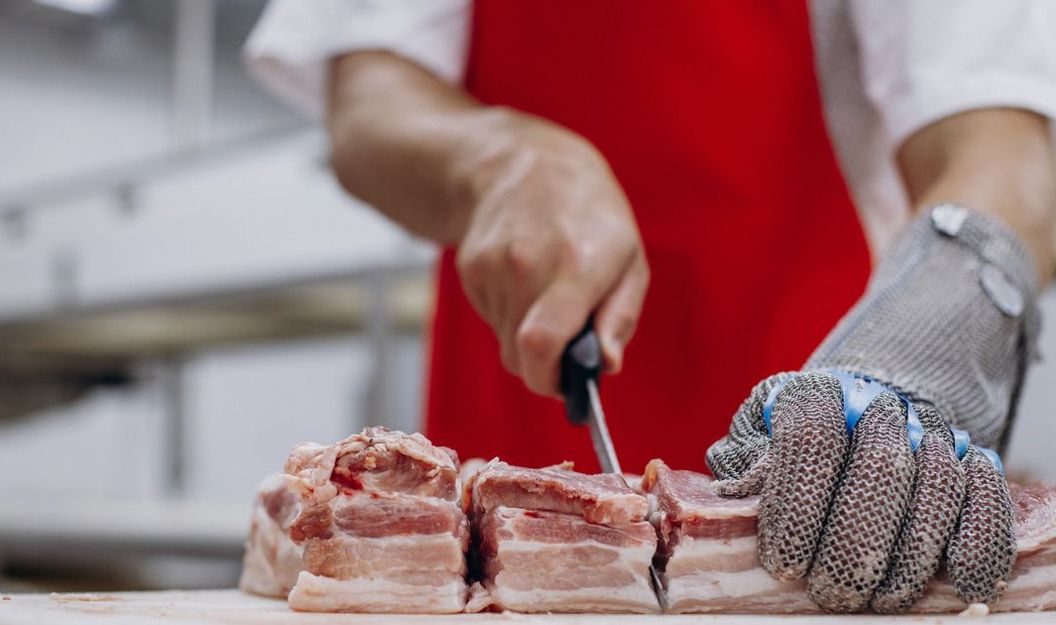
In order to identify hazards and address them appropriately, companies must carry out a risk assessment and, on that basis, provide suitable personal protective equipment (PPE). Where Knives and when working with blades – whether by hand or on machinery – as well as other pointed tools or sharp-edged objects, the risk of injury is increased. In food production, this applies, for example, to the processing of meat, poultry and fish, as well as vegetables. When boning, Filleting Cutting and trimming can quickly lead to injuries, particularly to the hands, which is why there are numerous types of cut-resistant gloves available. When dismantling equipment, for example, there is often a risk of puncture, which is why puncture-resistant gloves are used in such situations.
Although puncture- and cut-resistant gloves account for a large proportion of the range, protection is not limited to the hands. Depending on the workplace, the task and the risk assessment, more than Work gloves In addition, various other elements may be useful. Typical components, which are also often combined, are as follows:
Cut-resistant gloves for work involving blades, knives or sharp-edged materials
Puncture-resistant gloves for tasks requiring a higher level of puncture protection, such as boning or cutting up meat – there are also versions available that protect just one or three fingers
arm guards to protect the forearm and wrist
Stab-resistant boleros for extra protection in the upper body and arm areas
Aprons or body armour for work areas with a high risk of injury
Protective gloves and other cut protection equipment are selected depending on the specific task. For example, cut-resistant gloves offer protection against cuts, but do not automatically replace puncture-resistant gloves. Conversely, a puncture-resistant glove made from wire mesh may be very robust, but it may not necessarily be suitable for the specific task or working method required to provide reliable protection.
When it comes to clothing designed to provide cut protection, aspects of material properties and construction are interlinked. If the aim is to achieve a cut-resistant effect, durable materials are required that cannot be easily cut through by sharp blades. For stab protection, on the other hand, metal ring meshes are often used. The many small, interconnected metal rings create a flexible yet highly resilient barrier. The mesh is designed to prevent knife tips or sharp edges from reaching the skin and causing injuries.
In addition to the material, the fit is also crucial. Protective gloves, puncture protection and other features should restrict the wearer as little as possible. A snug fit, without being too tight, is often required. To prevent the gloves from constantly slipping down, the upper and lower straps that secure them should always be intact and adjusted correctly.
As the human body’s natural tools, hands are particularly at risk of injury from knives and blades. Cuts and more serious wounds do not only affect the person injured. An accident at work can lead to production stoppages and the contamination of food, work surfaces and equipment. All of this can, under certain circumstances, entail considerable organisational effort as well as financial losses. High-quality and suitable hand protection can significantly reduce these risks.
Optimal protection against cuts and punctures depends on the interplay of various factors. There is no one-size-fits-all solution for all work areas; protective equipment must be suited to the specific task at hand. Tools, puncture hazards, direction of cut, working speed, hygiene factors – all of these influence what is required in terms of PPE.
Added to this is the issue of size, as the cut protection must fit the relevant part of the body. An incorrect fit can further increase the risk of accidents. Providing comprehensive training for staff is an important step, as protective gloves merely support a professional working procedure and are only one part of the overall strategy. Taking individual preferences into account can also be useful to a certain extent. As well as maintaining the protective equipment, it must also be checked regularly for signs of wear and replaced where necessary.
Furthermore, it is important to take the relevant standards into account. Requirements relating to mechanical risks are governed by EN 388, whilst EN 1082 applies to puncture-resistant gloves and arm protection made from metal ring mesh. EN ISO 13998 is also relevant for protective clothing designed to protect against cuts and stabs from hand knives.
When it comes to personal protective equipment, puncture and cut protection is often combined with other workwear. This may include Waterproof clothing, food-grade clothing or clothing for cold protection and cold stores.
The right footwear is also an essential part of a safe kit. In damp working environments in particular, various factors come into play, as wet conditions can also increase the risk of accidents at work. As a general rule, protective clothing – from puncture-resistant gloves to rubber wellington boots – must be suited to both the working environment and the individual.
In professional food production, it is essential to combine safety, hygiene, quality and efficiency. This means that the highest standards are required of all equipment and consumables. We provide high-quality equipment from a single source – from reliable cut-resistant gloves to high-performance machinery. As supply chain specialists with extensive market experience, we know what matters – and have tailored our product range to meet these challenges.


More articles