Insektenschutz in der Lebensmittelverarbeitung
9. August 2024Read more

15. May 2026
The world of frozen foods is vast – and the quality of this variety is down to an unbroken cold chain. It includes fruit, vegetables, meat products, as well as pastries and pizza. Many foods are suitable for this method of preparation or preservation. For consumers, the advantages are obvious: they do not have to go shopping all the time, but have a certain stock on hand that can be prepared fresh, so to speak. Furthermore, many frozen products can be portioned as required; depending on the product, they are either cooked straight away or defrosted in a controlled manner. To ensure you can enjoy all these benefits, frozen food follows a ‘cold path’ – meaning that, once frozen, it should only return to above-zero temperatures once it reaches the consumer. This blog article discusses what to bear in mind when it comes to the frozen food supply chain.
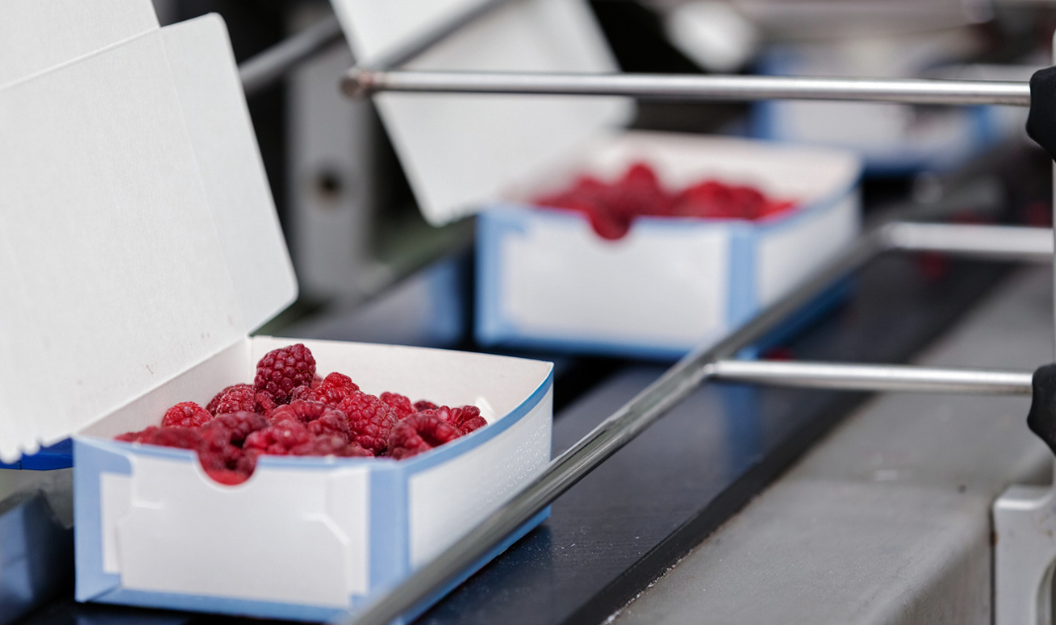
Whether fresh or frozen – food must first be grown or produced. This applies equally to raw produce and processed products. Frozen food is usually flash-frozen very shortly after being harvested. For vegetables, this usually takes a few hours; for fish, freezing often takes place almost immediately. The food is then transported to storage facilities and on to wholesalers.
First of all: Temperature requirements must be reliably maintained from the point of deep-freezing right through to delivery to the consumer. These requirements are laid down in EU legislation, including Directive 89/108/EEC and Regulation (EC) No 37/2005. In Germany, particular attention must be paid to the Ordinance on Frozen Foodstuffs (TLMV), which transposes EU Directive 89/108/EEC into national law.
For frozen products, -18 °C is a crucial figure. This is the minimum temperature below zero that they must be maintained at throughout the entire cold chain – with a tolerance of 3 °C in certain areas. Disruptions in the cold chain can lead to quality defects and a reduced shelf life. Whether affected foodstuffs may still be sold depends, on a case-by-case basis, on the product, the temperature history and the condition of the goods. In case of doubt, this can cause considerable financial loss and also The sustainability of frozen food have a negative impact. In order to maintain the required -18 °C (with the permitted short-term deviations) at every stage, it is important to identify high-risk critical points – known as heat loads – from production right through to sale. Possible heat loads within a cold chain include, for example:
Heat from open doors
Heat flux due to conduction
Heat generated by conveyor systems or ventilation
Heat from lighting
Warmth from staff
Warmth from storing fewer cold foods.
Once potential heat loads have been identified, they can be prevented, for example, by using what is known as a ‘temperature reserve’. This means that before a heat load is expected – for example, when loading the product onto the transporter – the deep-frozen product can be cooled further than –18 °C as a precautionary measure to counteract a possible rise in temperature. At the same time, communication between the individual stations is essential here. Coordination and consultation help to ensure that food does not start to thaw and that an uninterrupted cold chain is maintained. Minor temperature fluctuations cannot always be avoided, which is why appropriate precautions should be taken. However, the aim remains, of course, to maintain a constant temperature.
At various points along the cold chain, there are a number of measures – in addition to the temperature reserve – designed to reduce the likelihood of a rise in temperature. For example, the cargo hold of lorries can be pre-cooled, and the opening of doors – whether in the storage area or on the van – can be kept to a minimum. Furthermore, the doors should be well sealed and vans should be fitted with lighting so that work can be carried out inside even when the doors are closed. Ventilation must also be taken into account: air must be able to circulate. Frozen goods should ideally be shipped separately from non-frozen goods, as this affects the temperature. Appropriate packaging, prompt delivery and handling with short transport distances help to prevent temperature rises and support the required checks. Freezer units, such as chest freezers, should be positioned away from direct sunlight or hot air from heating systems wherever possible – also in the interests of sustainability.
The prescribed temperature of -18 °C is not merely a theoretical requirement. Compliance with this temperature must be monitored and documented at various points. In means of transport or storage facilities, this is carried out using suitable measuring and recording equipment. Simplified requirements apply in certain retail deep-freeze facilities.
In addition to temperature, hygiene conditions during the production of frozen food are also of great importance. Food businesses must, in accordance with their HACCP plan (Hchance Aanalysis and Ccritical Control P(oint) and actively implement it. The concept is designed to facilitate self-monitoring and helps to minimise risks. In addition to potential microbiological risks arising from temperature exceedances, chemical or physical hazards must also be taken into account, such as those caused by contamination or damage to the packaging.
If goods are thawed prematurely or recalled due to other errors during the process and have to be destroyed, this always results in losses. Food is a precious commodity. For this reason, it is particularly tragic when it has to be disposed of unused – quite apart from the financial loss. It is therefore in the interests of everyone involved in the production of frozen food to ensure that this does not happen. The German Frozen Food Institute lists the following preventive measures:
Regular hygiene checks
Checking the materials used
Inspection of the premises
Staff hygiene training
Systems for tracking goods
Monitoring and documentation of all measures
If necessary: corrective action
Under Article 2 of EU Regulation (EC) No 37/2005, both means of transport and storage facilities must be equipped with suitable recording devices. For certain smaller retail deep-freeze facilities, simplified requirements apply in some cases, involving a clearly visible thermometer. We offer a wide selection of thermometers and temperature sensors – including penetration sensors, frozen food sensors and more – as well as cold room thermometers. We also stock a range of data loggers.
To ensure that, alongside all the protective equipment for foodstuffs, our staff are also well looked after, you’ll find suitable workwear in our online shop.
Whether you’re in manufacturing, warehousing, cold storage or transport – our product range supports you in the processing and logistics of frozen food. For 100 years, we have been continuously developing as a specialist wholesaler for supplies used in food production. Please do not hesitate to contact us if you have any questions – we are happy to help.


More articles