Koriander
7. February 2025Read more

5. June 2026
In many kitchens, celery is still known simply as an ingredient in soup greens. However, this vegetable with its distinctive aroma has much more to offer: it is tangy, fresh and adds both depth of flavour and a slightly bitter note to many dishes. Catering businesses and food manufacturers appreciate its versatility and use the vegetable in a wide range of production processes. Whether as a root, a stalk or dried – this blog post takes a look at celery and its many facets.
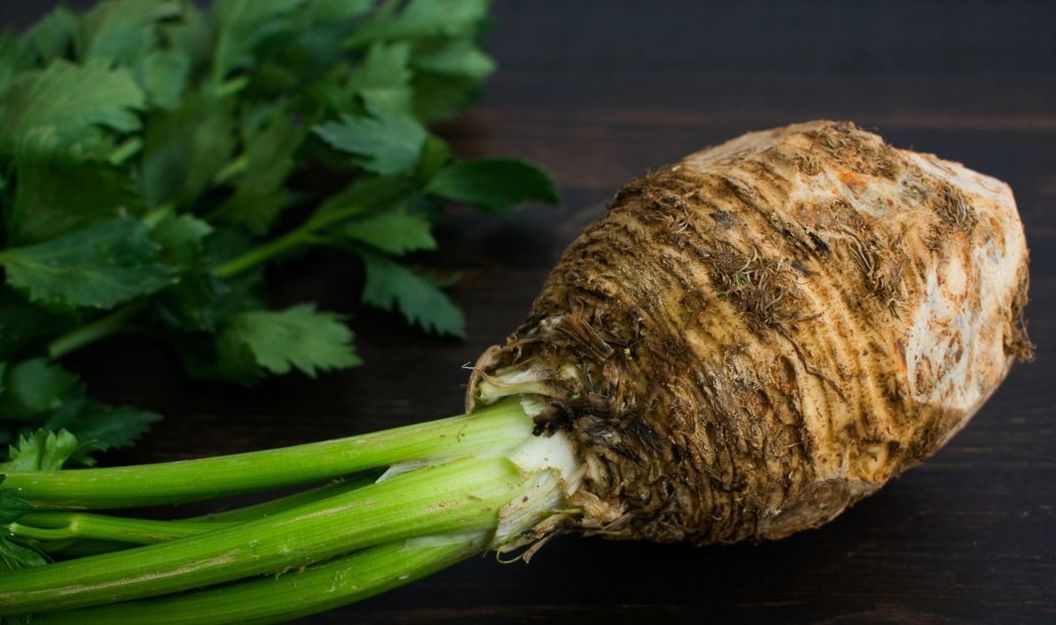
How Coriander or, like carrots, for example, celery also belongs botanically to the umbellifer family. Celery has the Latin name Apium graveolens and, in its wild form, is found in coastal and saline soils, amongst other places. Various cultivated varieties, each with its own culinary focus, have been developed from the wild form. Apium graveolens var. rapaceum, better known as celeriac, is one of the best known varieties. Whilst the round root is the main part used in celeriac, the focus with stalk celery is on the leaf stalks and with leaf celery on the leaves. Another aspect of celery’s versatility is that it is used as a fresh, dried or ground ingredient and as a component of spice mixes.
It is not only the part of the vegetable that is used that differs depending on the type of celery, but also its flavour and uses:
Celeriac: The flavour is intense and is described as earthy and spicy, with both sweet and tangy notes. Thanks to this range of flavours, the tuber is a great choice for, for example, stocks, sauces, fonds, soups, gourmet salads and meat dishes.
Celery: This variety is often used fresh, which is reflected in its flavour. Salads, dips, soups, vegetable medleys and stir-fries benefit from this in particular – as well as from the crisp bite that celery adds to a dish. Celery can also be used to make celery juice, which is highly regarded among those who are health-conscious.
Celery stalks: This variety is also particularly interesting as a culinary herb. The leaves offer a flavourful blend of celery and herbs. When dried and ground, celery leaves are particularly well suited to recipes that call for a herb-and-celery flavour – without having to rely on fresh produce.
As well as having its own distinctive flavour, celery is also used to round off the flavour of dishes: it adds depth to food and, above all, enhances Umami-Flavours. Celery is therefore frequently used, particularly in savoury recipes, to provide a base flavour, a vegetable note and a touch of refinement.
As already mentioned, its uses range from soups and stews, through sauces, dressings and marinades, to delicatessen salads and vegetable dishes. Meat and sausage products, as well as ready meals and spice mixes, are also popular products that contain celery. When fresh, it is best cut up with a clean, sharp knife – such as a chef’s knife or a vegetable knife.
As with many fresh ingredients, the flavour of celery can vary depending on its origin, the season or how it has been stored. In food production, however, it is important to maintain as consistent a flavour as possible across different batches. For this reason, it is advisable to use ground celery roots, celery salt or dried leaves.
If celery is included, its flavour is often prominent. Due to the intensity of dried or ground products, these should be used in moderation. As a general rule, it is important to consider the dish as a whole. In strong stocks, the flavour of celery may be more pronounced. In delicate sauces, light dressings or various spice blends, however, it should be used more sparingly. With celery salt, the salt content must also be taken into account to ensure the overall seasoning does not become too intense. Fresh celeriac, on the other hand, can be used in larger quantities as a vegetable component.
Celery contains various nutrients such as vitamins, minerals and essential oils. Thanks to its fibre content, it can aid digestion as part of a balanced diet. Because of its low calorie content, it can easily be incorporated into health-conscious recipes. Thanks to its flavour, it also helps to season food without the need for excessive use of salt or to make fat aromatic and full of flavour.
That depends on the type of celeriac. Fresh celeriac is best stored in a cool, dark and, if possible, dry place. Whole celeriac bulbs stay fresh for longer in the vegetable drawer or in suitable refrigerated storage than cut-up celeriac. Cut-up celeriac should be covered properly and used as soon as possible.
When dried and ground, celery is less perishable. As with the Shelf life of spices As a general rule, it is advisable to store it in a dry, well-sealed place away from direct light. This helps to preserve its flavour and colour as much as possible. It should also be borne in mind that celery is a food allergen subject to labelling requirements is involved. Therefore, as part of the organisation’s allergen management programme, celery must be clearly labelled, kept strictly separate and stored under controlled conditions in order to Cross-contamination to avoid.
Celery has a number of benefits – particularly when it comes to adding a rich flavour. However, as it is an allergen, it is not equally suitable for everyone. Depending on the dish and the role the celery plays in it, parsley root, parsnip, leek, lovage, carrot or certain herb mixtures can help to achieve a similar flavour. Furthermore, the basic seasoning for many dishes is traditionally based on onions and garlic.
Using celery to create dishes with a delicious flavour and a distinctive character requires a great deal – from perfected recipes and high-quality ingredients to flawless preparation right through to the finished dish. Ehlert supports food producers and catering businesses with equipment, tools, appliances, workwear and spices.
Our range of workwear and cleaning agents is available to ensure hygienic and safe food handling. You can also boost efficiency with our equipment and tools – from knives to measuring scoops. Ehlert offers a wide range of spices and spice blends to suit every taste. Last but not least, we’re happy to assist you with our many years of industry expertise. Please feel free to get in touch.


More articles