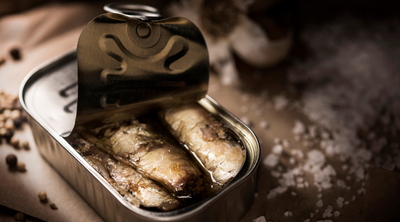
Ratgeber zur Herstellung von Fischkonserven
9. December 2022Read more

16. June 2023
First, a brief digression, as one question often springs to mind when discussing beetroot: ‘Bete’ or ‘Beete’? According to the Duden dictionary, both spellings are permitted, but the one with just one ‘e’ is recommended. Now that’s cleared up, let’s move on to some other interesting facts about the beetroot, which is quite rightly dubbed a superfood. In this blog post, we’d like to take a closer look at the outstanding properties it offers, beyond simply being a tasty ingredient.

Vegetables are healthy – their positive reputation applies to all varieties. But beetroot – Beta vulgaris in Latin, incidentally – stands out thanks to a whole range of health-promoting and health-maintaining nutrients. This starts with its high antioxidant content, which strengthens cells and the body’s defences. They also support the blood vessels and the heart, and accelerate recovery. Beetroot even has benefits when it comes to protecting against free radicals and preventing cancer. These small tubers are packed full of important nutrients. These include:
Folic acid
Various B vitamins
Vitamin C
Vitamin E
Minerals (e.g. sodium and potassium)
Magnesium
Iron
Nitrate
Furthermore, the nutrients help the body to produce vitamin A naturally. They support eye health and vision, metabolism, blood formation, bone growth and the immune system. Nerves, muscles and skin health also benefit from regular consumption.
The The Future of Food It also depends on us paying (more) attention to the regional origin of our food. In the case of beetroot, this is not a problem, as the plant is easy to sow and grow on German soil. This relatively undemanding winter vegetable usually thrives very well in Central Europe: sun or light partial shade, low-nitrogen, well-aerated soil and consistent moisture – that is all the low-maintenance and fairly hardy beetroot needs. It should be noted, however, that this root vegetable cannot be grown on the same soil every year; instead, it is necessary to grow a different crop for a few years in between as part of a proper crop rotation. On the other hand, beetroot offers the advantage of a long storage life: in a cool, dark place, the untreated root can be kept for several weeks, and when preserved, it can last for years.
As is so often the case, regional production goes hand in hand with being climate-friendly. As regular irrigation systems are just as unnecessary for growing beetroot as heated greenhouses, energy is saved efficiently. Water requirements are not very high and can usually be met by rainfall. Furthermore, low temperatures during the late growing season are not a major issue, and special chemical additives are generally not required.
Its earthy flavour makes beetroot a versatile ingredient in a variety of dishes and drinks. It can be used in its natural form or slightly processed, but also serves as a natural coloring agent. Betanin, which belongs to the betalain group, is considered a standard ingredient due to its beneficial constituents and does not need to be declared as an additive with no nutritional value. This intense coloring is extracted and later used, for example, in powder form to give food an appealing and appetising appearance. Clothing and the annual Easter eggs also benefit from beetroot-based coloring. Beetroot can be used to achieve vibrant colors.
Given the many benefits of beetroot, it is hardly surprising that it has been named ‘Vegetable of the Year’ for 2023 and 2024 by the Association for the Conservation of Crop Diversity (VEN). There are plenty of reasons to celebrate this vegetable and eat it more often – whether cooked, as juice or a smoothie, in a salad or as a spread, or in a casserole or roasted. The variety of recipes is almost as extensive as the list of its beneficial nutrients. What’s more, this root vegetable is by no means limited to its distinctive red colour. Colour variations, such as yellow or white, also exist. Anyone still looking for a good resolution – in the interests of their own health and sustainability – has found one.
To ensure that people and animals can enjoy eating beetroot, it usually needs to be treated and processed. In the food processing industry, for example, suitable workwear is required for this purpose. In the case of beetroot, this is sometimes to protect against its strong staining properties – disposable gloves protect the skin from discolouration. Many people also love beetroot balls or beetroot in jars – you can find suitable jars and other packaging materials for this at Ehlert. We offer the necessary products for all foodstuffs and their professional, regulation-compliant production, including vacuum-sealed bags.
Can’t find what you’re looking for? Or do you have any further questions or comments? If so, please feel free to get in touch with us.


More articles