Koriander
7. February 2025Read more

10. January 2025
Food should be filling, taste good and contain only what is stated on the packaging. Unfortunately, shop-bought food can sometimes come with an unwanted ‘extra’ – in the form of cross-contamination. Read on to find out how you can avoid this!

Cross-contamination occurs when microorganisms or pathogenic contaminants are transferred from one foodstuff to another. This includes biological organisms such as fungi, bacteria or viruses, as well as physical contaminants. These can enter the food in question in the form of plastic particles, skin flakes or hair. Cross-contamination can also arise from chemical contaminants, with fertilisers, spray agents or pesticides being the source of the transfer. Please note: Disinfectants can also cause cross-contamination.
Cross-contamination is categorised into two types:
Direct cross-contamination: Cross-contamination occurs directly over short distances. If food items are placed close together and one of them harbours a micro-organism, for example, there is a high risk that this will spread to the surrounding food. Take fruit, for example: if there is a single rotten cherry in a bowl, the pathogenic mould will quickly spread to the surrounding cherries. This marks the start of an exponential increase in contamination.
Indirect cross-contamination: When indirect cross-contamination occurs, it is often not immediately apparent where the transfer took place, as it occurs via indirect routes. Examples include:
A hand (or a glove) that (unintentionally) touches both foods in succession
Placing both food items in the same place at different times, without the surface having been cleaned in the meantime (e.g. on the scales)
Using a machine or tool without cleaning it afterwards
To stick with the example of cherries: if, after cutting away the – perhaps not immediately obvious – rotten part of the cherry, you use the same Knife When bananas are cut up, there is a risk of spreading pathogenic microorganisms in this way.
By the way: Bacteria are particularly common in raw food. However, they can also be transferred to cooked food via unwashed utensils.
The transmission of salmonella or other microorganisms can result in the loss of a great many valuable foodstuffs. Sometimes the contamination goes undetected – it is not noticeable either by its appearance or its taste. But the consequences are all the more severe after consumption: in the case of pathogenic microorganisms, food poisoning can result, causing stomach ache, nausea, vomiting and diarrhoea. It becomes even more dangerous when, through so-called cross-contamination, a product becomes contaminated with something to which someone else is allergic. Nuts, for example, can be life-threatening for allergy sufferers even in small quantities. The same applies if splinters or similar objects find their way into food.
The aim of any high-quality food processing operation is to prevent pathogenic cross-contamination. By following these 7 tips, you can help ensure that your food remains free from contamination:
Before starting work in food processing, you must wash your hands. Even if you are wearing gloves.
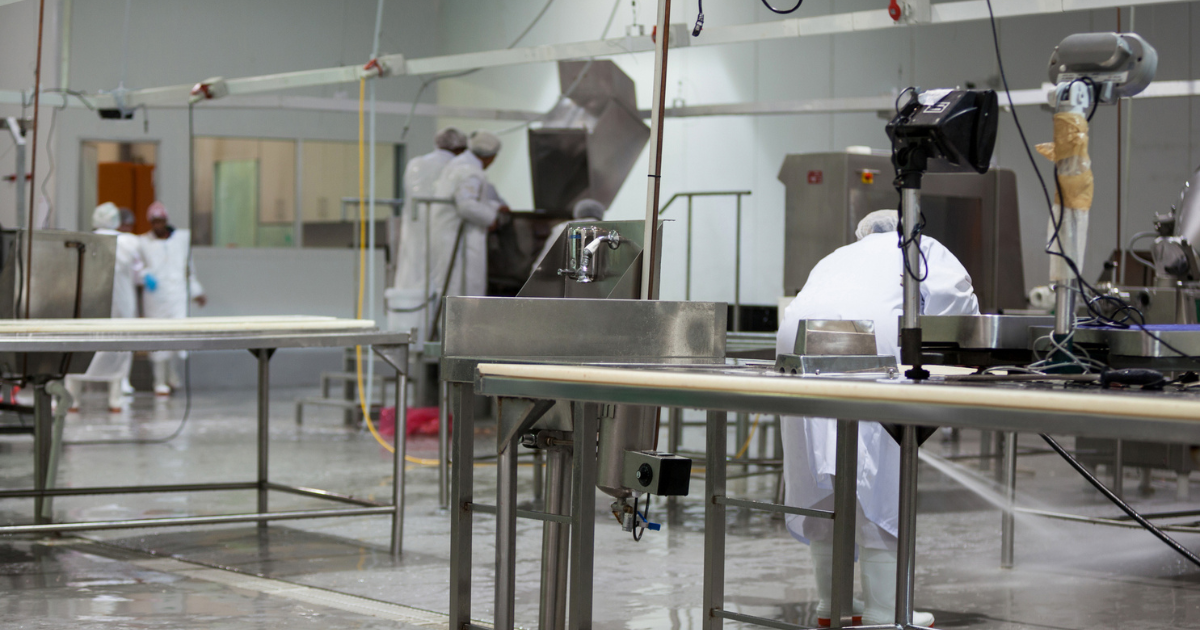
Thoroughly clean all work surfaces and equipment in the production facility! This includes washing them with hot water and Cleaning agents as well as disinfection. Once this has been carried out, the items are rinsed with water to prevent contamination from any residual disinfectant.
Appropriate cleaning products and utensils must be kept separate from food.
No pets are allowed near the food processing and production areas.
Only use clean, washed utensils and change items such as gloves, knives and tea towels frequently as required. In many cases, it is also advisable to use disposable products.
or airtight films / foils.
After handling raw food, all utensils that have come into contact with it must be cleaned and disinfected immediately.
Keep your fridge tidy! If you’re storing both raw and processed foods in the fridge, they should be kept as far apart as possible. It’s best to place raw foods with a higher risk of carrying salmonella at the bottom to minimise the risk of leakage. It is also important to use packaging that is as airtight as possible, such as tins or airtight film / foil.
Depending on the production facility and process involved in food processing, cross-contamination or cross-contact can only be minimised – but not completely ruled out. To be on the safe side legally, the final product packaging should carry a warning about possible contamination by the relevant foods in the form of allergens. Precise regulations on this are laid down by the Mandatory labelling of allergens specified. As a general rule, it is advisable to carry out regular checks in the form of a risk assessment in order to prevent pathogenic contamination in the production area – naturally, in conjunction with all mandatory control measures.
Once a food product is contaminated, it is usually already too late: preventing contamination and unhygienic conditions in commercial kitchens and other production areas is of the utmost importance. Otherwise, a genuine health risk to consumers may arise. Here at Gustav Ehlert GmbH, we know what is essential for impeccable food production. Thanks to our industry experience, we understand the risks as well as the ways and means of reducing them. With our Ehlert Equipment Check You’re even on the trail of knives. Working together for high-quality, uncontaminated food.


More articles