Fisch filetieren: Anforderungen an Messer, Unterlagen, Hygiene und mehr
16. October 2026Read more

14. November 2025
Accurate, clear and straightforward food labelling is important not just when the product is sold in the supermarket. Throughout the entire production chain, labels must provide reliable and easily recognisable information. Whether for meat, baked goods or ready meals, thermal labels have long been an indispensable part of production. This blog article explores the benefits they offer and the requirements they must meet.
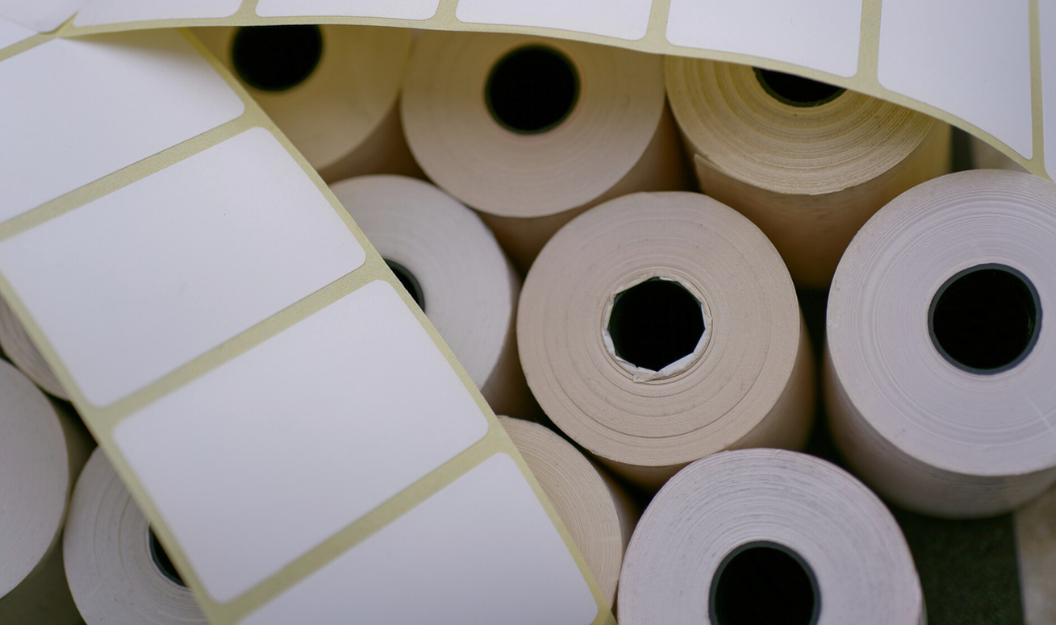
Whilst traditional labels are made of plastic or paper and are printed with ink, thermal labels are constructed differently. They consist of special thermal paper, sometimes with an additional protective coating, and instead of ink, the image is usually ‘printed’ using heat applied by a print head: The paper reacts to this heat, its thermo-sensitive layer changes, and the desired print image is produced. High contrast ensures that even small fonts are reproduced clearly and are easily legible. The printing process is usually based on direct thermal printing, and the thermal labels are self-adhesive on the reverse side.
In the food industry, thermal labels offer a range of compelling benefits. These include not only the fact that the technology is fast and generally requires little maintenance, but also the following:
Traceability: The ability to quickly print data such as the filling date or similar information onto a label makes it easy to trace the product.
Clear print quality: Whereas traditional printers can smudge, direct thermal printing impresses with its high contrast and excellent legibility of text such as use-by dates or barcodes.
Speed: The labels can be printed in a matter of seconds, which is particularly useful when production speeds and volumes are high.
Versatile use: Whether on the packaging of ingredients or finished products – the labels are easy to apply and their adhesive side sticks very well to many surfaces.
Fewer resources and lower costs: As no ribbons are required – the printer operates using heat – a direct thermal printer is particularly cost-effective and environmentally friendly, especially for short-lived labels. The key piece of equipment required is high-quality thermal labels.
As the food industry is subject to strict regulations regarding product labelling and traceability, quick-printing thermal labels help to ensure compliance. When using them, it should be borne in mind that, compared with other printing methods, the labels react more quickly to UV light and fade. Furthermore, only black ink can be used – which is why they are primarily used for barcodes and short pieces of information.
Given the benefits, it is hardly surprising that they are making their mark in various areas of food production – such as for labels on the Food packaging with details of weight, price, ingredients or best-before date. Speaking of which: thermal labels are also a popular choice for indicating, at short notice, that a best-before date is approaching. The same applies to labelling used for sorting stock in the warehouse as part of proper stock management. Last but not least, thermal labels are frequently used as dispatch labels, for example when goods are sent to trading partners. As the labels are available in various designs, individual requirements can be taken into account when making a selection. Due to their relatively rapid fading, thermal labels are primarily used as short-term labels.
To fully realise their benefits, thermal labels must meet various requirements. As they are used in the food industry, the entire label, including the adhesive, must be free from harmful substances. Furthermore, strong adhesion is essential, even under difficult conditions. Within a production facility, major problems can arise if products lose their labels – or if the labels become stuck to other items. It also becomes problematic if the printed image is no longer legible. This can be prevented by choosing variants with a protective varnish. The high quality and compatibility of the printer and thermal labels are also important for a good print result.
At first glance, thermal labels may seem rather unremarkable, but their versatility means they are more than just handy little aids – whether used as price tags or dispatch labels. When it comes to traceability, precise labelling really pays off. As carriers of information, they form a crucial link between production, packaging, logistics and sales.
As efficiency and quality are also among our guiding principles, you will find a wide range of other equipment, both small and large, that supports food production – from disposable gloves right through to machinery and tools.
As supply chain specialists with over 100 years’ market experience, we understand the high demands placed on food producers. Our extensive range of products enables you to meet these demands precisely.


More articles