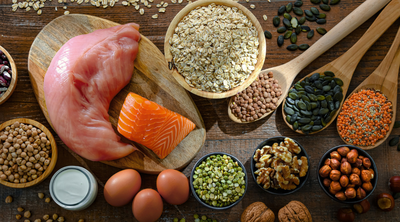
Eiweißreiche Zutaten in der Lebensmittelproduktion
23. October 2026Read more

6. February 2026
Creamy desserts, firm aspics or clear glazes: gelatine is the unsung hero that gives various foods the desired consistency. This all-rounder influences the firmness, mouthfeel and even the appearance of dishes – without taking centre stage itself. Gelatine is therefore a strategic raw material for producers, simplifying product control through its gelling properties. This blog takes a closer look at this often-invisible ingredient.
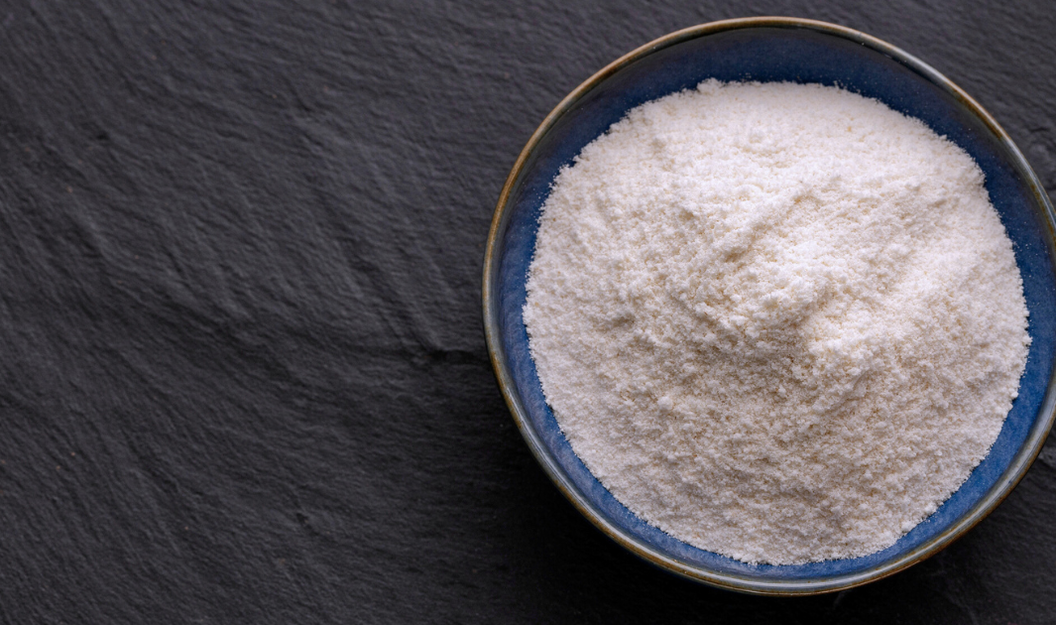
Gelatine is a protein product. In food production, it is used primarily as a gelling agent, and is also valued for being flavourless and colourless. Gelatine is produced by the (partial) hydrolysis of collagen, a protein. Traditionally, the collagen is derived from the connective tissue of animals, which is why gelatine is an animal-derived product.
In simple terms, gelatine is produced as follows: to produce gelatine from collagen, raw materials containing collagen are cleaned, ground up and broken down, for example using acids or alkalis. The resulting gelatine is then extracted. It is soluble in warm water and becomes gel-like as it cools. The solution is then filtered, demineralised and sterilised. Finally, it is concentrated and dried, resulting in gelatine in the form of granules, powder or sheets.
As already mentioned, animal-based raw materials are required as the basis for the production of gelatine. These are usually bones, hides and other slaughter by-products. The collagen content of the connective tissue is crucial. Pigskin, beef hides and bones are therefore particularly commonly used. However, depending on the desired end product, poultry or fish may also be used as a base. The sensory properties, consistency and gelling power are determined by the respective raw material used.
It is not without reason that gelatine features as an ingredient in many dishes. Whether in powder or sheet form, gelatine enhances food production by offering a wide range of product improvements.
Development of texture and consistency: The consistency of food can be precisely controlled using a gelling agent. This makes it possible to achieve any desired firmness, from melt-in-the-mouth to firm enough to cut.
Foam and emulsion stabilisation: Gelatine is a suitable stabiliser, particularly for delicate textures such as fluffy marshmallows, creams and similar products.
Water retention: Gelatine also improves the long-term consistency of food. For example, in yoghurts and dairy products, it reduces syneresis, i.e. the separation of water.
Shine & Transparency: Where food can be enhanced by a clear texture or a shimmering sheen, edible gelatine helps to achieve this.
Thermal reversibility: Gelatine can be used to control behaviour at different temperatures – for controlled gelling.
It is, above all, the combination of a pleasant texture and technological reliability that makes sheet gelatine and similar products so popular in food production. To make the most of these benefits, gelatine should be allowed to swell beforehand and should not be heated too vigorously. Another advantage that highlights the versatility of gelatine is that it is also available in a form capable of setting at cold temperatures.
When it comes to gelling strength, the so-called Bloom value is an important indicator. It is determined using a standardised test, which expresses the strength in grams. If the Bloom value is high, this means that the gelatine is very firm. In this case, a lower dosage is sufficient to achieve the desired gelling, gel formation or consistency. The Bloom value plays a particularly important role in the production of large quantities of food, as it is a crucial parameter in the planning process.
Given its wide-ranging benefits – from enhancing the mouthfeel to improving texture – it is hardly surprising that a wide variety of products make use of gelatine’s advantages. The following foods often contain this popular gelling agent:
Meat and sausage products, including aspic, Aspic and cooked ham
Desserts such as jelly, fruit jellies or soufflés
Dairy products, creams and mousses
Confectionery, such as chewy sweets or marshmallows with a springy texture
Delicatessen, wine, coatings, terrines
For example, when it comes to attracting vegetarian and vegan customer groups, the question arises as to whether gelatine can be replaced. A one-to-one replacement is difficult, but for certain foods, substances such as pectin, agar-agar, carrageenan, locust bean gum and guar gum flour or starch and sometimes even custard powder works well. In such cases, you’ll need to experiment to see how the alternative ingredients behave in terms of consistency, temperature and gelling ability.
Although gelatine is quite versatile, a certain amount of care is needed to make the most of its benefits. In addition to the quality of the gelling agent itself, factors such as Shovels and measuring jugs help you get the dosage right.
Cooking spoons ensure even mixing, whilst spices and the like create a flavour that really impresses. We also stock products for extracting gelatine from pork rinds.
Our range offers you the right equipment to ensure precise temperature control, accurate dosing, hygiene and reproducibility. Our equipment is designed for the production of a vast array of dishes. Drawing on 100 years of industry expertise, we are also happy to offer you advice.


More articles