Röstprozesse bei Nüssen, Saaten und Gewürzen
11. September 2026Read more

15. December 2023
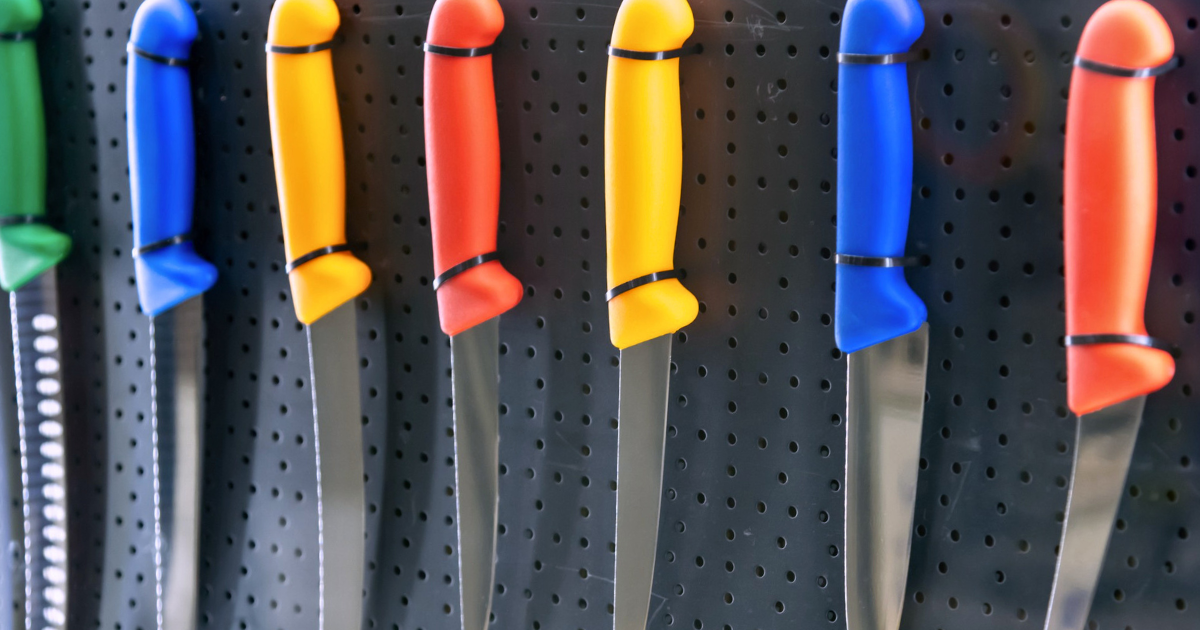
Anyone who processes meat professionally cannot do without the right equipment. The real stars and must-haves in food production: butcher knives. These sharp tools assist with the many steps involved in cutting up or trimming this valuable foodstuff – particularly as there are specific knives for many different tasks. The following blog post reveals what these blades are used for, what makes a good butcher knife, and what types of knives are available in this sector.

Anyone who has ever used a knife that was completely unsuitable for the task at hand will appreciate the importance of specialist knives. Butcher knives are a prime example of this kind of specialised tool.
As an essential tool in professional meat processing, knives often have to withstand very heavy use. As well as being suitably robust, it is also important that they support the work precisely and efficiently. And this is where variety comes into play: their blades can be long and narrow – for example, for delicate filleting – or broad and compact – perfect for cutting up and mincing large pieces of meat.
However, specialisation is not merely a way of making the butcher’s trade easier. Good tools can improve safety in the workplace, help to maintain the quality of meat products and make a crucial contribution to food safety.
Butcher knives comprise a range of knives specifically designed for professional use in slaughterhouses or in the processing and preparation of meat or fish products. These cutting tools are also known by names such as slaughterhouse knives or butcher’s knives.
In some areas, there is simply no alternative to these sharp knives if you want to work efficiently and safely. In other working environments, butcher’s knives are simply an important and useful aid. The knives are used in a variety of different fields of work:
Slaughterhouses and meat-processing plants: Butcher’s knives are part of the basic standard kit and are essential for the many stages involved in skinning, cutting up or boning. Cutting knives and the like are the real stars of the show here.
Butchers: Those who specialise in selling meat and sausages use butcher knives for the precise cutting and portioning of meat for sale. Butcher knives really come into their own with their specific characteristics, particularly when producing their own products.
Catering: In restaurants and other catering establishments, butcher’s knives are essential for the professional preparation of fish, meat or poultry. They are used at various stages of the cooking process – from preparation to plating up.
The various types of knife are designed for different tasks. Some are true all-rounders. Overall, there is a wide selection available; some notable examples are as follows:
Stabbing knives are an essential part of the knife kit in slaughterhouses. Whilst they may be described as all-rounders, their name derives from a specific purpose: the precise stabbing required to make an accurate incision in a vein, which leads to the animals being bled out. To carry out this procedure as accurately as possible, stinging knives often have a narrow, sturdy and very sharply tapered straight blade. They are manufactured in various lengths, so that the most suitable choice can be made based on the size of the animals being slaughtered and other criteria.
In keeping with their namesake function, these knives are also known as skinning knives. They are used for skinning animals. Their distinctive shape is a prime example of a professional knife perfectly adapted to its purpose: Firstly, the tip of the blade is not narrow and pointed, but broad and rounded. Furthermore, the blade widens towards the tip and is often slightly curved upwards. This shape not only facilitates precise, long and even cuts when skinning, but also prevents the meat from being accidentally damaged by the tip of the blade.
These knives are also known as evisceration knives and are designed for the professional evisceration of slaughtered animals. To open the abdominal wall and ribcage or to remove the offal intact, the knives have a number of special features: offal knives are fitted with a solid ball at the tip of the blade, which serves to protect the offal. This prevents accidental damage to the offal during the cutting process. In some cases, the blades are fitted with a serrated edge, which is used to cut through tougher parts. The knives must be sharp and robust in order to cut through even firm tissue with precision.
These knives are primarily used for removing meat from the bone. However, they are also used in other stages of meat preparation, such as trimming or skinning. To ensure precise and flexible handling, these butcher’s knives usually have a slender blade that tapers to a point at the tip. They are available in a straight shape or with a blade curved upwards. As well as offering precision, the curved blade shape facilitates long, sweeping cuts, which can make the work considerably easier. The blades of boning knives can also vary in flexibility. Highly flexible versions adapt particularly well when cutting. Which knife is best suited for boning depends both on the cut of meat and on how it is to be prepared afterwards.
Block knives are essential in professional meat processing. At the same time, they are also ideal for preparing many other foods, which is why no professional kitchen should be without them. Their name refers to their use in conjunction with chopping blocks, which gives an indication of their function: cutting, chopping or coarse mincing. These large knives have comparatively wide blades, which can vary in shape. Their sturdy construction enables powerful cutting or chopping, making them particularly well-suited as butcher’s knives for cutting through muscle meat or smaller bones.
It is these features, amongst others, that make butcher knives indispensable tools in professional meat processing and the catering industry. They enable precise and efficient work and play a key role in determining the quality of the end product.
Butcher knives are by no means limited to cutting tools used in slaughterhouses or cutting plants. These knives support work across many different sectors. For this reason, the Ehlert range includes a wide selection of knives: whether you’re looking for cutting knives, sausage-tying knives or cold cuts knives – we offer high-quality products to help you tackle any challenge with razor-sharp precision.
A good butcher knife can be recognised by a number of characteristics – particularly those that are important when working with others:
High-quality material: Good butcher knives are usually made from high-quality stainless steel, which is rust- and corrosion-resistant. The sturdiness and durability of the handle material are also key factors in determining a knife’s quality.
Balance and ergonomics: Butcher’s knives should be perfectly balanced and sit comfortably in the hand. Ergonomically shaped knives prevent the hands from tiring quickly and improve safety: if they allow for a comfortable and secure grip, this gives you greater control, even during prolonged use.
Hygienic design: High-quality cutting tools are designed to be easy to clean and to meet high hygiene standards. If the knives have a gap between the handle and the blade, dirt can accumulate there over time. Seamlessly crafted knives and finely machined blades, on the other hand, reduce the build-up of dirt.
Sharpness of the blade: Anything that needs to be sharp should stay sharp for as long as possible. A well-sharpened blade is therefore essential. Blades should be extremely sharp to begin with and retain their sharpness for a long time, even with regular use.
Excellent build quality: Naturally, the knives must be of a high standard in terms of their overall workmanship. After all, it all comes down to the optimal interplay of their characteristics. This applies to the quality of the blade itself, its specific grind and, for example, the stability of the handle.
When it comes to meat processing, there is arguably no tool more important than knives. If you’re looking to equip yourself with high-quality butcher knives, we’re here to support you as a reliable partner. As a specialist wholesaler of supplies and consumables for food production, we have a wide range in stock – including the right sharpening steel for butchers’ knives, such as block knives or boning knives.
With over 18,000 items always in stock, at Gustav Ehlert GmbH you’ll always find exactly what you need for your food production and processing. So we’ll ensure you’re satisfied with more than just razor-sharp equipment. Thanks to our full-service offering, you can stock up on a wide range of products to meet the needs of your food-processing business – all conveniently from a single source.


More articles