Sieben und Passieren: Qualität und Konsistenz gezielt steuern
18. September 2026Read more

4. July 2025
At the start of the year, a vegan diet is usually on everyone’s lips – quite literally – as part of Veganuary. It is estimated that more than 25 million people tried a completely plant-based diet last January. Around 1.5 million Germans even stick to this way of eating all year round. The market is responding by catering to this target group with vegan alternatives to traditional foods: vegan meat substitutes, vegan yoghurts, vegan chocolate – and vegan cheese substitutes. To provide suitable and tasty alternatives, manufacturers are getting creative, as the market continues to grow. This blog post takes a closer look at the ingredients used, what to look out for and what it’s all about.
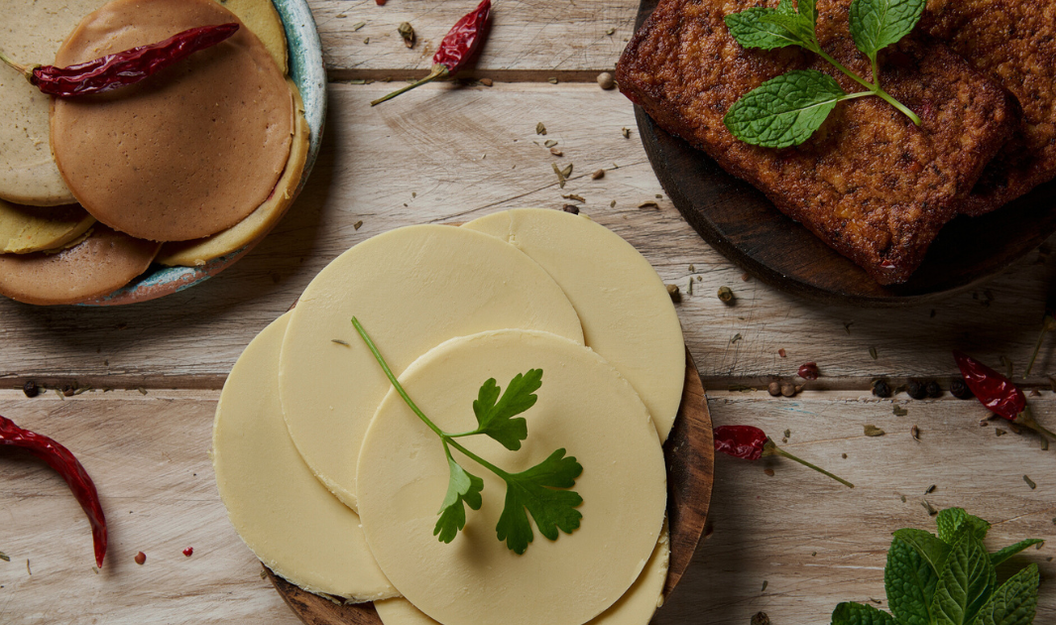
As with other vegan alternatives, the term ‘cheese’ may, in principle, only be used for traditional products – that is, those made from animal milk. Plant-based cheese alternatives must therefore use other names. After all, as is well known, ‘vegan’ means that a product is completely free from animal-derived ingredients. As cheese production has been practised and perfected over centuries, it is not always so easy to replicate cow’smilk and so on in this way.
Despite all the difficulties, various manufacturers are constantly working to expand and improve the range of vegan cheese alternatives. Three of the basic ingredients in many vegan cheese varieties are still coconut oil, starch and water. Depending on the variety, chickpeas, rice, nuts or palm or rapeseed oil may be added as supplements or alternatives. To get as close as possible to the taste of traditional cheese, flavors are often required. To achieve the typical yellow colour of cheese, colorings used.
Alongside other thickening agents and spices, salt is almost always a key ingredient in vegan cheese production. Although it is an ‘imitation’ product, the number of ingredients is usually kept to a minimum. However, this can vary considerably depending on which type of cheese is being imitated.
The market is growing, and there is already a suitable plant-based alternative available for many types of cheese. As well as grated cheese, soft cheese, hard cheese and cream cheese, there is also, for example, savoury Parmesan, mozzarella and cheese sold in blocks or slices. In addition, specific varieties such as Gouda and Brie are being replicated. Depending on the variety, the desired consistency can be achieved in different ways. Partly through the thickening agents mentioned, as well as starch, and partly through Fermentation processes, which are similar to those found in some traditional cheeses. Thanks to this process, creamy soft cheeses in particular require fewer additives.
Despite all efforts, vegan cheese products perform inconsistently in consumer tests. Often, their flavour and texture do not come close to the original or to consumers’ expectations. Many vegans also often use homemade alternatives instead of shop-bought cheese substitutes – for example, those made from yeast flakes – particularly for gratin dishes. Yeast flakes are also particularly well suited to making creamy sauces.
Ultimately, vegan cheese is all about imitating an established product. This raises the question of what advantages and disadvantages there are in favour of one or the other. For vegans, the key advantage is obvious: the cheese is free from animal-derived ingredients. Added to this is the significantly better carbon footprint of plant-based products, as there are no methane emissions and no feed or water consumption by cows. Another positive aspect is that they usually contain no cholesterol. Plant-based cheese alternatives can also be a genuine option for people with lactose intolerance.
On the other hand, there are some drawbacks when it comes to nutritional value. For the most part, vegan cheeses contain very little protein and calcium, but they often contain quite a lot of salt. As already mentioned, they are not entirely convincing in terms of taste and texture. Last but not least, the often comparatively high prices are a potential deterrent for consumers. Regularly testing products with a view to their ingredients seems to be the best approach for customers.
Whether for ethical, health or environmental reasons, whether it’s hard cheese, Emmental or other varieties: consumers are keen to find vegan cheese alternatives. For manufacturers, this means meeting these high standards in a targeted manner. The foundation for this is high-quality equipment, together with the right ingredients. To avoid unnecessarily prolonging the process, it is best to rely on a supplier who offers everything from a single source. Discover the wide and flavourful range of products from Gustav Ehlert GmbH and set out to explore new markets. We will support you with precision and reliability.


More articles