Fisch filetieren: Anforderungen an Messer, Unterlagen, Hygiene und mehr
16. October 2026Read more

17. July 2026
Aromatic, intense and visually appealing: this is how the classic standards for dishes can be described. One ingredient that reliably helps achieve this is tomato purée. It may seem unassuming, but it makes a significant impact in both food production and home kitchens. Often, even small quantities are enough to give sauces, marinades and more a richer colour, greater depth of flavour or simply a delicious tomato taste. With the right information, you can make the most of tomato purée’s full potential. Our blog article answers key questions.
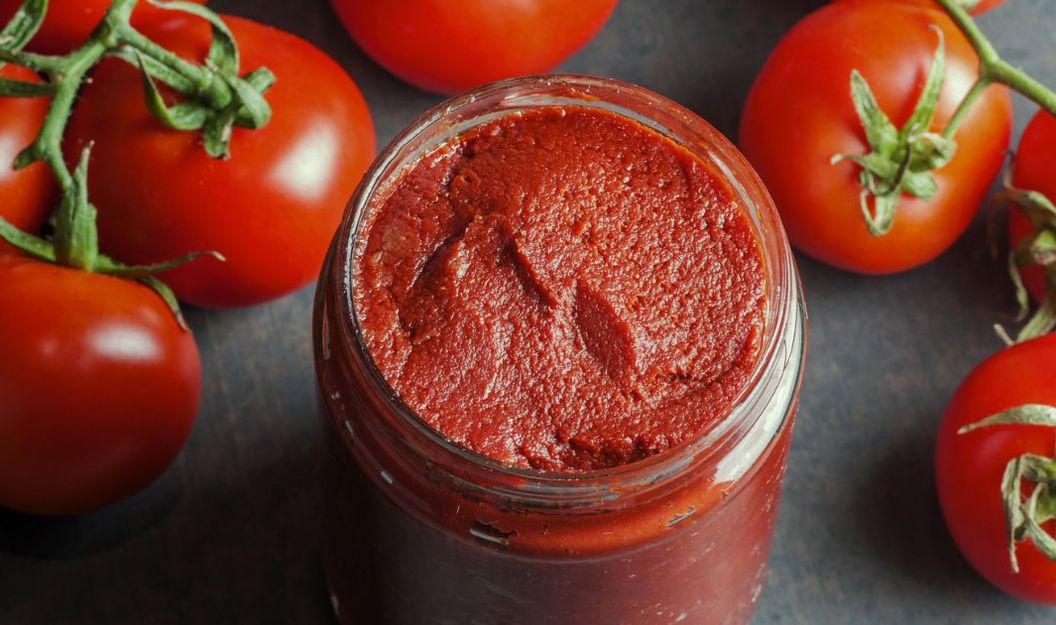
Tomato purée is a concentrate made from ripe, often sun-ripened tomatoes. Fleshy tomatoes are particularly well suited to this process. The tomatoes are washed, then chopped and heated. They are then strained to remove seeds and skins and to achieve a smooth consistency. Finally, the mixture is thickened – often in a vacuum evaporator – and pasteurised to Preservation. The result is a concentrated tomato product which, due to its low liquid content, has a very aromatic and robust flavour. Tomato purée is widely and readily used in the food industry. It serves not only as a natural flavour enhancer, but also as a colouring agent and an ingredient that helps achieve the right consistency.
In the case of tomato purée, the classification into three concentration levels, based on the dry matter content, has proved effective. The more the tomato purée has been boiled down or thickened, the more concentrated it is.
Plain concentrated tomato purée: This variety contains a relatively high level of residual moisture, whilst the dry matter content is around 14 to 22 per cent. The flavour is mild and fruity. The pulp is well suited to adding a natural, subtle tomato flavour whilst minimising the impact on the consistency.
Double-concentrated tomato purée: The colour is richer and the dry matter content is higher – usually between 28 and 30 per cent. It has a more intense flavour than standard concentrated tomato purée and has a firmer texture.
Triple-concentrated tomato purée: This is the most concentrated form, with a dry matter content of at least 36 per cent. The flavour is correspondingly intense. A sparing amount is usually sufficient to enhance the colour and add a certain umami flavour.
For certain recipes and in the food industry, where the aim is to achieve a consistent flavour across batches, it is important to bear this distinction in mind. The concentration of the tomato purée affects the dosage, water-binding capacity and the sensory outcome.
Good tomato purée is characterised by a number of qualities. It is deep red in colour and has a smooth to paste-like consistency. Its intense flavour comprises a variety of notes. Tomato purée tastes fruity, slightly sweet and delicately tangy all at once, and adds a savoury Umami-Flavours. Even in small quantities, these versatile ingredients can be incorporated into a variety of dishes.
High-quality tomato purée depends on high-quality raw materials. Sun-ripened tomatoes provide a good basis for natural sweetness, as well as a rich colour and a full-bodied flavour. Furthermore, the production process plays a major role: gentle simmering preserves more of the natural properties that would be lost if the heat were too high.
The preparation of various dishes often begins by frying tomato purée in a little fat. Heating causes the remaining water to evaporate, which intensifies the flavour and rounds out the aroma. This also brings out roasted flavours that enhance the dishes. However, timing is crucial when sautéing, as sautéing for too long or at too high a heat can result in bitter notes.
Tomato purée is used more often than one might think at first glance. In Mediterranean cuisine, it is frequently used as a base for sauces, whilst in Central European recipes it is often used as a flavouring ingredient in Stews, soups or meat dishes. The following dishes often feature tomato purée in their recipes:
Pasta and pizza sauces
Ketchup, BBQ sauces and seasoning sauces
Soups and stews
Ready meals, lasagne, bakes and convenience products
Meat and vegetable fillings
Marinades for meat, fish and Meat alternatives
Delicatessen salads, dips and spreads
Spice mixes, dry mixes and snack seasonings
Tomato purée is a popular choice, particularly for convenience products, because it delivers a lot of flavour with very little volume – and adds a fruity note.
When unopened, tomato purée usually has a shelf life of one to two years, depending on the packaging and manufacturer, and in some cases even longer. To prevent it from going off prematurely, it should be stored in a cool, dry place away from direct light. Once opened, the packet should be kept in the fridge and used up as quickly as possible. Leftovers should not be exposed to oxygen, heat or contamination from other foods unless absolutely necessary.
Whether it’s ready-made tomato purée, a wide range of spices, workwear for hygienic production or other production requirements: we support businesses in the food production and catering sectors with a wide range of products. Thanks to our many years of expertise, we understand the challenges facing the food industry and address them with the right equipment and reliable service. In this way, we not only support you in producing tomato products of consistent quality, but also equip you to produce a wide variety of dishes.


More articles