Eiweißreiche Zutaten in der Lebensmittelproduktion
23. October 2026Read more

14. April 2023
The search for the raw materials of the future – ones that meet the requirements of sustainability, availability and nutritional value – is bringing even foods that sound unconventional, such as jellyfish, onto our plates. The following blog post offers a brief insight into the potential of cnidarians for the food industry and highlights the hurdles involved in incorporating them into our diet.
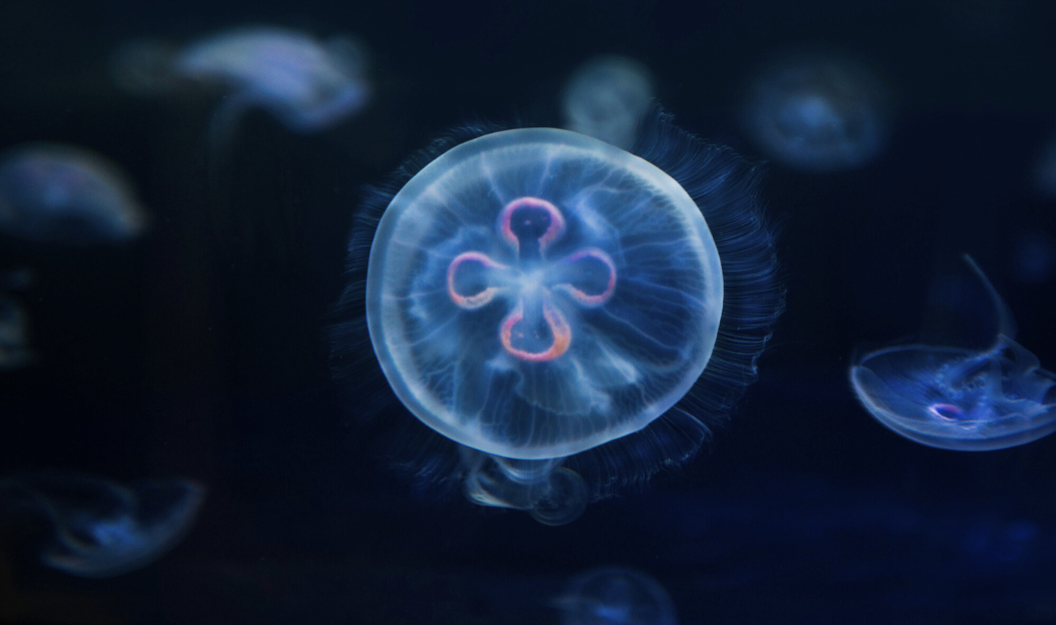
Anyone who isn’t familiar with the latest innovations in the food industry will need a good dose of imagination to picture cnidarians as a nutritious meal. Jellyfish as food: watery, gelatinous, slimy – what nutritional potential could possibly lie in them? Even if the thought doesn’t exactly make your mouth water – jellyfish do have a lot to offer as a potential food source:
Apart from water, jellyfish consist largely of protein. The high protein content of cnidarians is also characterised by its high quality: their efficiency as a protein source is enhanced, for example, by their high content of essential amino acids and their good digestibility. Unlike meat, jellyfish generally have a low fat content, making them a good choice for a low-calorie diet.
Proteins are not the only components of jellyfish that have a positive effect on our health. Eating them can provide the body with many additional minerals, including sodium, calcium, potassium and magnesium. Together with unsaturated fatty acids and valuable antioxidants, jellyfish once again prove themselves to be a promising superfood.
Jellyfish do not need much – and although they do not require a sophisticated diet, they grow very quickly. Livestock farming on land, on the other hand, consumes a great deal of resources such as land, water and feed. If we use the sea as a food resource without damaging it through overexploitation, we can turn it into a sustainable source of food. After all, it offers far more than just fish.
Jellyfish are available in large quantities for a variety of reasons. For one thing, these slimy aquatic creatures are among the beneficiaries of climate change: jellyfish thrive in warm waters, and so rising sea temperatures are leading to increased reproduction among many cnidarians. Furthermore, the increasing run-off of fertilisers into the sea means that jellyfish have access to a greater supply of food. The minerals in the fertiliser promote the growth of microalgae – a main source of food for jellyfish. At the same time, overfishing of the oceans is reducing the number of competitors for food as well as natural predators. If a careful balance between supply and demand is maintained in jellyfish fishing, it is reasonable to assume that favourable conditions for high jellyfish populations will continue to prevail in the future.
Jellyfish can be obtained in various ways. For example, they can be caught at sea or farmed in aquaculture facilities. Each method involves different conditions.
Fishing offers the major advantage of drawing on natural jellyfish stocks, which are, in all likelihood, available in large quantities. One disadvantage is that one must adapt to the prevailing conditions. Supply and demand are far more difficult to assess when one has no direct influence over jellyfish populations. Furthermore, factors such as poor water quality can pose unforeseen risks to the availability of the raw material. When jellyfish swarms are caught using large nets, unwanted by-catch may also end up in the nets. Furthermore, jellyfish must be processed relatively quickly. Unprocessed, they do not keep for long, which can lead to additional work in jellyfish fishing.
If the aim is to exploit jellyfish commercially through aquaculture, the breeding conditions can be controlled. By regulating factors such as food supply, salinity and water quality, for example, it is possible to ensure a continuous supply of these slimy creatures. As well as space, jellyfish farming requires, above all, expertise and suitable technical equipment. Once the necessary conditions have been sufficiently researched, jellyfish farming could even be carried out at the Urban farming are used. In any case, however, aquaculture requires additional resources to ensure that the jellyfish thrive.
However, there are further hurdles to be overcome if the nutritional potential of jellyfish is to be fully realised. For these wobbly little creatures to end up on consumers’ plates, for example, further innovation is needed, as well as a high-profile marketing campaign.
Slippery nuisances, watery and – aren’t most of them actually poisonous? For many people, jellyfish don’t exactly strike one as a tasty treat, although they are considered a delicacy in some parts of Asia. If it is to take its place in our food culture as a livestock animal of the future, the jellyfish still has a few hurdles to overcome when it comes to improving its image.
There are a wide variety of different species of jellyfish, and not all of them are suitable for consumption. Whilst some species can be eaten raw, in others toxic components must be removed or rendered harmless by means of shock freezing or boiling. Furthermore, jellyfish are highly perishable when fresh and untreated. They only keep for a few hours before disintegrating into an unappetising, slimy mess. If we are to make jellyfish a regular part of our diet, sustainable methods of preservation are needed. Freezing, boiling or drying these marine animals have proved to be effective methods. And our range can help with the right workwear for the production process.
To boost their acceptance and rid jellyfish of their squishy texture, innovations such as crispy jellyfish crisps have been developed. Such innovations are also aimed at helping jellyfish gain a better reputation and increasing their acceptance as a nutritious and sustainable dietary alternative. The right equipment can play a key role throughout the entire process.
Given their good nutritional profile, jellyfish could be a valuable addition to our diet in the future. However, the food industry still has some work to do when it comes to processing jellyfish before they are sufficiently researched, approved and accepted as a potential food source. Whether with or without jellyfish – when it comes to machinery, workwear, spices, packaging or any other aspect of food production, you can rely on us to provide everything you need from a single source. As supply chain specialists, we not only have what you need right now, but we’ll also support you with future developments in the food industry.

More articles