Transport im Lebensmittelbetrieb meistern
9. October 2026Read more

23. January 2026
Every year on 20 January, Cheese Lovers’ Day puts the spotlight on this popular food – particularly in America. But here in Germany, too, cheese is an integral part of our diet and is enjoyed every day on buttered bread, in bakes or simply on its own. Whilst delicatessens, restaurateurs and food producers draw attention to cheese on this day through special promotions, for example, we use it as an opportunity to learn more about the variety of cheeses, production methods and related topics.
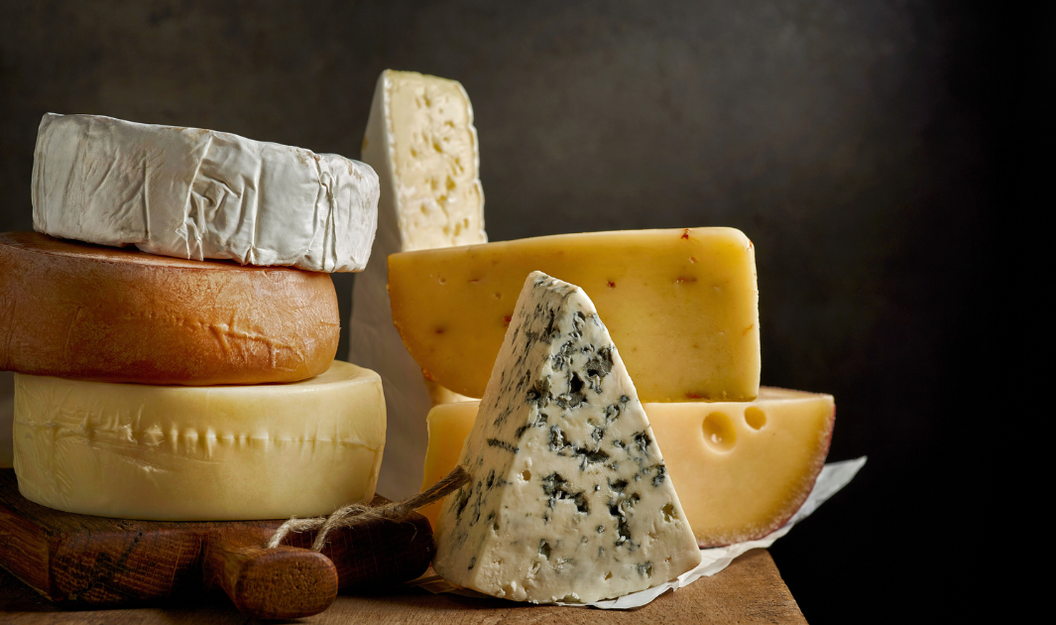
It cannot be proven beyond doubt where cheese was first deliberately produced. What is certain is that it was thousands of years ago, as people were already raving about cheese in ancient times. It was most likely a chance discovery – for example, through milk left to stand or the contact of milk with rennet enzymes from animal stomachs. During the transport of raw milk in animal stomachs, coagulation caused by rennet may have been observed and later reproduced through deliberate curdling. However the first deliberately produced cheese came about, it was followed by enormous developments, which are now regulated in Germany by the Cheese Ordinance.
These days, the variety of cheeses is immense. In Germany alone, there are several hundred different types. They can be grouped into categories, such as the following:
Cream cheese
Sliced cheese
Hard cheese
Soft cheese
Sour milk cheese
Blue-veined cheese
Cooked cheese
As well as obvious factors such as flavour and texture, they also differ in terms of the type of milk used, fat content, maturation period, rind treatment (where applicable, e.g. with red smear) and salting in a salt bath or brine.
It may be the savoury smell, the smooth texture or the strong flavour that makes people love cheese. As it matures, distinct Umami-Flavours that also make cheese taste so good to us. From mild to intense and from creamy to hard, cheese lovers will always find the right variety.
As well as offering a wide variety of flavours, cheese also has nutritional benefits. Depending on the type, it is rich in protein, calcium and fat-soluble vitamins.
Of course, the production process depends on the type of cheese in question, but the following steps form part of many cheese-making processes:
Pre-treating raw milk: Milk is used as the basis for traditional cheeses. With the exception of raw-milk cheeses, the milk is filtered or strained, pasteurised and skimmed. The latter is particularly important in terms of achieving the desired fat content.
Laying thick: To ensure the consistency of the Milk To produce curd, the mixture is thickened by adding lactic acid bacteria, which convert lactose into lactic acid, and, traditionally, rennet. This causes the mixture to curdle. The result is known as curd or jelly.
Cutting: The curd is then cut into small pieces. The smaller the pieces, the more whey is lost and the firmer the cheese becomes. For soft cheese, the pieces should therefore not be too small.
Forms: The pieces – known as curds – are then placed into moulds and the whey is removed by pressing. Cream cheese – in which the whey is removed by centrifuging or draining instead – is then ready to eat.
Salting: Whether by dry salting or in a brine bath: cheese that is to be matured must be salt is treated. As well as promoting the additional drainage of whey, this also helps to keep bacteria at bay, develop a rind, improve the flavour and extend the shelf life.
Ageing: In the final stage, the cheese matures. During this process, the different varieties are regularly turned, cleaned or treated with mould cultures. Maturation plays a key role in the development of flavour and texture and can take months.
As more and more people are opting for a vegetarian or vegan lifestyle, a microbial substitute for traditional Labkäse – or a vegan cheese substitute – is now often used instead.
Precision and quality are key to the production of many types of cheese. This applies not only to the raw materials, but also to the appropriate tools and equipment. For producers, process reliability is just as important: controlled maturation times, hygienic storage and packaging that complies with standards are crucial for marketability and shelf life.
Whether it’s sour milk cheese, rennet cheese, hard cheese or semi-hard cheese: our range provides all the equipment needed for their production. From disposable clothing for hygienic production, through premium mould cultures for perfect maturation, to thermometers that ensure the best conditions in the maturing chambers.
Our range of products also helps ready-made cheese look even better. For example, with cheese knives, cheese slicers or stylish cheese platters made from wooden boards.
Ehlert’s product range meets the highest standards – it is practical, robust and food-safe. This applies not only to cheese production. Thanks to our expertise, gained from many decades of market experience, our product range also supports the production of other high-quality foodstuffs.


More articles