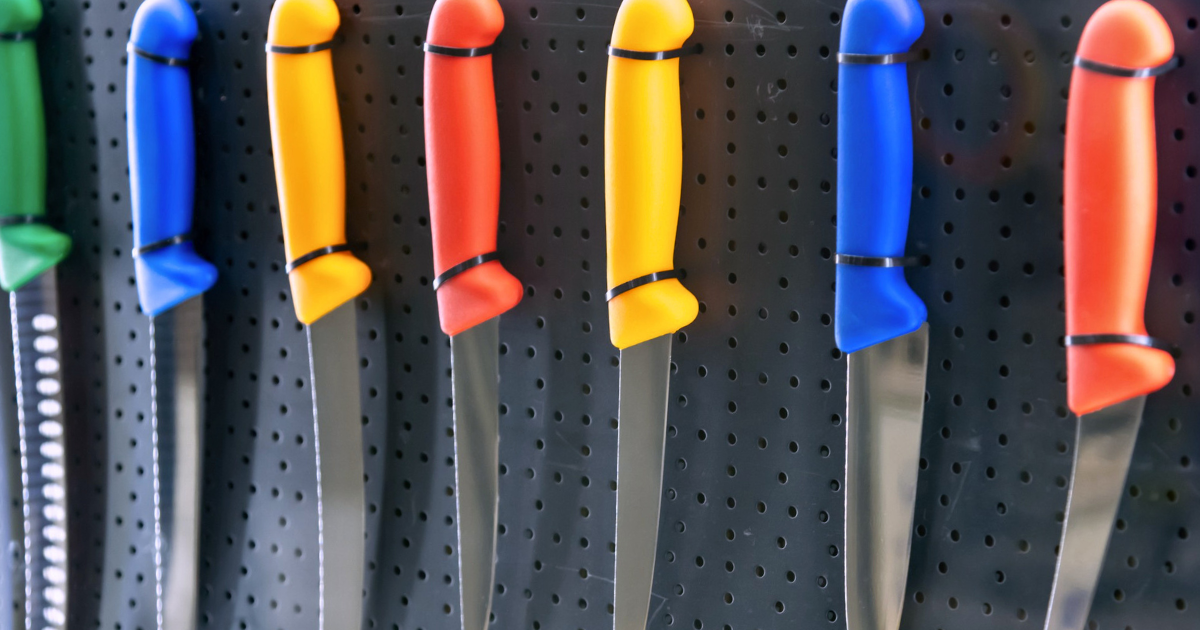
Zur Farbcodierung von Arbeitsmitteln
28. August 2026Read more

16. December 2022
More and more people are adopting a vegetarian or vegan diet. In recent years, there has been a decline in meat production – that is to say, the slaughter of animals. Nevertheless, cheap meat is still on everyone’s lips – quite literally. At present, price alone plays a decisive role for consumers, and yes, they want it cheap! Yet, given the precarious situation, this is not entirely without reason. The coronavirus pandemic, high inflation and exorbitant energy prices are driving consumers, as well as farmers and abattoirs, into a precarious situation. This is affecting not only the organic market but also the conventional market. What feels like the right step towards the ITW (Animal Welfare Initiative) is also taking a back seat, because consumers are simply not buying ITW products for the most part. Slaughterhouses therefore have no choice but to terminate existing ITW contracts with farmers, as there is simply no real demand for this meat. Ultimately, it is the farmer who loses out and is left to bear the costs of the additional expenditure involved in rearing the animals. For animal welfare to be promoted and livestock farming to become profitable for farmers, the entire economy must play its part. Pig farmers must therefore receive more financial support – including from the state. It is unacceptable for the base price of meat to be driven down to such an extent that pig farmers are forced to sustain high losses in the long term. Is it nevertheless possible to produce meat sustainably so that everyone benefits? One thing is certain: given the current situation, no particularly significant steps can be taken. Nevertheless, small adjustments can be made in isolated cases by taking certain precautions.

Anyone wishing to operate sustainably should prioritise animals sourced from the local region. Feeding and husbandry are crucial in this regard. Unfortunately, the issue of feeding in livestock farming is sometimes neglected and swept under the carpet. Why is this the case? Animal feed contributes significantly to the ecological footprint and has social implications in the countries where the feed is produced. The consequences are serious. The import of cheap soya from non-EU countries, which is used as concentrated feed, is destroying the livelihoods of smallholders and other people. But that is not all: entire rainforests are falling victim to deforestation to make way for soya cultivation. Monocultures are then grown on the cleared land, treated with pesticides and fertilisers. The result: soils become overburdened and rendered unusable. Farmers working on these fields are left defenceless against the chemicals and must accept the consequences for their health.
Globally, more plant-based animal feed is grown than plant-based food for human consumption. A shift in thinking is needed: alternative, locally sourced feed must be procured, and sustainable standards – such as certification schemes for soya grown outside the EU – must be established. Fortunately, there are a large number of farmers who are working against intensive livestock farming and are committed to organic farming in the form of a circular economy. This has several advantages: firstly, less fertiliser needs to be applied to grassland, as manure fulfils this purpose naturally. Secondly, existing pastures are used for grazing – thus eliminating the need for additional arable land to grow concentrated feed. CO₂ is also sequestered thanks to the high humus content in the soil, creating healthy, nutrient-rich pastureland. Species-appropriate livestock farming requires that only as many animals are kept as the farm’s land area can support and as can be fed on the farm’s own organically certified fodder. Meat produced using this method is legally protected and clearly defined by the terms ‘eco’ and ‘organic’. This circular economy is based on agricultural sustainability and produces high-quality meat products.
The next natural step in the production process for meat products is slaughter. This should be as stress-free as possible for the animal. Once the meat has been sourced from nearby abattoirs, processing can then begin. The advantage of this is that transport distances are shorter. To minimise food waste, the meat is processed according to demand and utilises the entire animal in line with the ‘nose-to-tail’ principle. This means, for example, that it is not just the highly sought-after breast fillets from poultry that end up on consumers’ plates. Many restaurateurs already use the less attractive offal and other cuts to create tasty dishes.
More articles
Another way to help shape meat consumption in a sustainable manner is to buy game meat from game farms. Although this form of animal husbandry is regarded more as a niche market in this country, butchers and restaurants form part of its loyal customer base. In small farm shops, freshly slaughtered game meat is sold in the form of sausages, pâtés, ham or as raw meat by many farmers who keep game in enclosures in the surrounding countryside during the autumn and winter months – as this is the game season. This ensures short transport distances. The animals are kept in small herds with plenty of outdoor space, in a manner appropriate to their species. They live there all year round and feed on the grasses and plants growing in the open pastures. Hay, grain or silage are only provided as supplementary feed when necessary. The does give birth to a fawn every year in spring or early summer. The young are reared for 12 to 18 months before being culled. The culling is carried out directly within the enclosure to spare the animals any stress. Although game meat from controlled breeding is more expensive, it is of a high quality.
Nothing beats support and appreciation. For this reason, farmers source seasonal produce such as herbs and vegetables from one another. After all, only what grows in season can be cultivated in the region. Collaboration with nearby winegrowers, breweries and bakers, or with local restaurants, is also to be encouraged and is readily embraced. For guests or customers, this usually signifies higher quality when produce comes from the immediate vicinity.
In any case, by labelling your goods correctly, you create greater transparency, which benefits you in the form of increased purchasing power from your customers. Customers are more inclined to buy something if they feel a closer connection to a product. Information provided via stickers and labels, for example, gives details about the origin of the meat and the herbs used. The following statement would be useful here: ‘Our pork comes from the XY district’. A recommendation for the amount of meat to consume could also be included: 300 g of meat per week is recommended.
It is not always possible to source seasonal and regional ingredients. That is why fair-trade products such as oils, spices, delicatessen items and workwear are also of interest to butcher’s shops. Knowing where the goods come from helps to foster a more conscious approach. We also stock our own range of organic-quality spice blends.
Another important factor when buying meat is the choice of packaging. At present, almost all meat and sausage products are carefully wrapped in an additional layer of plastic film or placed in a plastic bag to make them suitable for customers to carry home. Shrink-wrapped meat products are also found in abundance in chilled display counters. This generates more plastic waste. So-called mono-plastics currently represent the most sensible alternative. These are recyclable and require comparatively little energy. The use of paper bags also contributes to environmental sustainability.
The questions one might ask oneself when Packaging materials The criteria that should generally always be applied to both paper and plastic in order to incorporate a sustainability aspect are:
Does the timber come from sustainably managed forests?
Is the plastic used recyclable?
How much energy is used in production?
Can the packaging material be reused?
Electricity consumption is very high in meat processing plants. Consequently, a number of measures can also be taken with regard to electricity. Green electricity, which can be sourced either entirely or in part, is the first step in the right direction. Heating using renewable alternatives such as wood chips, pellets or solar systems for hot water production is another way to save energy.
Optimal preparation for transport, with coordinated, planned routes and trucks loaded to maximum capacity, helps to ensure efficient supply chains. Electric vehicles and fuel-efficient engines also contribute to an environmentally conscious and sustainable carbon footprint.
Cooling and cooking processes consume a particularly large amount of energy. We have set out below how you can optimise these processes in a sustainable way:
Open cold rooms for as short a time as possible and fit a cold-proof curtain
Adjust the temperature: increasing it by 1 °C can save up to 4 per cent in energy
Regularly remove dirt from the condensers in the cold stores to ensure that sufficient heat can be dissipated
Choose a suitable location for the condenser (of cold stores): as cool and dust-free as possible
Fit covers to refrigerated display counters during non-sales hours
Using waste heat to heat water
When buying new appliances, look for energy efficiency
Fill the kettle with as little water as possible
Open the boiler for as short a time as possible
Consider lowering the cooking temperature
Timely switching on and off of boilers and hot-holding appliances
Optimise work processes, for example by reusing cooking water for blanching or pre-cleaning the equipment
The total amount of CO₂ emitted by a business can be determined on the basis of its individual processes using a life cycle assessment. This is stipulated by the Federal Ministry for the Environment, Nature Conservation and Nuclear Safety and the Federation of German Industries, and serves as a guideline for businesses. EMAS (Eco-Management and Audit Scheme) is based on the voluntary implementation of a company-wide environmental audit. As part of this, an environmental verifier assesses energy consumption, emissions and waste management at regular intervals. EMAS originates from the European Union (EC Eco-Audit) and supports companies and organisations in continuously improving their environmental performance. An important component of the EMAS Regulation is the international environmental management standard DIN EN ISO 14001.
Raising awareness within businesses and creating fair working conditions: The following questions crop up time and again: What are the working conditions like in a meat-processing plant? Are fair wages paid? How is slaughter carried out? These are issues you should always bear in mind within your business. By showing your staff the respect they deserve, you can contribute to a self-sustaining cycle. After all, when staff are valued, they are more motivated to do a good job.
The key points for being a fair employer:
Fair pay
Securing the future through the next generation: creating new apprenticeship places
All genders are welcome
Inclusion: Employing people with disabilities
Opportunities for professional development and further training
Work-life balance
Work protection also plays a vital role within a company. Our extensive range includes a wide variety of products designed to ensure day-to-day safety in the workplace. As well as gloves and cut and splash protection, you’ll also find suitable footwear and first-aid kits. This ensures your staff in meat production are well equipped.
Sustainability in meat production is a vital and necessary factor in creating a sound foundation for life – for the environment, for animals and, ultimately, for people – in the long term. Every stage of the process – from feed cultivation through animal husbandry and slaughter to processing and responsible meat consumption – is inextricably linked. We should therefore look to the future with care and make the right choices – even if this is proving rather difficult at present. With our diverse product range, you and your staff are well equipped to tackle all the tasks ahead. After all, it is only with the right equipment that you can improve work processes efficiently and sustainably.