Zur Farbcodierung von Arbeitsmitteln
28. August 2026Read more

10. July 2026
Whether in meat processing or frozen food production, saws can perform a wide variety of tasks in food processing whenever raw materials can no longer be cut efficiently, safely or with sufficient precision using knives. Professional sawing systems are therefore a key component of cost-effective production processes, particularly when dealing with large, hard, bone-in or frozen products. When using saws, it is important to consider not only good cutting performance but also aspects relating to hygiene, health and safety, cleaning and maintenance. We’ll take a look at these.
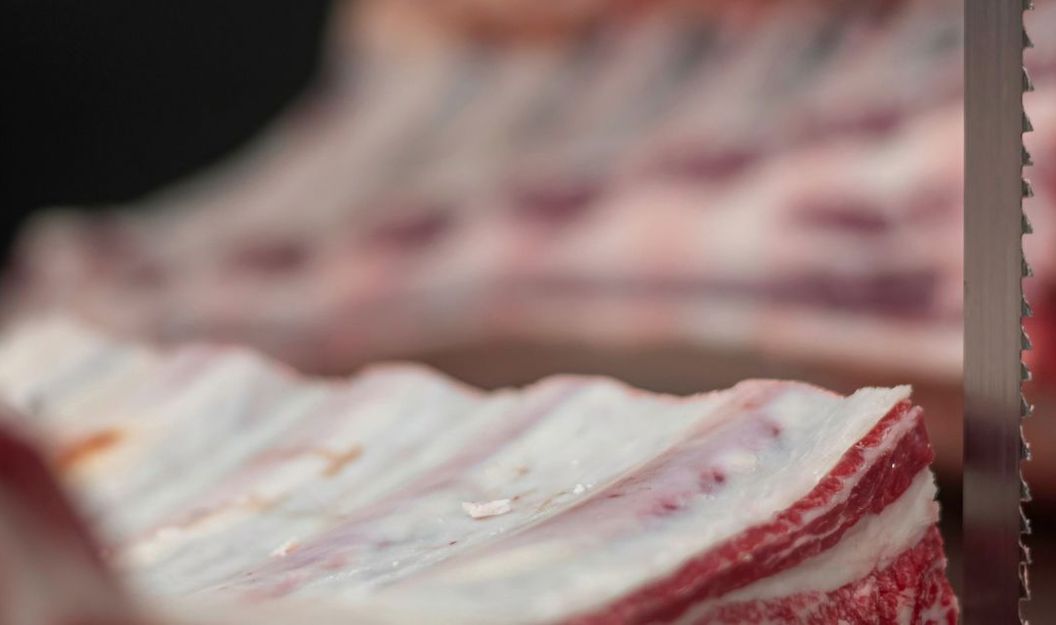
The most important and largest area of application is undoubtedly meat processing. In slaughterhouses, cutting plants and other meat-processing facilities, bone saws, band saws, bow saws, cutting saws and block cutters are used to cut up carcasses, separate bone sections or cut large pieces of meat into uniform portions.
As well as in meat processing, saws are also used in fish processing. When very large fish, frozen fish or deep-frozen blocks of fish need to be cut up, the right sawing technology is essential to carry out the work at all – or at least to do so in a more controlled and cost-effective manner than with knives. This is a crucial factor in industrial processes where the aim is to produce uniform portions, minimise raw material wastage and ensure hygienic further processing.
Saws or specialised cutting systems can also be used for hard cheese or large blocks of cheese. Compared with meat and bone processing, however, this is more of a supplementary area of application.
Another common application of sawing technology is in the production of frozen and convenience foods, particularly frozen blocks of meat, fish or poultry. These are cut into workable pieces, slices or portions using band saws, block cutters or automated sawing systems. Traditional sawing technology is less commonly used for vegetables; saw-like cutting principles are particularly relevant for very firm, compact or block-shaped frozen products.
Good Knife are indispensable tools in food processing, yet even they reach their technical and economic limits when dealing with certain products and processes. Bones, frozen blocks, large pieces of raw material or particularly tough structures often require a different method of separation. Saws allow for controlled operation in these situations too, as they cut through the material step by step and require less effort.
The following points, for example, highlight clear advantages over knives:
Precise cuttings of large or hard items
Consistent portioning for standardised production processes
Less physical exertion or strain on staff
Reduced wastage of raw materials thanks to more controlled cutting techniques
Faster processing speeds for industrial-scale production
For these reasons, food-grade saws are not merely a tool, but an essential part of the production process, particularly in meat processing. They enable the raw materials to be processed in a repeatable and predictable manner, which would be considerably more labour-intensive, less precise and more risky if carried out using hand knives.
In food production, it is not only performance that determines a machine’s suitability. Great importance is also attached to its design. Food hygiene regulations stipulate that objects, fittings and equipment that come into contact with food must be capable of being effectively cleaned and, where necessary, disinfected. Hygienic design is therefore not merely an additional feature in food-processing saws, but an essential component of hygiene concepts.
Depending on their design, food-processing saws operate with manually guided saw blades or with motorised, high-speed cutting tools. Consequently, health and safety is of paramount importance when using them. If machines are not correctly secured, maintained or operated, the risk of injury increases. For example, with band saws, the openly accessible cutting area poses a risk of serious hand and finger injuries if safety measures, safe working procedures and thorough training are not consistently adhered to.
Important safety measures relating to sawing technology include, for example:
Protective covers and guards for saw blades
Sliding carriages, stops or feeding aids
Emergency stop systems and clear controls
Correct blade tension and suitable saw blades
Regular training for staff
Where necessary, suitable protective workwear
Personal protective equipment must be selected on the basis of a risk assessment. When working on band saws, care must also be taken to ensure that unsuitable gloves or loose items of clothing cannot become caught in moving machine parts.
Saws will only operate reliably and continuously if they are checked regularly and maintained correctly. Dull, incorrectly tensioned or unsuitable saw blades not only increase waste but also pose a safety risk. If you have to apply more pressure than usual, there is also a greater risk of uncontrolled movements and injuries.
Depending on the machine, a service may, for example, involve the following steps:
Checking the saw blade, tension and guide
Inspection of safety guards and emergency stop functions
Cleaning surfaces that come into contact with food
Replacement of worn components
Records of cleaning, maintenance and repairs
In particular, in connection with HACCP concepts, audits and internal quality standards, proper documentation is essential.
Professional sawing technology can have a direct impact on product quality. Consistent cuttings ensure predictable portion sizes, a uniform appearance and efficient further processing. At the same time, precise saw cuts can help to reduce raw material wastage. Every rough cut, every change in structure or every unnecessary step in the process can affect quality and cost-effectiveness.
High-quality sawing technology combines efficiency, hygiene and safety, and is always in demand in food production wherever large, hard, frozen or bone-in raw materials need to be cut up.
As an experienced and professional specialist wholesaler supplying equipment and consumables for food production, we ensure that operations run smoothly. This also applies to professional sawing equipment and the relevant accessories. The wide range of digital services in our online shop includes subscription orders, order templates, barcode scanning and much more, making professional purchasing even easier.


More articles