Röstprozesse bei Nüssen, Saaten und Gewürzen
11. September 2026Read more

5. December 2025
Pastrami harmoniously combines craftsmanship, history and flavour. Its savoury, smoky aroma, aromatic spice crust and melt-in-the-mouth meat have long since made it an international delicatessen icon. Let’s take a look at the origins, production, variations and other aspects of this popular sandwich filling.
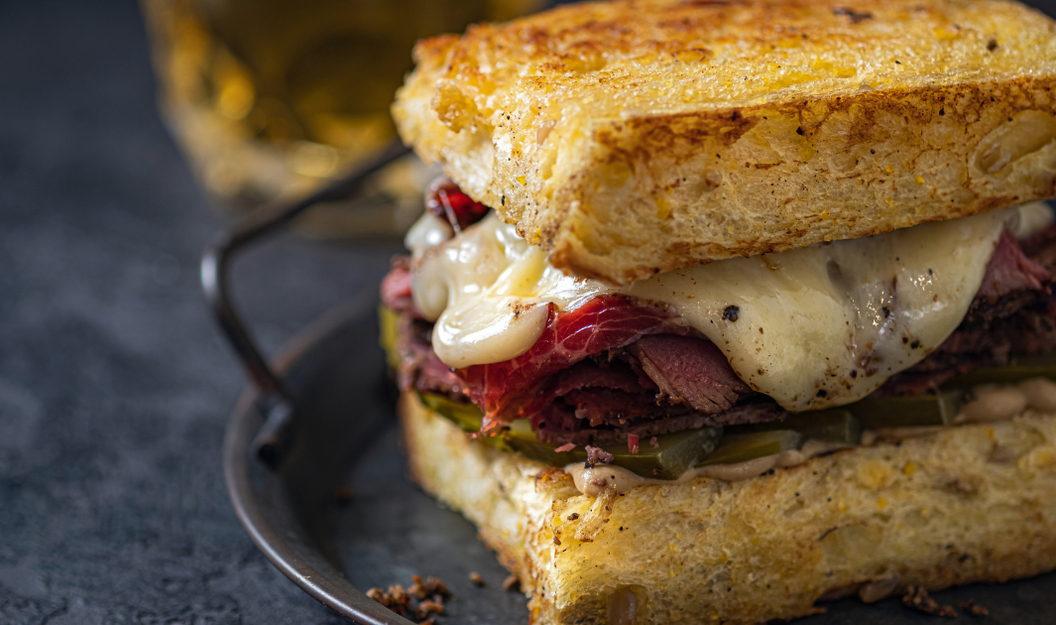
Pastrami generally refers to a cured, strongly seasoned, smoked and often subsequently steamed beef product. In addition to its intense flavour, it is particularly the combination of these different processing techniques that comes together to create pastrami’s characteristic overall profile. The processes of curing, seasoning, smoking and steaming give this speciality its unmistakable colour, aroma and juiciness. Pastrami is generally made from beef brisket or shoulder and served cut into thin slices. A traditional and famous classic is, for example, Pastrami on Rye. The New Yorker Sandwich has achieved true cult status with his creation consisting of two slices of rye bread, pastrami, mustard and gherkins. Pastrami is one of those products where preservation and refinement come together perfectly – one reason why it impresses both in terms of flavour and craftsmanship.
The origins of this meat speciality cannot be definitively determined. It is thought to have its roots in the Ottoman and Eastern European traditions of meat processing. From very early on, meat was preserved by salting, seasoning, pressing and drying. The Turkish word pastırma for example, refers to such a meat product. The same applies to the Romanian pastramă, which is used with the verb to keep is associated with ‘preserving, storing’. It is not possible to say with certainty whether, and to what extent, the preservation methods used in the various regions are related.
It is said that in the 19th century, the tradition of preparing meat found its way to New York via immigrants from Eastern Europe and developed into the standard production method. Over time, however, smoking and steaming the meat became increasingly common, replacing air-drying. Ultimately, this meat product, known as pastrami, became legendary, particularly as a sandwich filling in American delis.
Taken together, the many different stages of processing result in a meat product that is both distinctively aromatic and tender.
Curing: The meat – often beef brisket – is treated, particularly in industrial production, using curing injectors and brine syringes. Traditionally, pastrami is wet-cured in brine. In addition to the appropriate curing salts, the brine usually also consists of spices such as Garlic, pepper, Coriander or juniper. The spices impart a rich flavour and provide an excellent basis for the subsequent smoking and steaming.
Seasoning: After curing, the pastrami-making process involves another step that is no less important: the piece of meat is coated with its aromatic rub. Whilst curing serves, amongst other things, to flavour the inside of the meat, the rub coats it with an outer layer which, during smoking, develops into the characteristic spice crust.
: Smoking is another essential step in achieving the characteristic pastrami flavour. During this process, the meat is not only cooked to a core temperature of around 72 °C, but also undergoes a crucial refinement. The interplay of controlled heat, smoke and the spices creates the dark crust, the savoury smoked flavour and the firmness of the outer layer. During smoking, the rub bonds with the meat, ensuring that peppercorns or coriander seeds adhere well. This is an important factor in ensuring that the spicy coating does not soften or fall off during the subsequent steaming process.
Traditionally, pastrami was not always made from the same cut of meat. It was common to use meat from animals other than cattle, or even cuts other than beef brisket. The term ‘pastrami’ refers both to the product and to the method of preparation, and is therefore not strictly limited to a particular type of meat. The use of beef brisket is also linked to its availability in the industrial sector at the time. The range of products now includes variants such as turkey pastrami, chicken pastrami – and even plant-based versions that aim to replicate the characteristic flavour profile. However, given the variety of different interpretations, correct and unambiguous labelling must always be ensured.
Pastrami stands out from other cured or smoked meat products thanks to its distinctive flavour profile – which makes it equally appealing to delicatessens and the catering trade. At the same time, pastrami is a product characterised by regional variations and the diversity that comes with them. BBQ variants, for example, emphasise a more intense smoky flavour or a firmer texture when sliced. Furthermore, the variety of spice profiles offers considerable freedom of interpretation, revealing a wide range of flavours in this cured sandwich filling to true pastrami fans. This also opens up a multitude of creative possibilities for manufacturers and kitchens, without compromising the fundamental principles of pastrami.
As a specialist wholesaler to the food industry and a supply chain specialist with over 100 years’ experience, our range offers a wide selection of high-quality products that are perfectly tailored to enhance your food production. Whether it’s spices, machinery, knives, workwear or cleaning supplies – we provide everything you need reliably and efficiently from a single source.


More articles
Steaming: After smoking, the meat must be steamed. This makes the meat even more tender, which is particularly beneficial for tougher cuts. Alternatively, cooking methods involving vacuum-sealed meat in a water bath or a combi-steamer are also used.
Cold cuts: When the cooked meat is sliced thinly, its flavour, juiciness and texture really come into their own. This is achieved with masterful craftsmanship using the right Knife – Professional slicers ensure greater efficiency and consistent results.