Sieben und Passieren: Qualität und Konsistenz gezielt steuern
18. September 2026Read more

12. September 2025
It enjoys absolute cult status, particularly in southern Germany and Austria: the Leberkäse. However, this hearty dish with its somewhat confusing name goes down well almost everywhere – not least because of the many different ways it can be enjoyed. Reason enough to take a closer look at this classic dish. What’s the story behind the name? What needs to be taken into account during production? And how can Ehlert support the industrial production of this meat product? Let’s find out.
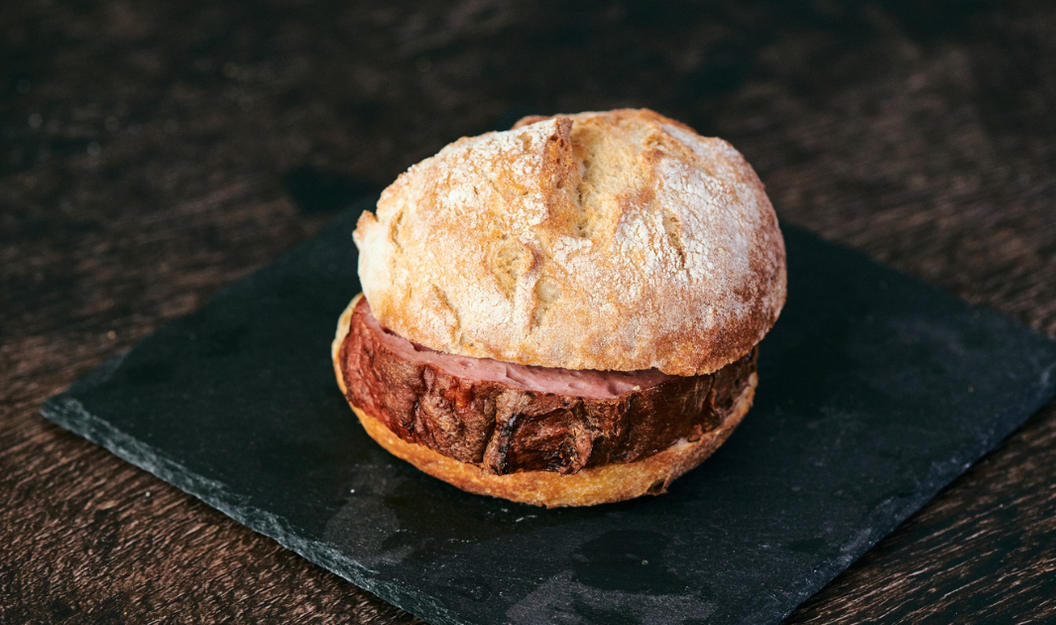
To understand the term ‘Leberkäse’, it is essential to note one thing first: ‘Leberkäse’ is by no means the only name for this popular delicacy. Other terms in use include, for example, ‘Leberkäs’, ‘Leberkas’, ‘Fleischkäse’ and ‘Fleischlaib’.
Anyone hearing the name ‘Leberkäse’ for the first time will inevitably think of a mixture of liver and cheese – but that is not entirely accurate. As for the second part of the word, ‘Käse’, the derivation is quite straightforward. Because from Cheese about Cheese right up to Kas It seems the connection was quickly made. In Bavarian, ‘Kas’ refers to a compact mass ready to eat, just like the one found in Leberkäse.
The part involving the, on the other hand, is more difficult Liver to explain. It is not possible to trace the origin of the term with complete certainty. Two plausible theories are as follows: it is possible that animal liver was in fact a major ingredient of the dish in the past. Or the term Liver gradually evolved from the term loaf. This, either on its own or in combination with the Laib-Käs, may have been intended to highlight its compact shape.
For gourmets, the following characteristics are particularly important when enjoying Leberkäs:
An aromatic and intense flavour
A juicy texture
A fine and elastic texture
A classic loaf tin
A golden-brown outer crust
To achieve all these characteristics, every detail must be just right when making Leberkäse. Despite regional variations, the preparation essentially involves the following steps:
Meat selection: When selecting meat for Leberkäse, the majority opt for beef or pork, often in a mixture of both. In some specialities, horsemeat is also used. Although the name does not necessarily have anything to do with animal liver, consumer protection regulations stipulate that, due to the name ‘Leberkäse’, the product must contain at least five per cent liver – with the exception of Bavarian Leberkäse. Many suppliers therefore tend to label the dish as ‘Fleischkäse’ instead.
Cutters: To produce a uniform sausage mixture from the meat, it is first minced, i.e. chopped into fine pieces. It is then mixed with spices, bacon and salt. People often opt for Curing salt is added because the sodium nitrite it contains ensures that the Leberkäse retains its attractive pink colour. Water and potato starch are also used, along with various spices depending on the recipe.
Filling: As well as the flavour, the shape is crucial when it comes to meatloaf. That is why, in the next step, the mixture is poured into a loaf tin. This not only gives it its distinctive appearance, but also ensures it develops that characteristic crust on the outside.
Baking: In the final step, the Leberkäse is baked until it develops its much-loved golden-brown crust.
Traditional Leberkäse can be enjoyed as a hot lunch or as a hearty Leberkäse sandwich, as is customary with a Bavarian snack. However, that is by no means the end of the creative ways to enjoy Leberkäse. Alongside the traditional choice of pork or beef, a variant made with horse meat is eaten mainly in Austria. In this country, however, recipes featuring poultry can also be found. Another modern take is the ‘pizza Leberkäse’, which incorporates peppers, cheese and diced salami – or other classic pizza toppings.
There are also variations in shape, particularly where the rectangular shape is less suitable for industrial production. Furthermore, having it as a snack is just one of many ways to enjoy Leberkäse. For example, the combination of Leberkäse with a fried egg is becoming increasingly popular, and Potatosalad – for a particularly hearty treat.
In the food industry, Leberkäse is produced on a large scale. As well as delicious and carefully balanced recipes, this requires a variety of raw materials and equipment – not least to ensure the mixture is cut to the right consistency. Gustav Ehlert GmbH is your partner for high-quality equipment, tools, curing salts, spices and much more. With us, you’ll find not only salts for Seasoning and knives for perfect cutting, as well as a range of packaging solutions.
It’s not just liver loaf and the accompanying potato salad that need this: high-quality food needs to be attractively packaged and presented to really win people over. Of course, this applies not only to meatloaf, but also to all our other best-selling products. Discover our wide-ranging range and benefit from our many years of expertise.


More articles