Insektenschutz in der Lebensmittelverarbeitung
9. August 2024Read more

9. December 2022
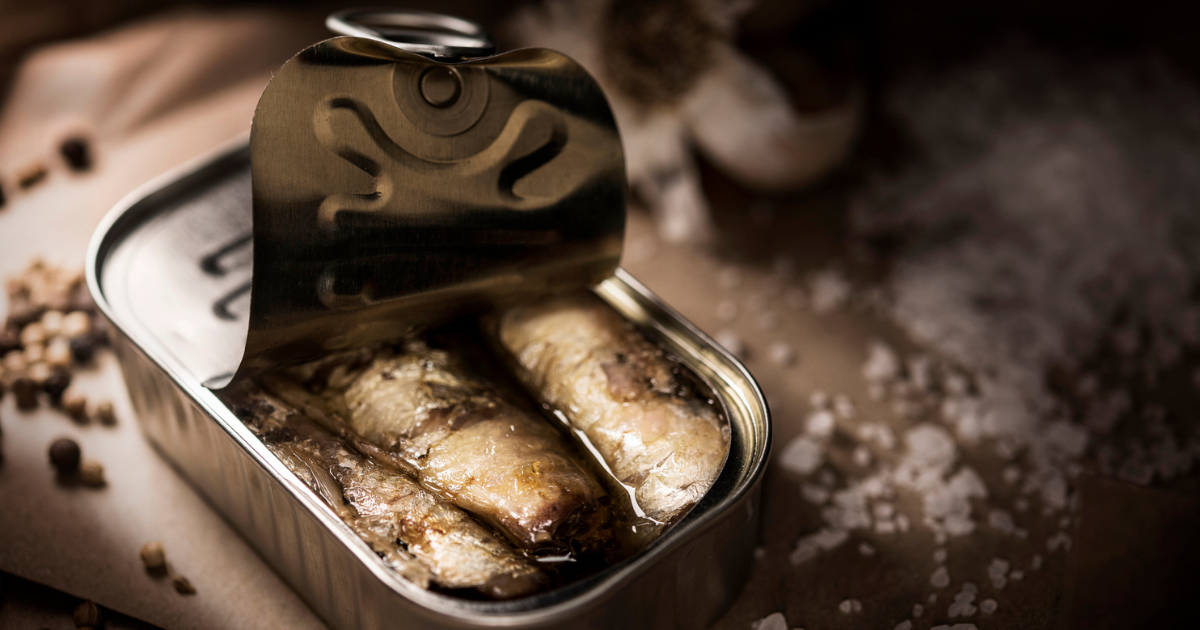
Who hasn’t heard of them? Herring fillets in a spicy tomato sauce, hearty mackerel and tuna specialities in those distinctive tins… But how do you manage to preserve fish – such a delicate resource – for months on end? What types of tinned fish are there? What are the most popular fish products in Germany, and what do you need to bear in mind when producing tinned fish?

The term ‘canned fish’ is a collective term for preserved fish, seafood and other fish products. The tins and lids are designed so that fish and seafood can be packed in an airtight and light-proof manner. However, as tinned fish products are not necessarily all the same, we should explain the different types once again:
If fish products are produced as long-life or fully preserved tinned goods, preservatives are unnecessary. Heating the fish to around 110 °C causes it to sterilised. If stored correctly without refrigeration, it will keep for at least two years. The best-known examples of whole tinned fish are sardines in oil, tinned tuna and various fish fillets in sauce.
When is it necessary to sterilise tinned fish? When the pH level is above 4.5. In this case, the fish provides a breeding ground for germs and bacteria – it goes off and the tin swells up. This phenomenon is also known as ‘bombage’ and occurs when the product has not been preserved properly or sufficiently. Cans of fish and seafood can be preserved using a device known as an autoclave.
Long-life tinned products are contrasted with semi-preserved tinned products. These fish products, also known as ‘Präserven’, are gently processed at temperatures below 100 °C pasteurised. Although fish, seafood and the like will only keep for up to 6 months – as microorganisms may not be completely killed off under certain circumstances – this processing method is gentle on the product, meaning that its colour and flavour remain virtually unchanged. Semi-preserved fish must be kept chilled at all times. Consumers should also pay attention to the best-before date. Examples of semi-preserved fish include Bismarck herring, rollmops, anchovies and fried herring.
When stored at a maximum temperature of 20 °C, these tinned fish will keep for up to 12 months.
Some of the most popular fish and seafood products include:
Tuna
Tinned herring
Marinated herrings
This top three is closely followed by frozen fish, crustaceans and molluscs, fresh fish and smoked fish. Canned fish proved particularly popular with consumers during the coronavirus crisis due to its long shelf life.
Tinned fish keeps for a particularly long time when it is preserved in its own juice or in water. This way, the fish retains its natural flavour for longer. What’s more, the flavour develops better in the tin.
Unlike half-cans and three-quarter cans, full cans do not need to be stored in a cool place. This saves on energy costs.
Last but not least, the tins are designed so that they can be easily stacked. This saves storage space and also means that several pallets of tinned fish can be transported at the same time.
How do sardines actually end up in the tin? Do they put the herring in first and then the sauce, or is it the other way round? We’ll take you through it step by step – from the sea straight into the tin.
To make tasty tinned fish, you need – of course! – fish that’s been freshly caught. Ideally, it should come from MSC-certified fisheries. The acronym stands for ‘Marine Stewardship Council’ and refers to a non-profit international organisation dedicated to the protection of the oceans and fish stocks.
On the tins you will find a tracking code which allows you to trace the fish back to the fishing vessel. It also tells you which fishing method was used and which sea the fish comes from.
The largest quantities of fish are caught in China, Indonesia, the USA and Peru. However, in northern Germany too, fishing for fish and seafood is one of the main sources of income.
As soon as the fish is caught, it is processed, vacuum-packed and deep-frozen at the adjacent production facilities. It can then be transported by ship or lorry in this state. To ensure the cold chain is not interrupted, it is kept in cold storage at all times.
Speaking of cold stores: many companies process fish and other products in this freezing-cold environment. To do so, staff need cold-store clothing made specifically for this purpose.
Once it arrives at the production facility, the fish is unpacked, defrosted, cured and fermented. It is precisely the curing and fermentation stages that extend the shelf life of this foodstuff, which is rich in omega-3 fatty acids and protein. However, it is important to remember that less is more. This is because too much acid and salt distorts the original flavour.
Thanks to a particularly gentle steam-cooking process, the texture and flavour of herring, mackerel and other fish remain as natural as possible. To ensure the quality of the fish products, fish X-ray machines and flake ice makers are required. The former are usually made of stainless steel and are used to check fish fillets for bones and nematodes. With this equipment, you’re on the safe side when producing tinned fish. The latter, as the name suggests, produce flake ice for the hygienic storage and attractive presentation of fish and seafood. Both machines are characterised by the fact that they can be cleaned with ease.
In many companies, the filling of tinned fish is still done by hand. To do this, the pieces or fillets are, depending on the recipe, coated in sauce and/or garnished with spices and herbs. The tins are sealed airtight and packaged. The fish and seafood are then ready to be distributed to retailers and sold to the end consumer.
[About the spices](https://www.ehlert-shop.de/gewuerze/wuerzmischungen/grill-bratenwuerzungen/ or https://www.ehlert-shop.de/maschinen-werkzeuge/messer-klingen/koch-kuechenmesser/)
This depends primarily on the role within the production chain: if your staff are working on a fishing vessel, weatherproof jackets, dungarees or overalls are essential. It is important that this clothing protects against wet conditions, but also against the cold. With waterproof work boots, workers are protected from head to toe against the sometimes gruelling conditions on fishing vessels.
However, even in production facilities sheltered from the weather, the right workwear is essential. This might include boots with steel or plastic toe caps, as well as gloves and caps.
Other useful products for the production of tinned fish include:
Cut protection and protection against punctures
disposable clothing
Foodwear
Scales
Packaging
Ultimately, it all comes down to storing tinned fish correctly. This determines how long fish and seafood will keep in tins, cans or similar containers.
If the best-before date on the tin is illegible, you can quickly check whether a tin of fish is still safe to eat by using your senses: If the tin is undamaged, and the product smells and tastes as it should and looks normal, then tuna, herring and the like can be eaten without any concerns.
Tinned fish should no longer be eaten if
the best-before date has clearly passed,
the fish is mouldy or smells of fermentation,
the product tastes metallic or musty, or
the tin is badly dented, rusty or bulging.
If eaten despite being spoiled, fish and seafood can cause serious infections and illnesses such as salmonella poisoning or even botulism.
When producing and processing fish, a highly perishable foodstuff, it is important that hygiene and work protection go hand in hand. We can provide you with the right workwear and the best equipment to ensure compliance with all hygiene measures – our team is on hand to advise you.


More articles